

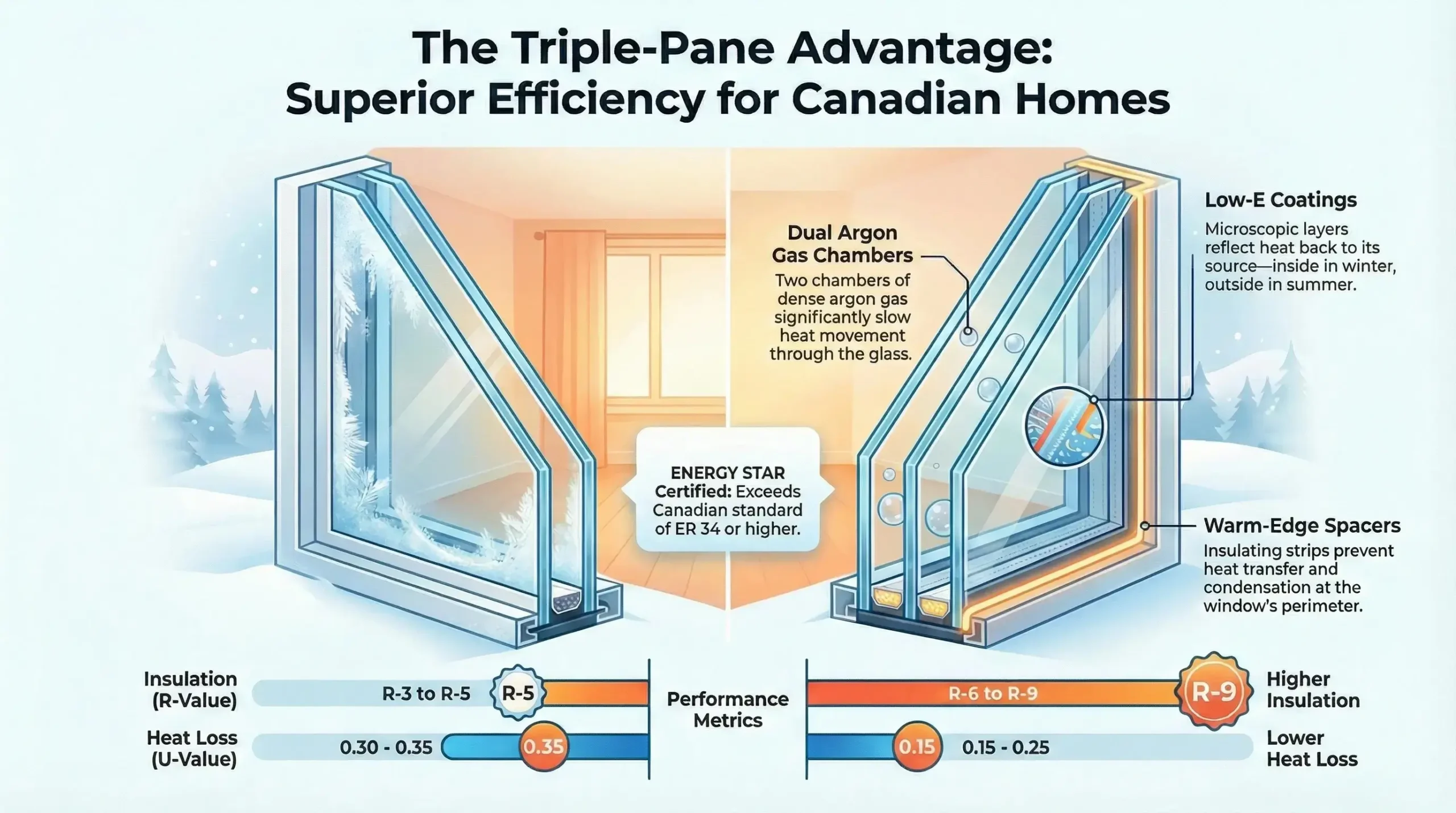
Triple-pane windows (also known as triple-glass windows) are designed to keep Canadian homes warmer in winter, cooler in summer, quieter year-round, and far less prone to condensation than older single or standard double-pane windows.
When replacing vinyl windows, many homeowners are unsure whether double-pane is enough or if triple-pane is worth the upgrade. Understanding how single, double, and triple-pane glass differ makes that decision much easier.
Table of Contents
- Shop Triple-Pane Windows To Reduce Your Energy Bills
- Are Triple-Pane Windows Worth The Cost?
- Other Benefits Of Upgrading To Triple-Pane Windows
- Single Vs Double Vs Triple-Pane Windows
- Can You Use Triple-Pane Glass in Doors Too?
- Upgrade to Triple-Pane Windows with NorthShield
Shop Triple-Pane Windows To Reduce Your Energy Bills
Triple-pane windows are made with three layers of glass sealed together instead of one or two. The spaces between the glass panes are filled with insulating argon gas and separated by warm-edge spacers, which help slow down heat transfer and reduce outside noise.
This layered design improves insulation, limits condensation, and keeps indoor temperatures more stable throughout the year, making triple-pane windows especially well-suited for Canadian climates.
So, How Do Triple-Glass Windows Reduce Your Energy Bills?
1. Higher Insulation Rating
Insulation rating (R-value) increases from roughly R-3 to R-5 in double-pane to R-6 to R-9 in triple-pane. R-value measures how well a window resists heat flow. The higher the number, the better the insulation.
2. Lower Heat Loss Rating
Heat loss rating (U-value) drops from 0.30-0.35 to 0.15-0.25. U-value measures how quickly heat escapes. The lower the number, the less heat you lose.
3. Two Argon Gas Chambers Instead Of One
Triple-pane windows feature two argon gas chambers, compared to double-pane windows, which have only one. This means tri-pane windows conduct far less heat than double-pane. Argon is a dense, invisible, non-toxic gas placed between the panes. Because it is heavier than air, it slows down heat movement through the glass.
4. Two Sets Of Warm-Edge Spacers
Warm-edge spacers reduce heat transfer around the edges of the glass. Spacers are the strips that separate the panes. Warm-edge spacers are made from insulating materials that prevent heat from escaping at the perimeter – the most common place for condensation to form.
5. Thicker Glass Unit
A thicker glass unit increases overall thermal resistance. More layers of glass and gas create a stronger barrier between indoors and outdoors.
6. Additional Low-E Coatings
Optional Low-E coatings reflect heat and block UV rays without darkening the glass. Low-E (low emissivity) is a microscopic, transparent coating on the glass that reflects heat back to where it came from – inside in winter, outside in summer.
7. Guaranteed ENERGY STAR-Certifications and Higher ER ratings
ENERGY STAR is a Canadian efficiency standard for windows. Windows are graded using an Energy Rating (ER), and to be considered energy-efficient in Canada, a window must score ER 34 or higher. Triple-pane windows easily exceed this level.
This is why tri-pane windows don’t just look better on paper – they feel different in your home. The interior glass surface stays noticeably warmer in winter, cooler in summer, and far less prone to condensation.
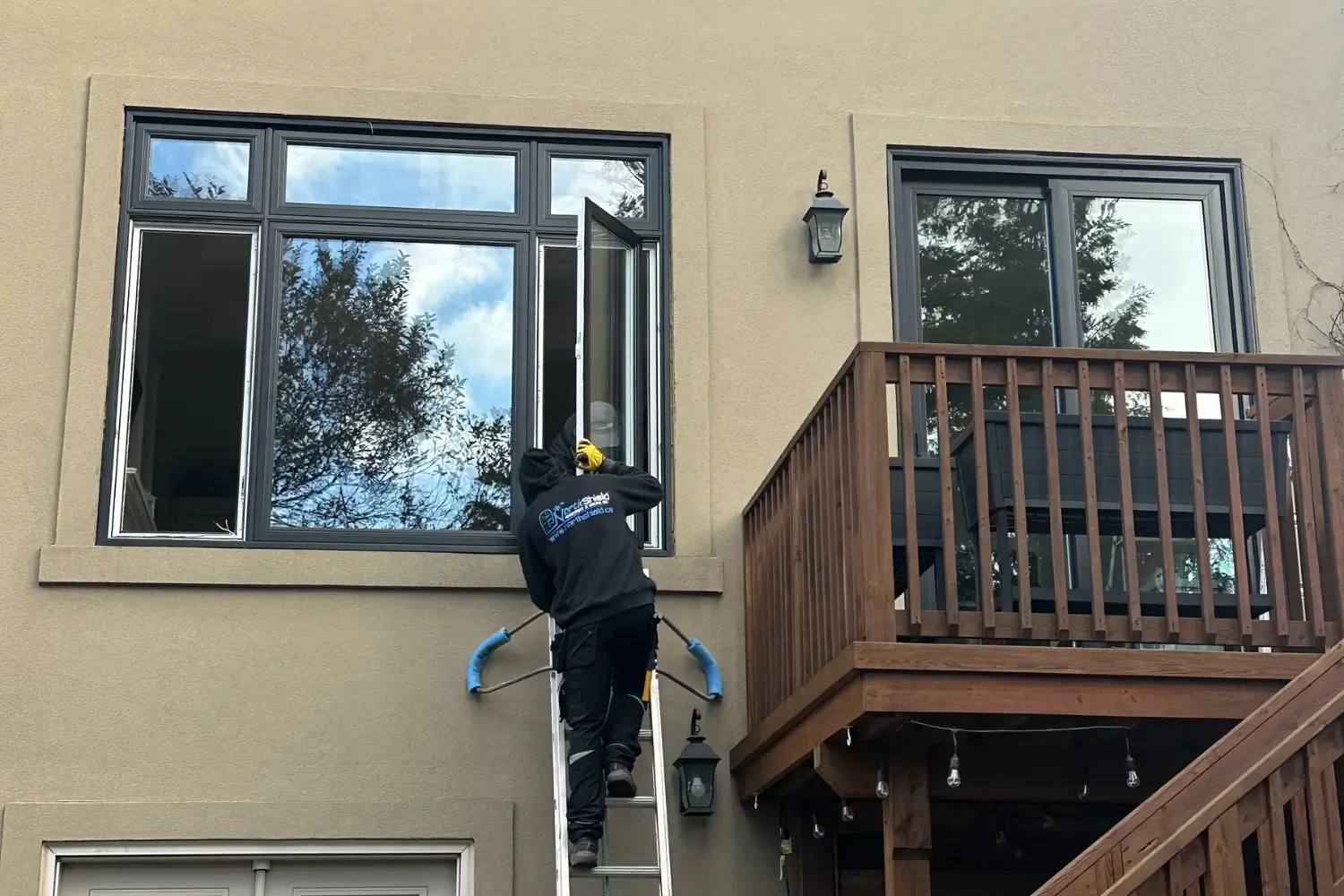
Are Triple-Pane Windows Worth The Cost?
Short answer, yes, definitely! Not just for your energy bills but for your everyday comfort.
Tri-glass windows typically cost 10-15% more than double-pane units. If you’re replacing every window in your home, that increase can add a few thousand dollars to the project, so it’s a fair question to ask whether the upgrade is worth it.
The average Canadian household spends around $2,200 per year on energy, with a large portion of that going toward heating in winter and cooling in summer. Because windows are one of the biggest sources of heat loss in a home, improving their insulation directly affects how hard your furnace and air conditioner have to work.
Triple-pane windows can reduce HVAC costs by 2–3% per year, depending on:
- The size and number of windows in your home
- Which direction your windows face (sun exposure)
- How well insulated the rest of your house is
- Your local climate
That may not sound dramatic in a single year, but over the 20-30 year lifespan of your windows, the savings add up – especially in colder regions like Winnipeg, Calgary, and throughout the GTA, where heating demand is high for many months of the year.
More importantly, the benefits are noticeable immediately, not just on a utility bill:
- Fewer drafts and cold spots near windows in winter
- More consistent room temperatures from wall to wall
- Less condensation, moisture, and frost on the glass
- Quieter indoor spaces, especially in bedrooms and living rooms
- Reduced strain on your furnace and air conditioner, which can help extend their lifespan
For many homeowners, the decision isn’t only about energy savings. It’s about comfort and how your home feels every day.
Other Benefits Of Upgrading To Triple-Pane Windows
1. Better Temperature Control All Year
Triple-pane windows help maintain a more consistent indoor temperature, reducing drafts and uncomfortable hot or cold spots near windows.
How?
- Two argon gas spaces slow down heat movement through the glass
- The extra pane creates a stronger barrier between indoors and outdoors
- Warm-edge spacers reduce heat loss around the edges of the window
- Higher R-values and lower U-values keep indoor temperatures more stable
2. Noticeably Quieter Indoor Spaces
Triple-pane glass makes a clear difference in how much outside noise enters your home, especially in bedrooms and living areas.
How?
- The extra pane of glass adds mass, which dampens sound vibrations
- Two gas-filled spaces disrupt how sound waves travel through the window
- Thicker glass reduces the amount of outside noise entering the home
3. Reduced Condensation and Frost on the Glass
Triple-pane windows are much less likely to develop condensation or frost during cold weather.
How?
- Better insulation keeps the interior glass surface warmer
- Warm glass reduces the chance of moisture turning into condensation or frost
- Warm-edge spacers prevent cold spots around the perimeter of the glass
4. Protection From UV Rays That Fade Interiors
Triple-glass windows with Low-E coatings can help protect your floors, furniture, and décor from long-term sun damage.
How?
- Optional Low-E coatings reflect ultraviolet light away from the home
- The coating is transparent, so natural light still enters the room
- Less UV exposure means less fading of floors, furniture, and fabrics
5. Ideal for Large, Street-Facing, and Basement Windows
These types of windows experience the biggest temperature swings and noise exposure in a home.
Why?
- Larger glass areas experience greater heat transfer, which the triple-pane reduces
- Street-facing windows benefit from improved noise reduction
- Basement windows are more prone to condensation and temperature swings, which triple-pane helps control
6. Strong Frames and Professional Installation Matter More
Triple-pane windows perform best when supported by strong frames and proper installation.
Why?
- Triple-pane glass is heavier and requires durable, multi-chamber vinyl frames
- Proper installation ensures the window is fully sealed and insulated
- Correct support prevents glass unit stress and potential seal failure over time
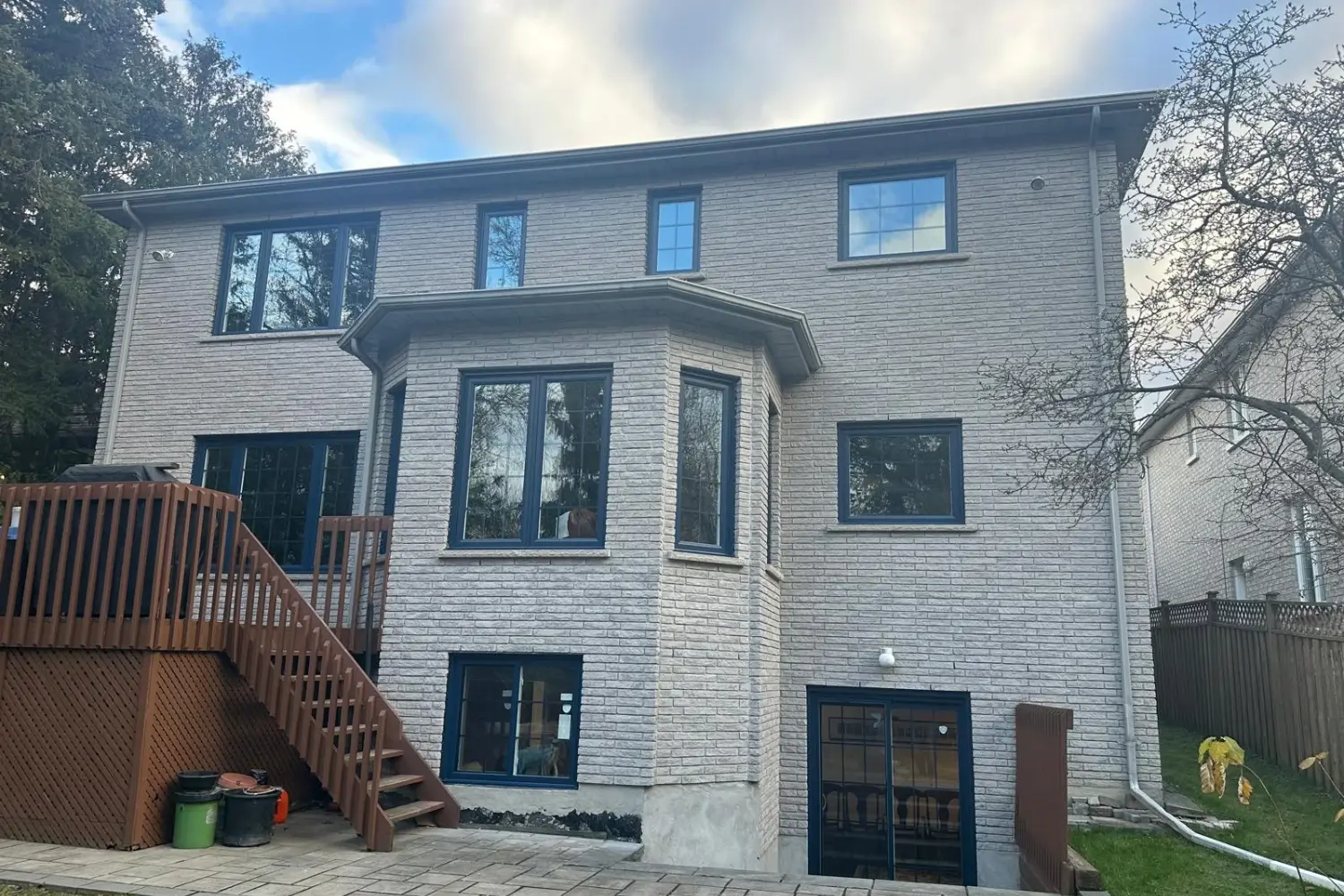
Single Vs Double Vs Triple-Pane Windows. Let’s Compare!
Today’s windows are no longer just a sheet of glass in a frame. They use multiple layers of glass with insulating gas and special spacers between them to improve comfort and efficiency.
Single Pane Windows
- One sheet of glass in the frame
- Common in older homes
- Very little insulation compared to modern windows
Double Pane Windows
- Two panes of glass sealed together
- One space between the panes filled with argon gas
- Warm-edge spacer between the glass panes
- Optional Low-E coating for added efficiency
- Became the Canadian standard for good reason
Triple-Pane Windows
- Three panes of glass sealed together
- Two argon gas-filled spaces between the panes
- Warm-edge spacer between each pane (same technology used in double pane)
- Optional multiple Low-E coated surfaces
- Thicker glass system designed for maximum insulation
Side-by-Side Comparison
| Feature | Single Pane | Double Pane | Triple-Pane |
|---|---|---|---|
| Number of Glass Layers | 1 | 2 | 3 |
| Argon Gas Spaces | None | 1 | 2 |
| Warm-Edge Spacers | No | Yes | Yes |
| Typical R-Value | ~R-1 | R-3 to R-5 | R-6 to R-9 |
| Typical U-Value | ~1.0 | 0.30 – 0.35 | 0.15 – 0.25 |
| Noise Reduction | Minimal | Moderate | Significant |
| Condensation Resistance | Poor | Good | Excellent |
| Energy Efficiency | Very Low | Good | Excellent |
| Best Use | Older homes only | Most homes | Cold climates, large or street-facing windows |
| Relative Cost | Lowest | Moderate | 10–15% more than double pane |
Can You Use Triple-Pane Glass in Doors Too?
Yes – and this is something many homeowners don’t realize.
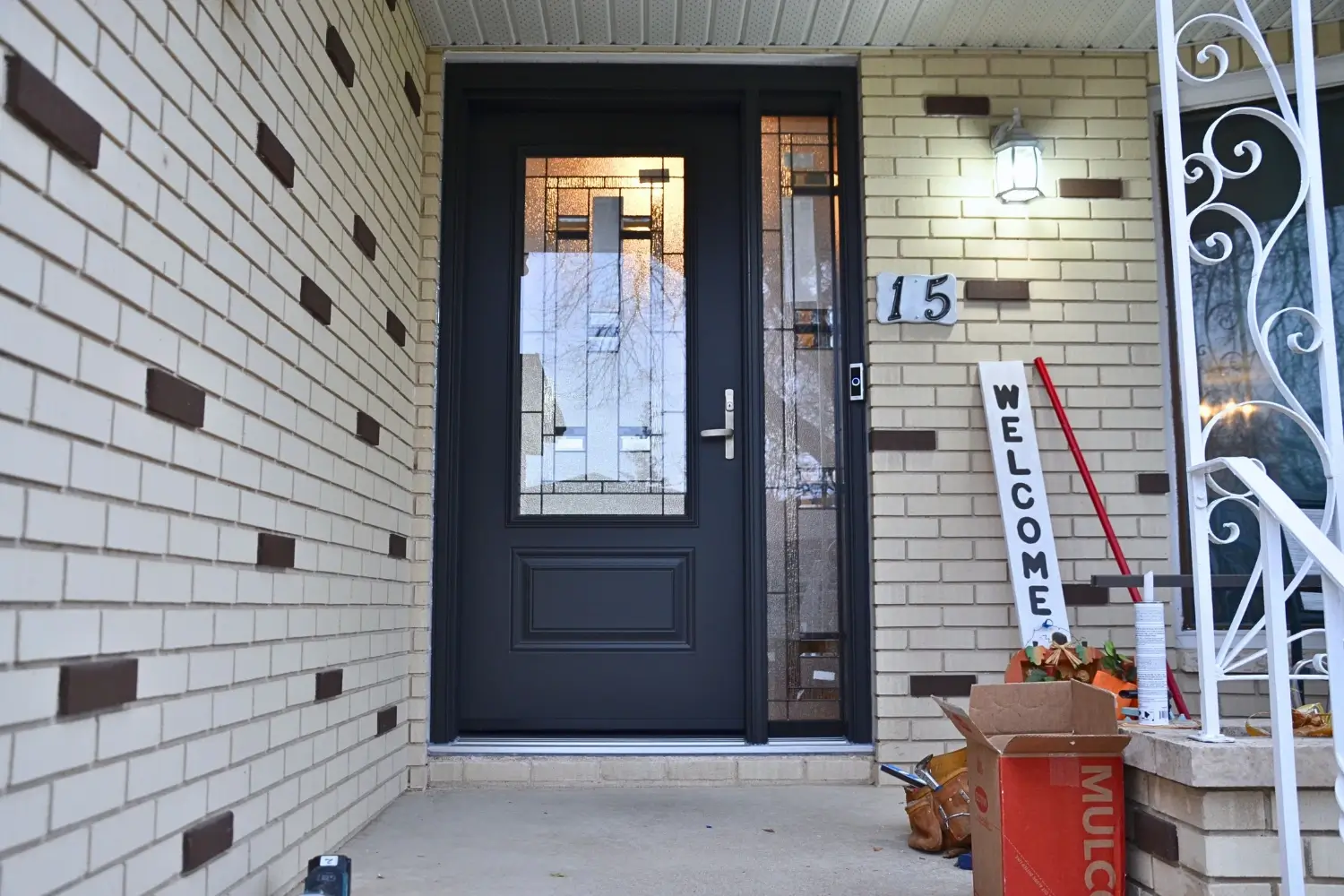
Doors with glass, especially patio doors and decorative entry door inserts, can lose just as much heat as windows. These are often the spots where people notice cold drafts in winter, heat build-up in summer, or condensation forming on the glass.
Triple-pane glass can be installed in:
- Entry door glass inserts and sidlites
- Patio doors and sliding glass doors
Upgrading these glass sections to tri-pane provides the same benefits you get from your windows:
- Better insulation against outdoor temperatures
- Reduced condensation and frost on the glass
- Noticeably less outside noise entering the room
- Protection from UV rays when Low-E coatings are added
Because sliding patio doors and French patio doors often contain large glass panels and entry doors are directly exposed to outdoor conditions, improving the glass here can significantly change how comfortable the surrounding room feels during extreme weather.
For many homeowners, upgrading the glass in doors is just as important as upgrading the windows themselves.
Upgrade to Triple-Pane Windows with NorthShield
NorthShield triple-pane windows and doors are built specifically for Canadian homes and climate conditions. We don’t just upgrade the glass, we ensure the entire window and door system supports the performance of tri-glass units.
Our triple-pane products feature:
- Argon gas-filled glass units for improved insulation
- Health Smart Windows with Super Spacer warm-edge technology
- Optional Low-E glass coatings for additional efficiency and UV protection
- Multi-chamber vinyl frames designed to support heavier glass units
- Professional installation focused on proper sealing and insulation
- A lifetime transferable warranty for long-term peace of mind
We proudly serve homeowners across Winnipeg, Toronto and the GTA, and Calgary, helping them create quieter, more comfortable, and more energy-efficient homes.
1645 St. James Street, Winnipeg, Manitoba, R3H 0X1
Monday – Friday 9am to 5pm
Saturday – Sunday – By appointment Only
364 Supertest Road, Unit 206, Toronto, Ontario, M3J 2M2
Monday – Friday 9am to 8pm
Saturday – 9am – 2pm
Sunday – By appointment Only
6041 4 St SE, Calgary,
T2H 2A5
Monday – Friday 9am to 5pm
Saturday – 9am – 2pm
Sunday – Closed