

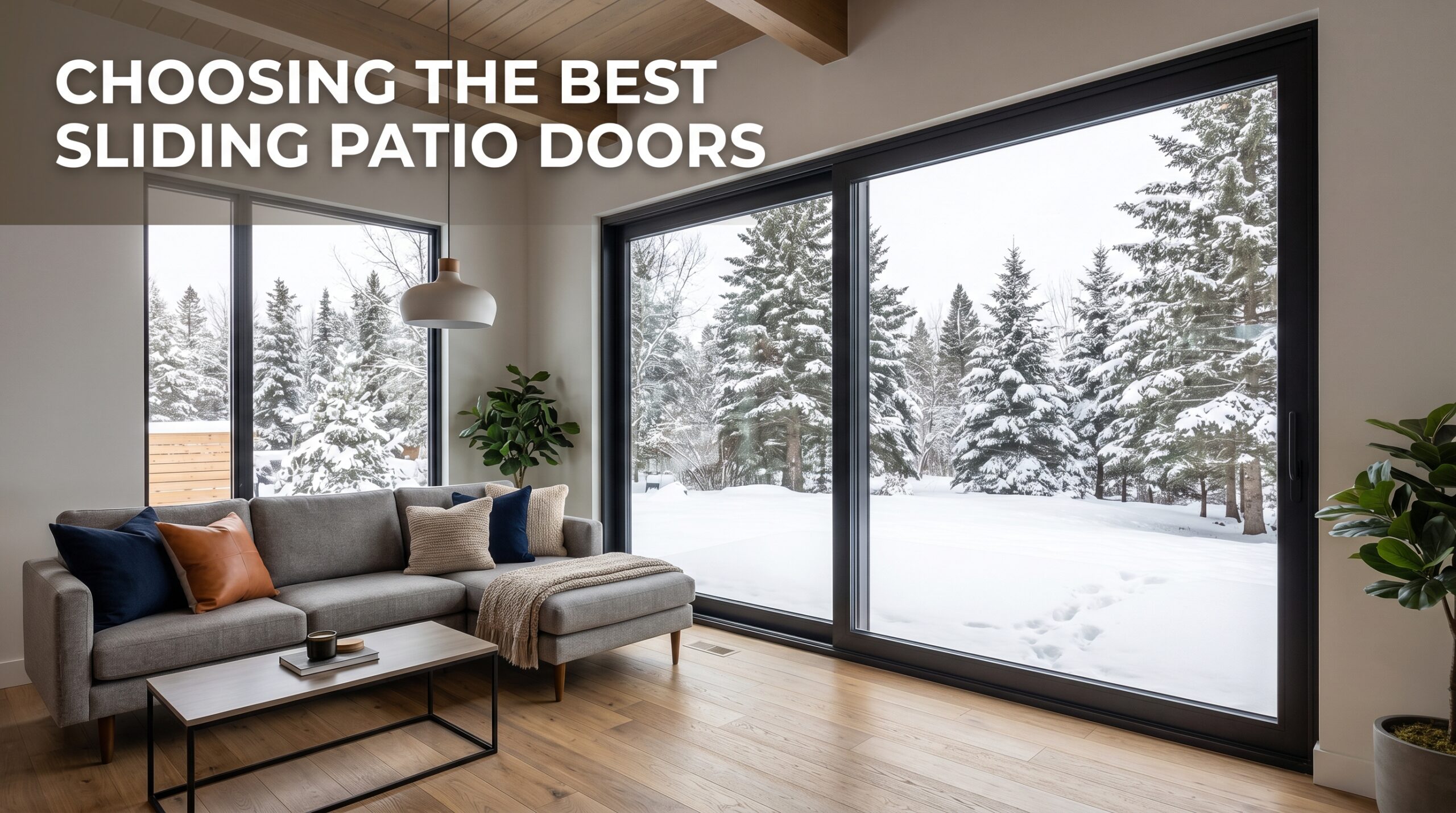
Sliding patio doors take on a specific challenge in Canada that most product reviews written for American audiences simply don’t address: they need to perform well at -30C, not just -10C. The combination of a large glass area, a track that must stay free of ice, and weatherstripping that contacts a moving panel means there are more failure points than a standard hinged door. Getting the specification right upfront saves a lot of frustration later. Here’s what actually matters when choosing a sliding patio door for a Canadian home.
Glass Specifications That Matter in Cold Climates
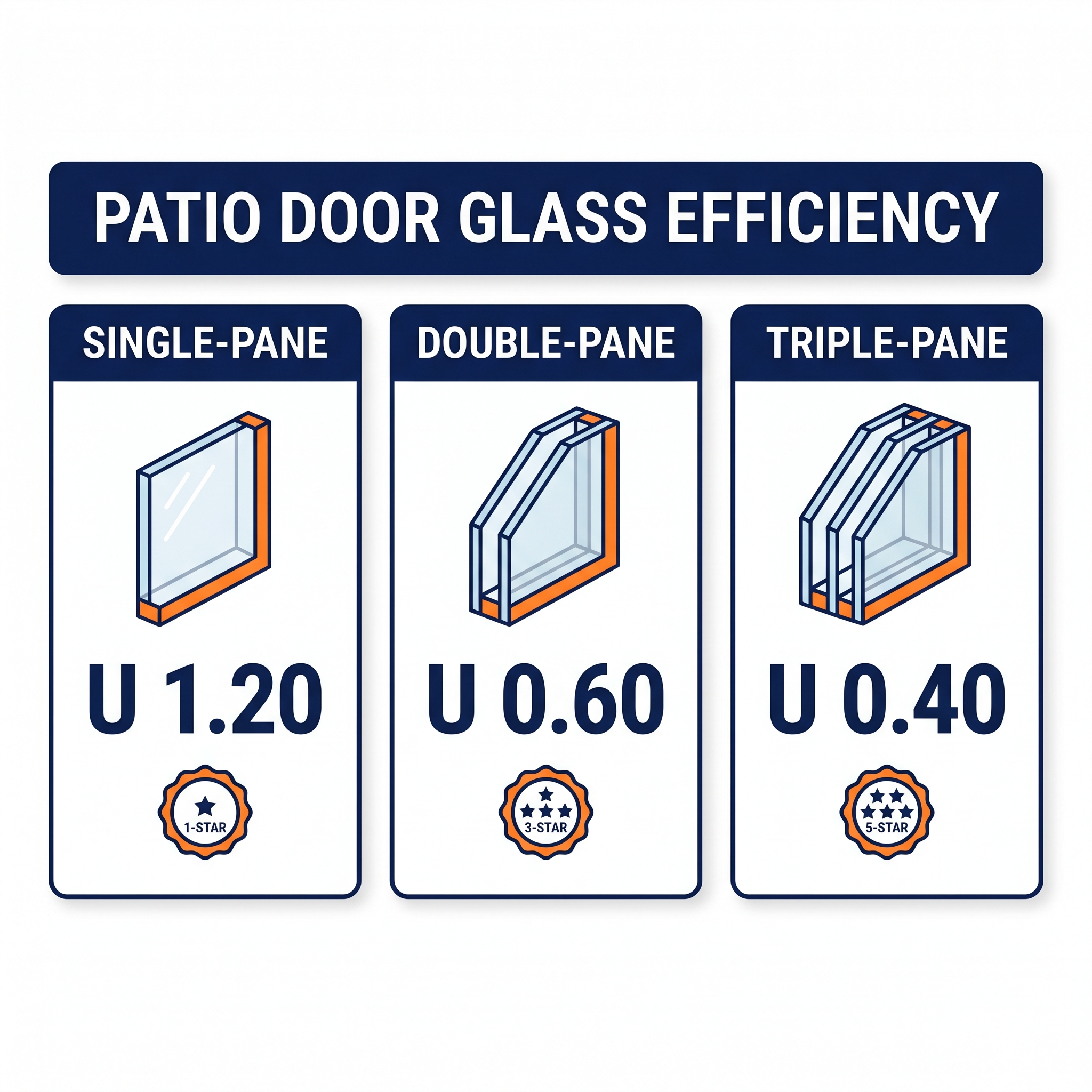
The glass unit is the largest surface area of any patio door, which makes it the most significant factor in energy performance. Single-pane glass – still sometimes found in older homes and lower-end products – is essentially not viable for heated Canadian living spaces. Double-pane is the minimum acceptable standard, but the gap between a good double-pane unit and a properly specified triple-pane unit is significant in climate zones 5 through 7.
The numbers to ask for: a U-factor below 1.0 W/m2K for the overall door unit, and an ENERGY STAR certification for the relevant climate zone. For homes in Calgary, Winnipeg, or Northern Ontario, look specifically for the Zone 3 or Zone 4 certification on the ENERGY STAR label – that’s the rating designed for the coldest Canadian climates.
Frame Materials Compared
Three frame materials dominate the Canadian market. Each has a legitimate use case and a clear weakness:
- Fibreglass: The best overall performer for cold climates. Fibreglass has very low thermal conductivity (similar to wood), handles repeated freeze-thaw cycles without warping or shrinking, and doesn’t absorb moisture. The main drawback is cost – fibreglass patio doors typically run 30 to 50 percent more than equivalent vinyl units. If budget allows, fibreglass is the best long-term investment for Canadian homes.
- Vinyl (PVC): The most popular choice in Canada for good reason. Quality vinyl frames perform well thermally, don’t rust or rot, and are available in a wide range of sizes and configurations. The concern with vinyl in extreme cold is that cheaper formulations can become brittle at very low temperatures. Look for multi-chamber vinyl profiles, which add rigidity and improve insulation value.
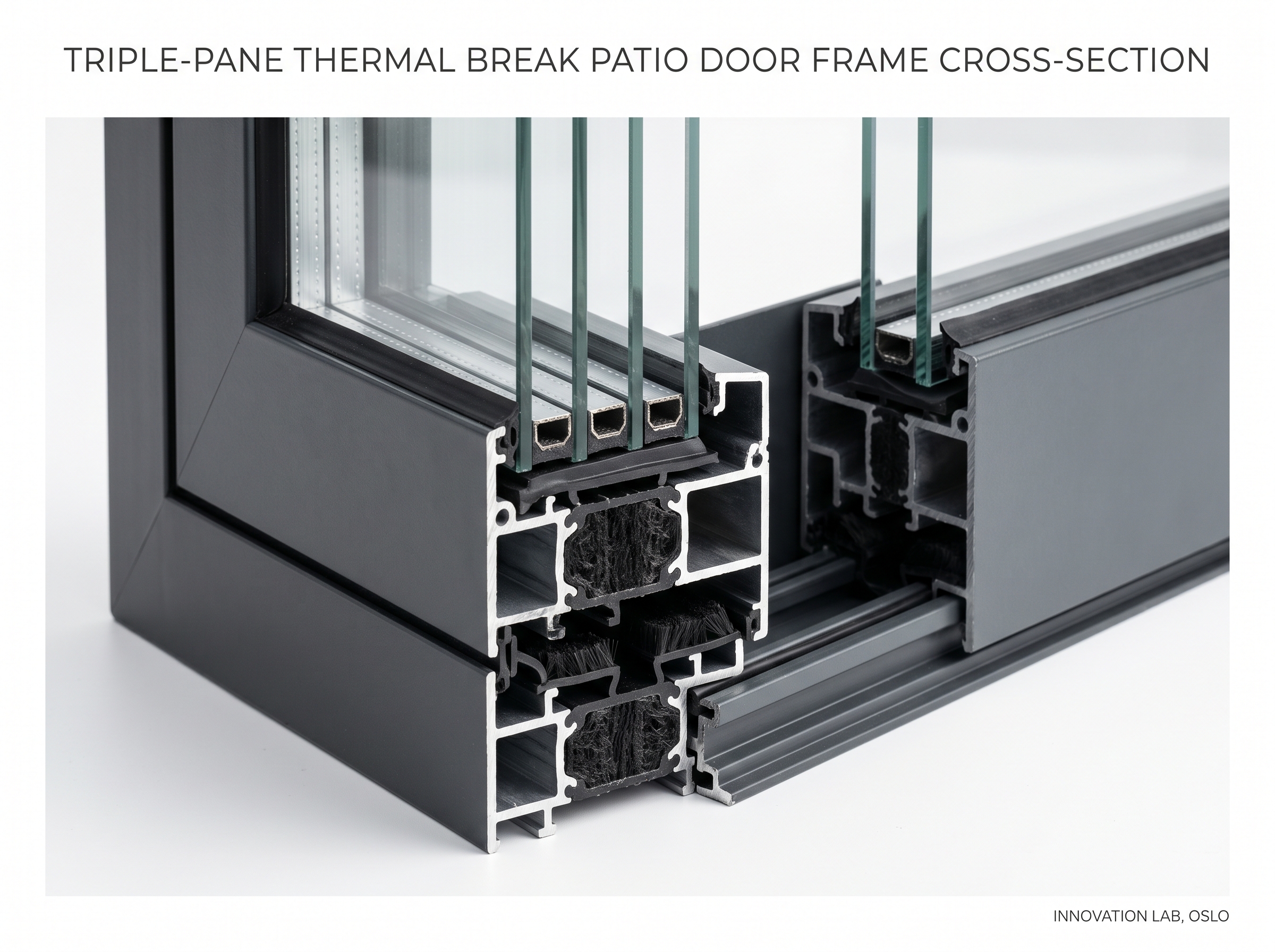
- Aluminum: Aluminum frames conduct heat and cold readily, which makes them a problematic choice for exterior doors in Canadian climates without a proper thermal break. A thermal break – typically a section of rigid polymer between the interior and exterior aluminum surfaces – reduces heat transfer dramatically. Aluminum with a quality thermal break can perform adequately, but it costs more than vinyl with comparable performance.
Weatherstripping: The Most Overlooked Factor
Weatherstripping on sliding patio doors wears faster than on any other door type because the panel drags across it every time the door opens or closes. Cheap pile weatherstripping – the fuzzy brush-like material around the frame perimeter – compresses and loses its seal within three to five years. When it fails, you get cold drafts along the entire door height, which is noticeable immediately in a Canadian winter.
Better weatherstripping uses dual-fin or pile-with-woven-center designs that maintain contact under the sliding pressure without compressing flat. The difference in long-term air infiltration performance between a well-weatherstripped door and a cheaply-sealed one is significant. Ask specifically about weatherstripping replacement availability and cost when getting quotes – if the manufacturer doesn’t stock replacement weatherstripping, that’s a red flag for long-term maintenance.
Track Design and Winter Maintenance
The bottom track of a sliding patio door is a collection point for debris, moisture, and in Canadian winters, ice. A poorly designed sill that traps water will eventually cause the track to freeze, making the door difficult to operate and potentially damaging the bottom weatherstripping.
Look for self-draining sill designs with weep holes that channel water out before it can freeze. Low-profile tracks reduce the trip hazard and are easier to sweep clean. In homes with pets or young children – where the door gets heavy use – track cleanliness directly affects how smoothly the door operates and how long the rollers last.
FAQs
Sources and references
- Natural Resources Canada – Energy-Efficient Doors and Windows
- ENERGY STAR Canada – ENERGY STAR Certified Windows, Doors and Skylights
- Canadian Home Builders Association – Canadian Home Builders Association Resources
- NFRC – National Fenestration Rating Council – Consumer Resources
Ready to upgrade your patio door?
Get a free in-home estimate from NorthShield Windows and Doors. We serve Calgary, Toronto, and Winnipeg with expert installation and guaranteed workmanship.
Get Your Free Quote