

It’s a frustratingly common problem. You turn the handle to let in some fresh air, but the window crank just spins and spins, doing nothing. Before you resign yourself to a sealed window, know that learning how to fix window crank issues is often a straightforward project you can handle yourself. However, if the problem points to a bigger issue with the window’s seal or frame, it might be time to consider our professional window installation services.
Understand Why Your Window Crank Is Spinning Freely
To fix the problem, it helps to know what’s going on inside that small metal box at the bottom of your window. Casement and awning windows use a mechanism called an operator. When you turn the handle, it rotates a series of gears that push or pull a long metal arm. This arm connects to the window sash (the part that moves) and guides it open or closed.
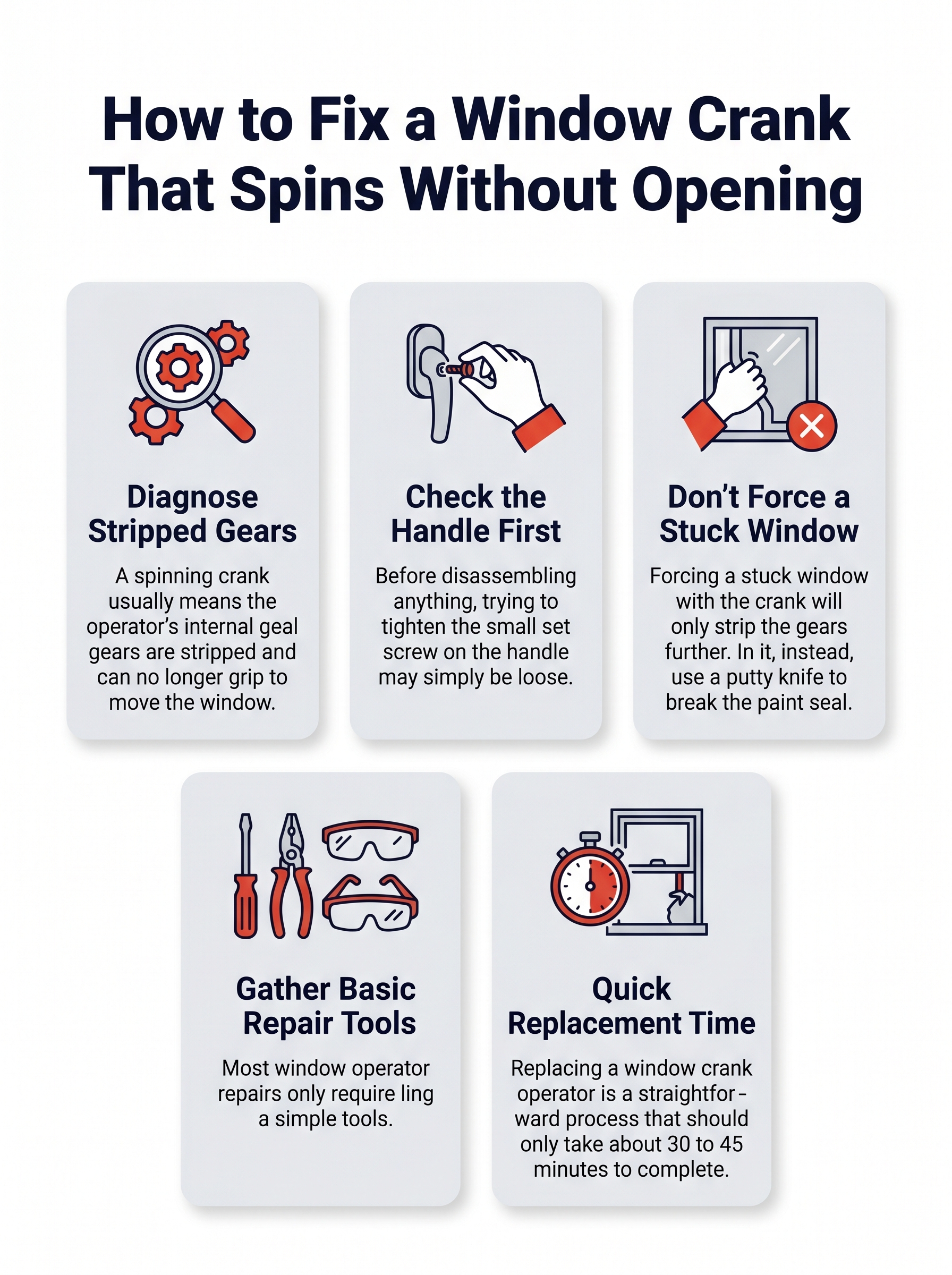
Think of it like a bicycle chain. When everything is aligned, pedalling moves the bike forward. But if the chain slips, you can pedal all you want, and nothing happens. In most cases of a spinning window crank, the gears inside the operator have been stripped. The teeth are worn down and can no longer grip each other to transfer the force from your hand to the window arm. Other, less common causes include a handle that’s no longer gripping the operator stem or an operator arm that has popped out of its track on the window sash.
Visual Inspection to Diagnose the Problem
Before you start taking things apart, a few simple checks can help you confirm the diagnosis.
- Start with the handle itself. Most have a small set screw on the side. If it’s loose, the handle can spin without actually turning the gear stem. Try tightening it with a screwdriver and see if that solves the issue.
- Next, look at where the operator arm connects to a small track on the bottom of the window sash. Is the arm’s guide wheel still sitting inside the track? Sometimes, forcing a window open or closed can pop it out.
- Finally, with the crank disengaged, gently try to push the window open with your hands. If it doesn’t budge, the problem might not be the crank at all. The window could be painted shut or the frame might have warped, putting immense strain on the operator gears and causing them to fail.
Pro Tip: If your window feels stuck, don’t force it with the crank. You’ll only strip the gears further. Instead, use a putty knife to gently score the paint seam between the sash and the frame to break the seal.
Gathering Your Tools for Window Operator Repair
The good news is that you don’t need a professional workshop to tackle this job. Most window operator replacements require only a few basic tools that you likely already have:
- Phillips head screwdriver
- Flathead screwdriver
- Pliers
- Safety glasses
A few other items can make the job easier, though they aren’t strictly necessary. A small, flexible putty knife can help you pry off the plastic operator cover without scratching the frame. Some cleaning rags and a can of silicone lubricant are also great to have on hand for cleaning the track and lubricating the new mechanism. Before you order a replacement part, take a clear photo of your existing operator. There are hundreds of variations, and a picture is the best way to ensure you get an exact match.
Step-by-step: How to Replace The Window Crank Mechanism
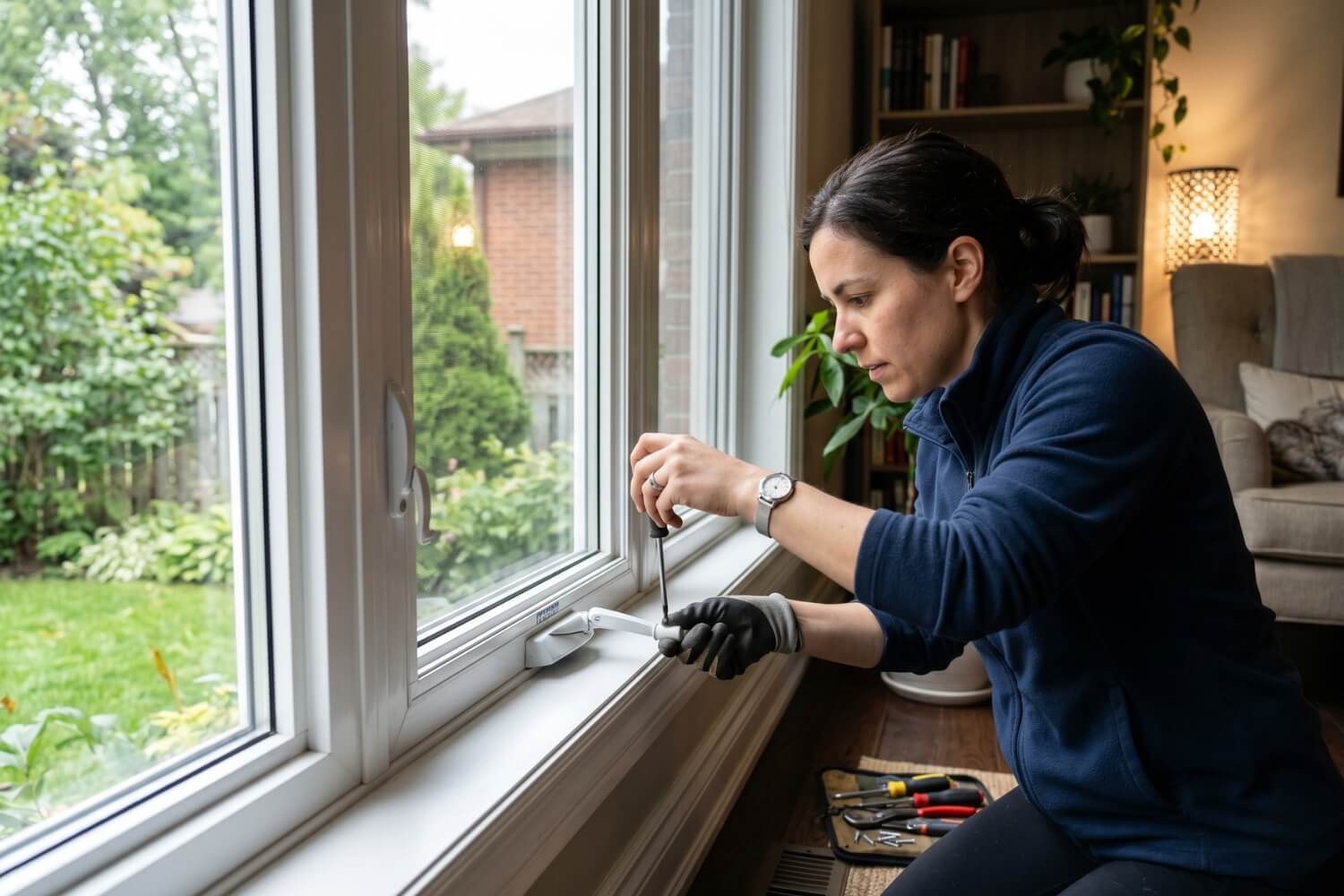
Once you have your replacement operator in hand, you’re ready to swap out the old one. The process is logical and should only take about 30 to 45 minutes. Follow these steps carefully.
- Remove the handle and cover. Start by loosening the set screw on the crank handle and pulling it off the operator stem. Next, remove the plastic cover that sits over the operator box. It might be held in by screws, or it may just snap into place. If it’s a snap-on cover, use your putty knife to gently pry it off.
- Access the operator arm. You’ll need to open the window sash to get to the arm’s connection point. If the old operator is completely broken, you may need to manually push the window open from the inside. Be careful while doing so.
- Disconnect the arm. Look at where the operator arm connects to the bracket on the window sash. There is usually a small clip that you can slide off with a flathead screwdriver. Once the clip is removed, the arm will detach from the sash.
- Unscrew the old operator. The operator assembly is secured to the window frame with several screws. Carefully remove all of them, making sure to support the operator so it doesn’t fall. Once the screws are out, you can lift the entire old mechanism out of the frame.
Testing Your Work
With the old, faulty part removed, you’re on the home stretch. Installing the new operator is essentially the reverse of the removal process. Pay close attention to the details to ensure a smooth, long-lasting repair.
- Position the new operator. Before you do anything else, hold the new operator next to the old one to confirm they are an identical match. Place the new mechanism into the opening in the window frame, aligning the screw holes.
- Secure the new assembly. Insert and tighten the screws to secure the new operator to the window frame. Make them snug, but avoid over-tightening, which could strip the wood or vinyl.
- Reconnect the arm. Guide the end of the new operator arm back into the sash bracket and re-secure it with the clip you removed earlier. You should hear a faint click as it locks into place.
- Test your work. Temporarily place the crank handle back on the stem and operate the window. It should open and close smoothly throughout its entire range of motion. If everything works perfectly, reinstall the plastic cover and permanently attach the handle.
Did You Know: Regularly cleaning and lubricating your window tracks and hinges with a silicone-based spray can significantly reduce the strain on the operator gears, extending the life of the mechanism.
When the Crank Isn’t the Only Problem
What if you replace the operator and the window is still difficult to open or close? This usually indicates that the spinning crank was a symptom of a larger issue. A warped window frame or sash can cause binding, which puts excessive force on the crank mechanism. Over time, this strain will strip the gears on even a brand new operator.
Similarly, check the window’s hinges for rust or debris. If the hinges aren’t moving freely, the operator has to work much harder to move the sash. These underlying problems often point to issues with the window’s structural integrity or insulation. A window that is warped or has failing hardware is likely also letting in drafts, which can affect your home’s energy efficiency.
Know When To Call a Pro
While replacing an operator is a manageable DIY task for many, there are times when it’s best to call in a professional. If you can’t find an exact match for your operator part, it’s wise to seek expert help. Forcing the wrong part to fit will only cause more damage.
More importantly, if you notice any signs of water damage, soft spots, or wood rot on the window frame or sill, stop immediately. These are clear indicators of a much bigger problem that a simple mechanical fix won’t solve. A failing window frame compromises your home’s structure, security, and energy efficiency. In these situations, a full replacement is often the most cost-effective long-term solution. If you suspect your window issues go beyond a simple broken crank, we can help you assess the situation and provide a clear path forward. You can book a free quote with our team to explore your options.
FAQs
Here are answers to a few common questions homeowners have about fixing their window cranks.
How much does a replacement window operator cost?
The part itself is quite affordable. A standard replacement operator for a casement or awning window typically costs between $25 and $75, depending on the brand and model of your window. You can find them at specialty hardware stores or online.
Can I just replace the stripped gears instead of the whole mechanism?
Unfortunately, this is not usually possible. The gears are housed inside a sealed metal casing and are not designed to be individually replaced. The entire operator assembly is sold as a single unit, which simplifies the repair process.
How can I prevent my window crank from breaking again?
The best prevention is regular, gentle operation. Avoid forcing the window if it feels stuck. Periodically clean the window tracks and lubricate the hinges and operator arm with a silicone spray. This reduces friction and strain on the gears, helping them last much longer.
What’s the difference between a casement and an awning window operator?
While they function similarly, their arms and mounting plates are different. A casement window opens sideways like a door and typically has a single, straight arm. An awning window is hinged at the top and opens outward from the bottom, often using a scissor-like arm mechanism. It’s important to buy the correct type of operator for your specific window style.
Free How To: Fixing a Spinning Window Crank