

If you hear a thin whistle or a low howl near a window every time the wind picks up, the short version is this: air is squeezing through a gap it should not be able to reach. Wind noise from windows almost always comes down to worn weatherstripping, a sash that no longer seals tight, or a small failure in the frame or caulking. The good news is that most of it is fixable in an afternoon, and the cases that are not usually point to a window that is near the end of its life anyway. If yours are that far gone, upgrading to properly sealed energy-efficient windows ends the noise for good.
Ontario homes take a beating from wind, especially through winter. Below we walk through what makes a window whistle, how to trace the exact spot the air is getting in, and the fixes that hold up versus the ones that fall apart by spring.
What Causes Wind Noise From Windows
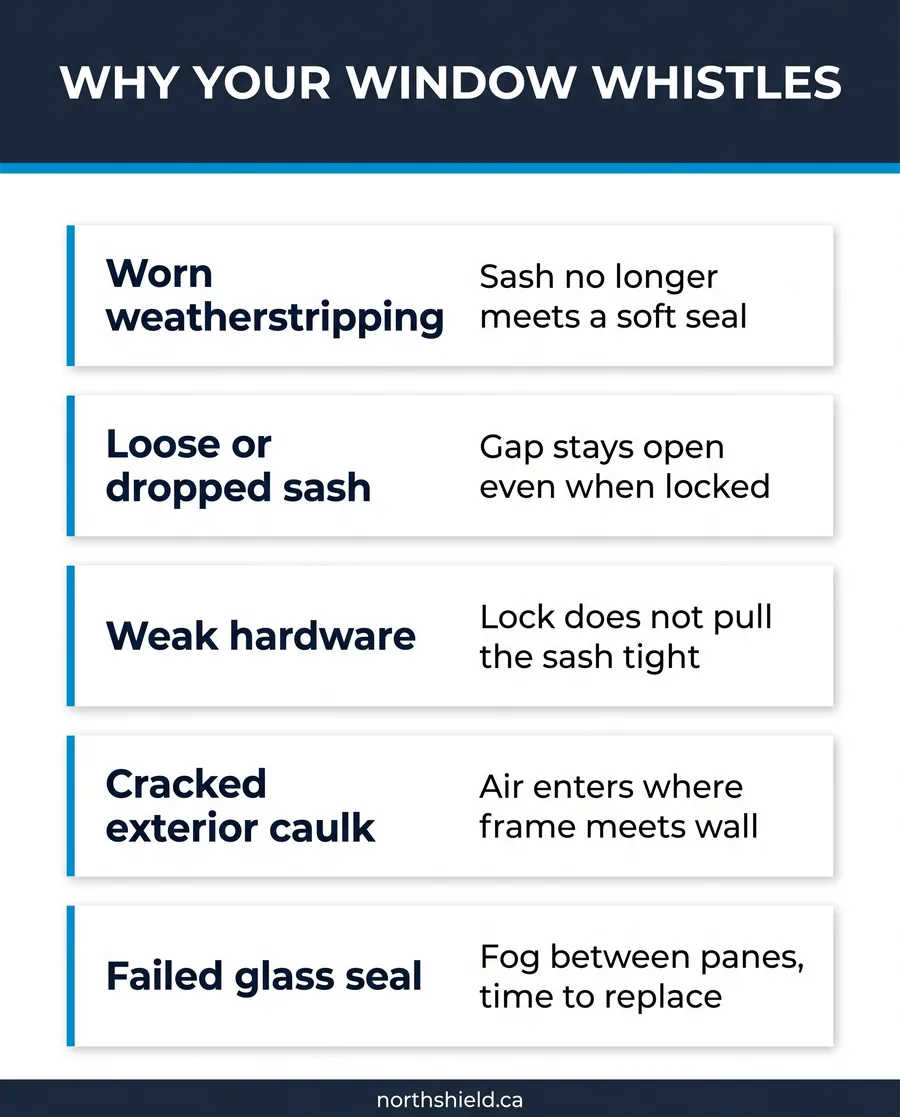
A whistling window is basically a tiny wind instrument. When air is forced through a narrow opening at speed, it vibrates and you hear a tone. The pitch tells you something: a high, sharp whistle usually means a very small gap, while a deeper moan points to a larger opening or a loose sash rattling in its track. Either way, the sound is a symptom, and the cause is almost always one of a short list of culprits.
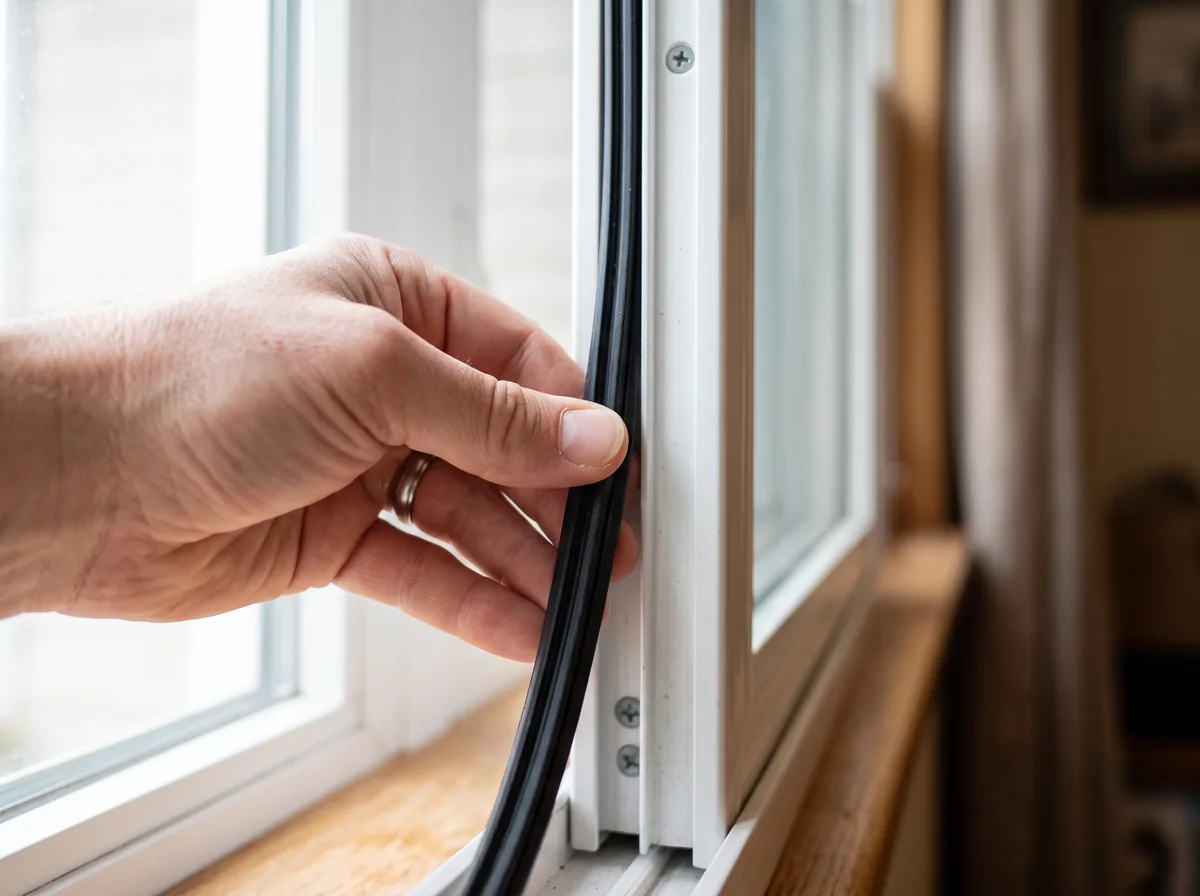
- Weatherstripping that has hardened, torn, flattened, or fallen out of its channel, so the sash no longer meets a soft seal.
- A sash that has dropped, warped, or lost tension, leaving it slightly open even when the lock is thrown.
- Locks and hardware that no longer pull the sash tight against the frame, a common issue on older casement and awning windows.
- Gaps where the window frame meets the wall, often behind failed exterior caulking or shrunken interior trim.
- A failed or missing weep-hole cover or a warped screen frame that catches the wind and hums.
Quick take: A whistle is air moving through a gap under pressure. Nine times out of ten the fix is fresh weatherstripping or re-tightening a sash that no longer seals. If the frame itself has shifted or the glass seal has failed, that is when repair stops paying off and replacement makes more sense.
How To Find Where Air is Coming In
The checks and fixes below are meant for simple, ground-floor windows you can safely reach. Skip anything that involves ladders, upper storeys, power tools you are not comfortable with, or removing a sash you cannot re-seat. NorthShield Windows & Doors is not responsible for injury or damage from work attempted based on this article. When in doubt, book a professional assessment.
Before you buy a single roll of weatherstripping, spend ten minutes finding the actual leak. Guessing wastes money and often leaves the real gap untouched. Work through these on a windy day, or use a helper with a fan:
- Do the hand test. On a gusty day, slowly move a damp hand around the entire perimeter of the sash and frame. A cold, moving stream of air is easy to feel on wet skin.
- Try the candle or incense trick. Hold a lit incense stick near the edges and watch the smoke. Where it bends sharply sideways, you have found your gap. Keep the flame well away from curtains.
- Run a paper test on the seal. Close the window on a strip of paper. If it slides out with almost no resistance, the sash is not compressing the weatherstrip.
- Look and listen at the lock points. Throw and release the lock while someone listens outside. If the whistle changes, the hardware is not pulling the sash tight.
- Inspect the caulking. From outside, check the joint where the frame meets the siding or brick for cracks, gaps, or caulk that has pulled away.
Did you know
Wind does not have to be strong to make a window sing. A gap only a couple of millimetres wide can whistle loudly once outdoor air pressure differs from indoor pressure, which is exactly what happens when your furnace runs and a gust hits the windward side of the house at the same time.
Fixes That Work
Once you know where the air comes in, the repair usually matches the cause. Here is what works, roughly in the order most homeowners should try:
- Replace the weatherstripping. Peel out the old strip, clean the channel, and fit new foam, V-seal, or pile weatherstrip rated for the gap size. This solves the majority of whistles.
- Adjust or tighten the hardware. On casement and awning windows, worn operators and loose keepers stop the sash from closing tight. Adjusting or replacing the keeper often restores the seal.
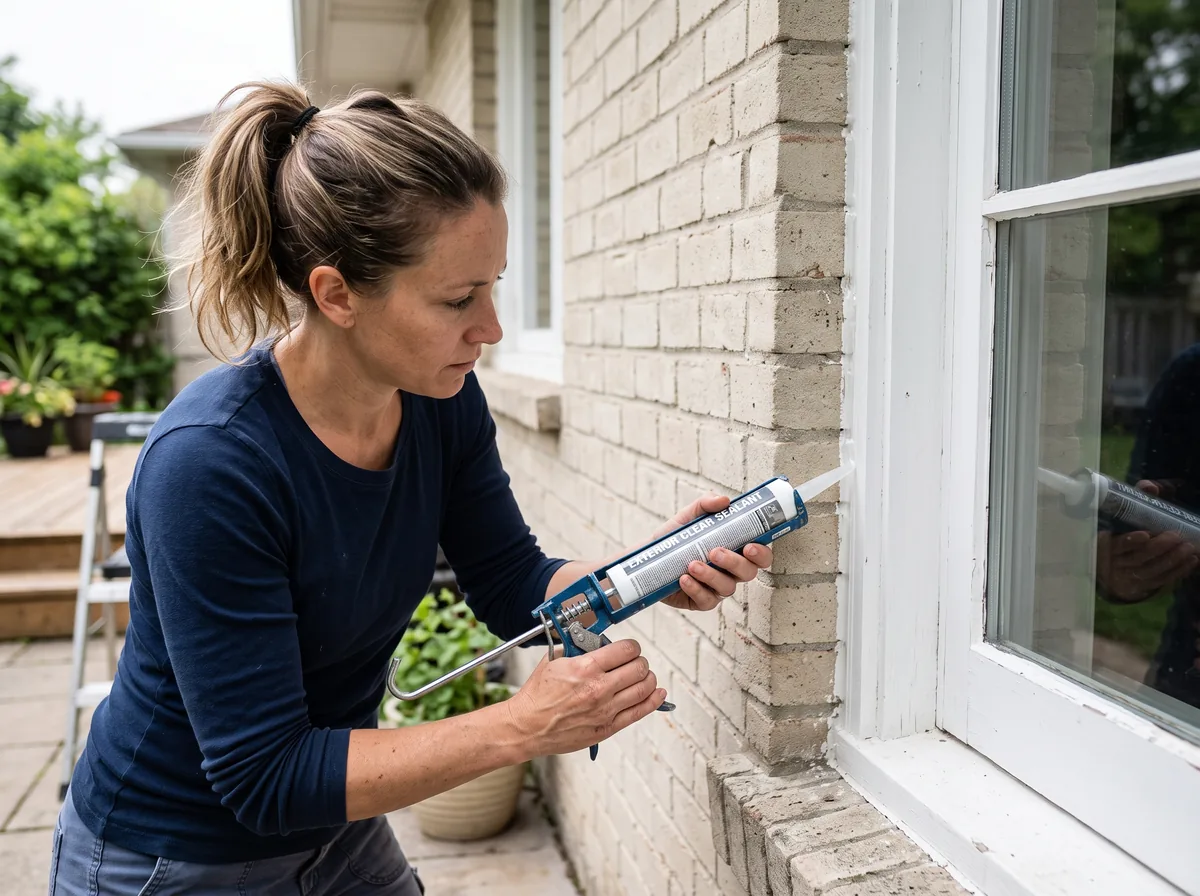
- Re-caulk the exterior joint. Remove cracked caulk, and lay a fresh bead of quality exterior sealant where the frame meets the wall. This kills leaks that no interior fix will touch.
- Add a temporary interior seal for winter. Rope caulk or a shrink-film window kit is a cheap stopgap while you wait for a permanent repair or a replacement quote.
- Re-seat or shim a dropped sash. If a sash has sagged, a professional can often re-square it so it meets the seal evenly again.
For a manufacturer-level look at how a properly sealed unit is supposed to perform, the ENERGY STAR guidance on windows, doors, and skylights is a solid, independent reference for what tight, efficient glazing should deliver.
Save your money
Start with the cheapest fix that targets the confirmed gap. A five dollar roll of the correct weatherstrip beats a whole-house shrink-film job that hides the noise without solving it. Only move up to hardware or professional re-seating once the simple seal swap has clearly not worked.
How Long Each Fix Lasts
Not every fix is created equal. Some buy you a season, others buy you a decade. Here is a realistic comparison so you can decide whether to patch or invest. Costs are broad Ontario planning ranges, not quotes.
| Fix | Best for | Typical cost | How long it holds |
|---|---|---|---|
| New weatherstripping | Worn or missing sash seals | $10 to $40 per window | 3 to 8 years |
| Hardware adjustment | Sash that will not pull tight | $0 to $150 | Several years |
| Exterior re-caulking | Frame-to-wall gaps | $15 to $200 | 5 to 10 years |
| Shrink-film winter kit | Emergency winter draft | $10 to $30 | One season |
| Full window replacement | Failed frames or seals | $700 to $1,500+ per window | 20+ years |
Pricing note: these are typical Ontario ranges as of 2026 for planning only, and they exclude your specific site conditions. Actual costs vary by window type, access, and installer. Always get a written quote before committing to repair or replacement work.
When Noise Means it is Time to Replace
Weatherstripping and caulk buy time, but they cannot rescue a window whose bones have gone. A few signs tell you the whistle is really a replacement conversation:
- The frame is visibly warped, rotted, or no longer square, so no new seal will ever compress evenly.
- You see fog or condensation between the panes, which means the sealed glass unit has failed.
- You have already replaced the weatherstripping and re-caulked, and the noise came right back within a season.
- The window is a single-pane or early double-pane unit that is drafty, noisy, and expensive to heat around.
Modern replacement windows solve the whistle at the source with tight multi-point locks, compression seals, and insulated frames. If yours are original to an older Ontario home, a professionally handled window installation usually erases the noise and the draft in one move, and you feel the difference the next windy night.
Pro tip
When you get a replacement quote, ask specifically about the locking system and the number of seal contact points. A window with a multi-point lock pulls the sash evenly against the frame all the way around, which is exactly what stops the pressure-driven whistle that single-latch windows never fully beat.
"Chased a whistle in our front bedroom for two winters with tape and film. Turned out the sash had dropped a few millimetres. New windows went in and the room went dead quiet on the first stormy night."
Ontario homeowner, 2024
Download the free quick guide
A one-page checklist to trace the leak and pick the fix that actually stops the whistle.
Frequently Asked Questions
Tired of a window that sings every time the wind picks up? NorthShield Windows & Doors helps homeowners across Toronto, Vaughan, and Oakville trade drafty, noisy units for tight, factory-direct windows that stay quiet. Book a free in-home estimate and we will tell you straight whether a seal fix or a full replacement is the smarter call for your home.