

A bowed door frame is a jamb that has curved or twisted out of straight, so the door no longer sits square inside it. You notice it when the door sticks, the gap around it goes uneven, drafts sneak in, or the latch stops lining up. The honest answer to the big question is: sometimes yes, a minor bow can be coaxed back and re-shimmed, but a frame that has warped from moisture, rot, or a shifting house usually needs replacing rather than bending back. If yours is that far gone, a properly installed replacement exterior door and frame solves it in one shot.
Ontario doors live a hard life. They swing between humid summers and dry, freezing winters, and that constant expansion and contraction is tough on a frame. Below we explain what a bow really is, what causes it, when it can be straightened, and when trying to save it just wastes your weekend.
What a bowed door frame actually is
A door frame is made up of two side jambs and a head jamb, and the whole assembly is supposed to be straight, plumb, and square. A bowed door frame is one where a jamb has curved along its length, usually the strike-side jamb pushing in or out at the middle. Because the door is a rigid rectangle, even a small bow in the frame shows up as a wedge of changing gap: tight at the top, wide in the middle, or the reverse.
It helps to separate a bow from other parts of a door. A sagging door usually points to worn hinges, while a warped door slab has bent or twisted. If the frame itself is bowed, the entire doorway may be out of alignment. They can look similar from across the room, but the fix for each is different, so pinning down which one you have is the first job.
Quick take
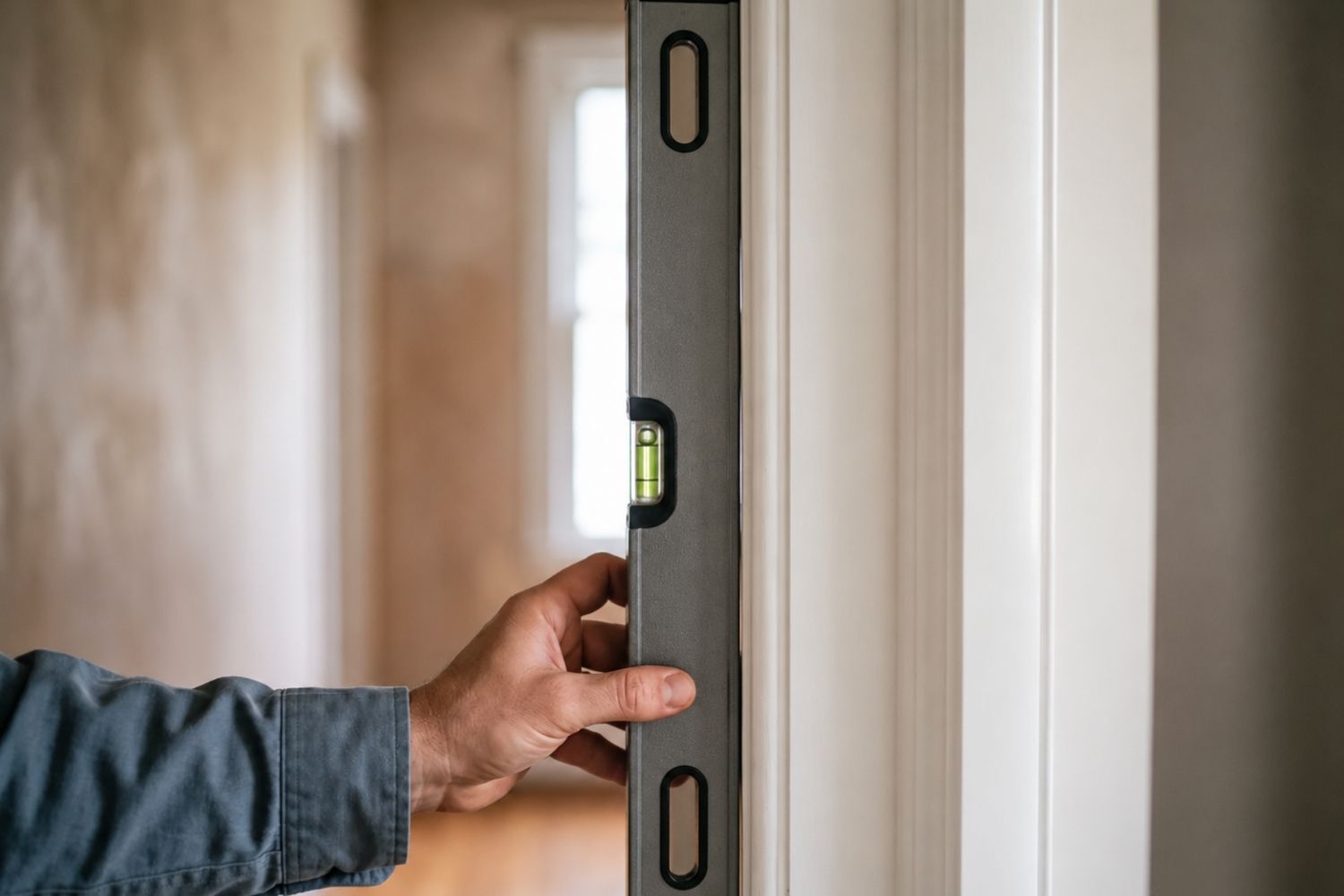
A bow is the frame curving out of straight, not the door itself warping or the hinges sagging. Confirm it is the frame by holding a straightedge against the jamb. If light shows through the middle, the jamb is bowed and that is what you need to address.
What causes a door frame to bow
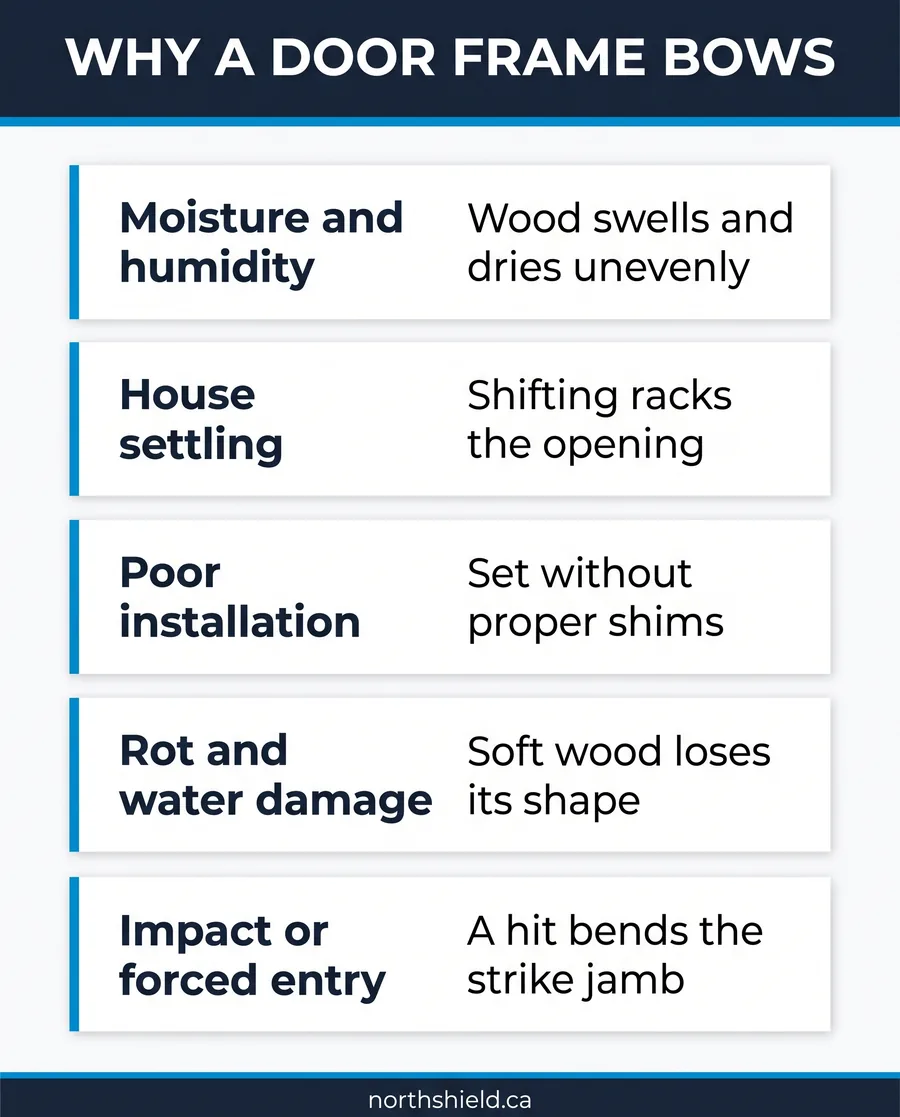
Frames bow for a handful of reasons, and knowing which one you are dealing with tells you whether a fix will hold. The usual causes:
- Moisture and humidity. Wood jambs absorb water, swell, and dry unevenly, and repeated cycles leave a permanent curve. This is the most common cause on exterior doors.
- House settling and foundation movement. As a home shifts over the years, the rough opening around the frame can rack, squeezing or twisting the jamb.
- Poor original installation. A frame set without proper shims, or fastened too tight in one spot, is bowed from day one and only gets worse.
- Water damage and rot. A leak at the sill or threshold softens the wood, and a soft jamb loses its shape under the weight and pressure around it.
- Thermal and seasonal movement. The big Ontario swing between summer humidity and winter dryness expands and contracts the frame, slowly working it out of line.
- Impact or forced entry. A hard hit or a shouldered door can bend a jamb at the strike, leaving a localized bow around the latch.
Red flag: soft or dark wood
If the bowed section of the jamb feels spongy, looks stained, or crumbles when you press it, you are looking at rot, not just a bow. Rotten wood cannot be straightened and it will keep spreading. That section of frame needs to be cut out and replaced, and the water source that caused it has to be fixed first.
Can a bowed door frame be straightened?
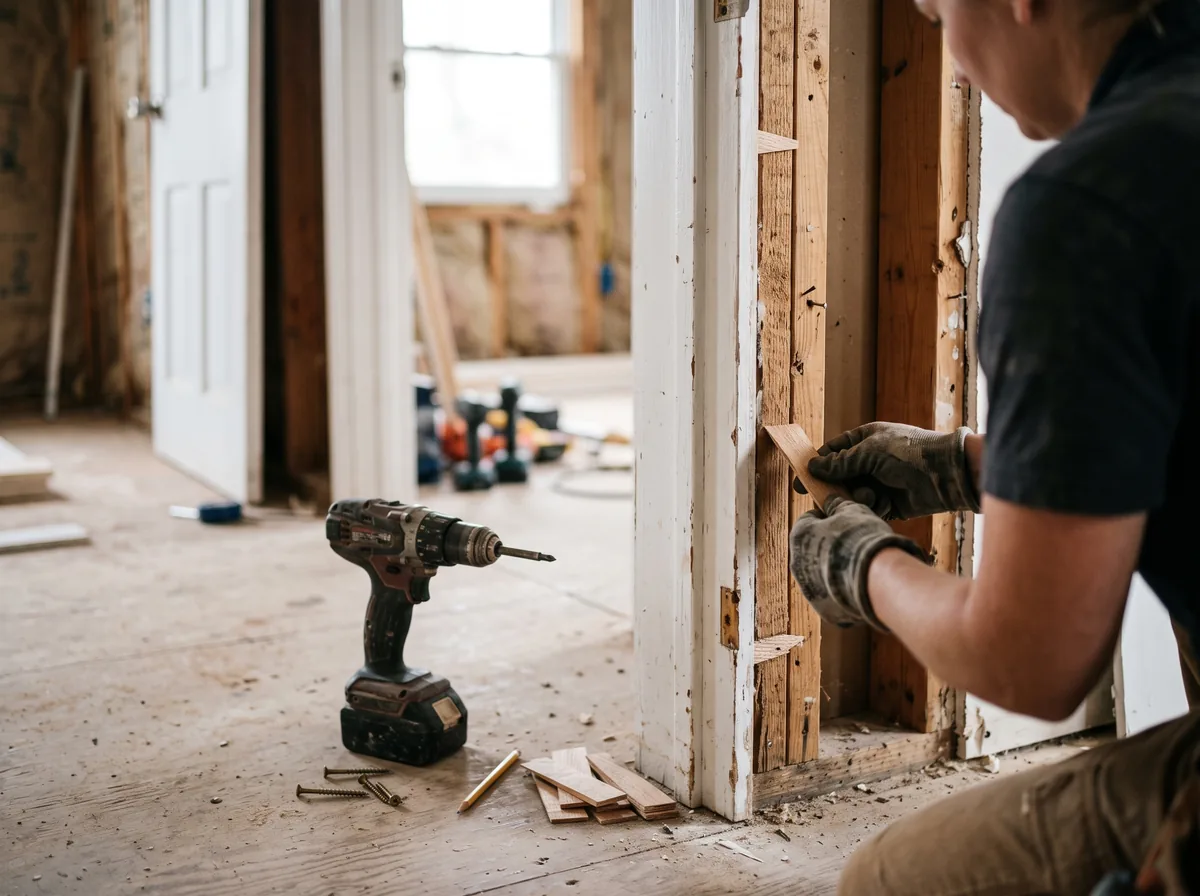
Yes, if the bow is minor and the wood is still sound. A small bow is often the fastener behind the jamb pulling it in or letting it push out, and re-shimming can bring it back. Here is the approach a professional uses, and that a confident do-it-yourselfer can attempt on an interior door:
The steps below are general guidance for a minor bow in sound wood on an accessible door. Exterior doors, load-bearing walls, rotted frames, and anything involving the structure of your home are jobs for a qualified installer or carpenter. Working on a door frame can affect weather-sealing and security, and NorthShield Windows & Doors is not responsible for injury or damage from work attempted based on this article.
- Confirm the bow. Hold a straightedge along the jamb and mark where the gap is. This tells you where to push or pull the frame.
- Find the fasteners. Remove the trim on the bowed side to expose the shims and screws holding the jamb to the rough framing.
- Adjust the shims. Where the jamb bows inward, back off the screw and add or thin a shim to let it move out. Where it bows outward, draw it in with a longer screw into the framing.
- Draw it straight gradually. Tighten in small steps, checking with the straightedge, so you ease the jamb back rather than cracking it.
- Re-hang and test. Close the door, check the gap is even all around, confirm the latch lines up, and only then reinstall the trim.
If you would rather see how the pros keep a factory door square in the first place, a manufacturer reference such as the JELD-WEN care and maintenance guidance is a useful, non-salesy look at how frames are meant to be handled.
Pro tip
Fix the cause before you fix the bow. If moisture bowed the frame, straightening it without addressing the leak or the humidity just resets the clock. Seal the threshold, sort out the drainage, or manage the indoor humidity first, or the jamb will bow right back the next wet season.
When straightening will not cut it
Some bows are not worth chasing. Straightening buys you nothing when the underlying frame is compromised, and pushing hard on a bad jamb can crack it or wreck the seal. Lean toward replacement when:
- The wood is rotted, soft, or water-stained anywhere along the bow.
- The frame is badly out of square, not just gently curved, which usually means bigger structural movement.
- You have straightened it before and it bowed back within a year.
- The door is old, drafty, and hard to seal even when the gap looks close.
- The bow followed a break-in or impact that damaged the jamb and strike.
A new pre-hung door comes as a matched slab and frame, set plumb and square with proper shimming and modern weather-sealing, so the whole opening starts true again. When the old frame is beyond a shim adjustment, a clean door installation is faster, tighter, and cheaper over time than fighting a jamb that keeps moving.
Straighten or replace: a quick guide
Here is how the common situations tend to break down, so you can size up your own door before calling anyone. Costs are broad Ontario planning ranges, not quotes.
| Situation | Can it be straightened? | Typical fix | Typical cost |
|---|---|---|---|
| Minor bow, sound dry wood | Usually yes | Re-shim and re-fasten | $0 to $150 |
| Loose or missing shims | Yes | Add shims, adjust screws | Under $50 |
| Rot or water damage | No | Replace jamb or full door | $400 to $2,500+ |
| Frame badly out of square | Rarely | Reframe or replace | $800 to $3,000+ |
| Old, drafty, repeat bowing | Not worth it | Replace pre-hung door | $1,000 to $3,000+ |
Pricing note: these are typical Ontario ranges as of 2026 for planning only and exclude your specific conditions. Actual cost depends on the door type, extent of damage, and access. Always get a written quote before starting repair or replacement work.
Save your money
A minor bow in sound wood is often a free fix: back off a screw, add a shim, and it is straight again. Do not let a repair company talk you into a full replacement for a jamb that just needs re-shimming. Save the replacement budget for frames that are rotted, racked, or repeatedly bowing.
“Our front door frame bowed so bad the deadbolt missed the strike. Turned out water had been wicking up the jamb for years. No amount of shimming held. New pre-hung door and it has been square ever since.”
Ontario homeowner, 2024
Download the free quick guide
A one-page checklist to tell a bow from a warp and decide whether to re-shim or replace.
Frequently Asked Questions
Fighting a door frame that will not stay square? NorthShield Windows & Doors helps homeowners across Hamilton, Barrie, and Richmond Hill figure out whether a bowed frame can be saved or is due for replacement. Book a free in-home estimate and we will give you a straight answer before you commit to a repair.