

A hard cold snap shows you fast which doors were built for it. If you're wondering what makes an exterior door hold up in extreme cold, most of the answer sits in parts you can't see from the curb: the core, the seals, the threshold and how the door went in. This guide covers each one, so you know what to ask before you look at entry doors made by NorthShield.
The short version: a door copes with deep cold when it resists heat loss through its core, seals tightly all the way around, and was installed square in its frame. A good-looking door that misses on one of those will still frost up, whistle or leave the hallway cold.
What an exterior door faces in extreme cold
An exterior door has one of the toughest jobs in the house. Its outside face sits in deep cold while the inside face is warm, and the slab, the frame and the seals all shrink and shift a little with the temperature. Natural Resources Canada notes that poor installation, hard use, shifting foundations and seasonal warping can push hinged doors out of square with their frames, and says a door that doesn't fit snugly needs its hardware, gaskets or weatherstripping looked at.
So "holding up" really means three things. The door keeps heat in, it keeps cold air out, and it keeps closing and latching smoothly when everything has contracted. The climate in Winnipeg, Calgary and the GTA is different, but the same three questions apply to all of them.
The core matters more than the shell
From the outside, steel and fiberglass doors can look alike. The difference that matters in the cold is underneath. Natural Resources Canada explains that doors can have an insulated core covered with a metal, fiberglass or wood shell, and that insulated core doors are more thermally resistant than solid material doors and doors that include glazing.
That's why the shell material alone doesn't settle it. NorthShield makes both steel entry door styles and fiberglass entry door styles, and in either case the core and the build are what to ask about. If you want the material comparison itself, we covered it in our post on choosing between fiberglass and steel doors.
Ask for the door's rating, too. NRCan describes the U-factor as the rate of heat loss, where a lower number means more resistance to heat loss, and says the same technical specifications apply to doors as to windows. A supplier can show you the figures for the exact door you're considering, which beats comparing brochures.
Quick take
Two doors that look identical can be built differently inside. Ask to see the spec sheet for the actual door, not a photo of it.
Where cold gets in: edges and threshold
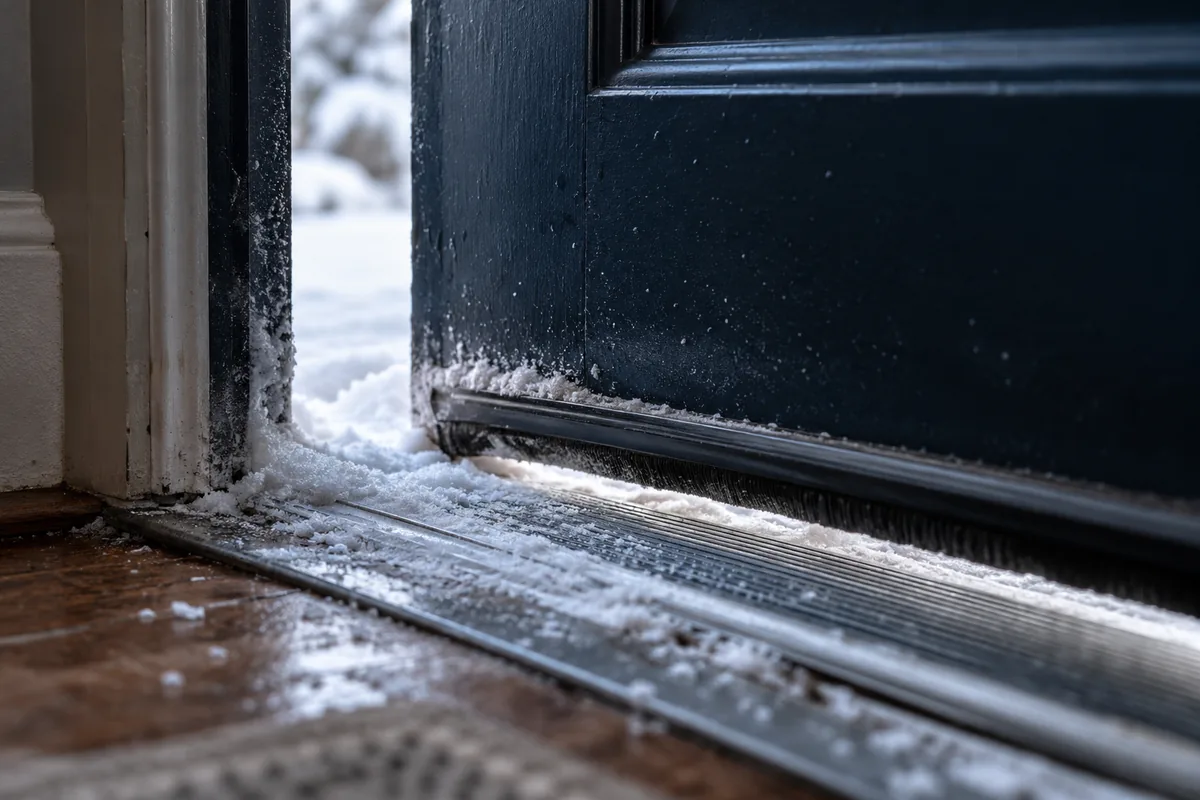
Even a well-insulated exterior door in extreme cold can lose its advantage at the edges. NRCan describes V-shaped vinyl weatherstripping as making a good seal even when the door warps from season to season, and says the bottom of the door is often a source of major drafts. It also calls that area difficult to seal well, which is exactly why it's worth asking how a given door handles it.
Cold also makes seals stiffer and the door can move a little, so a threshold or sweep that works in October can show gaps in January. NRCan notes that some weatherstripping types need regular adjustment as the door's warp changes. A seal that's easy to adjust or replace is a real plus.
Pro tip
On a cold, windy day, hold the back of your hand an inch from the edges, the bottom and the lock area. If you can feel moving air, or you see frost lines in the same spots each morning, you've found where to look first.
If that sounds like your front entrance, our post on fixing a drafty front door walks through the first checks.
What to look at on the door in front of you
Use this as a short list when you compare doors or talk to a supplier.
| Part of the door | What deep cold does to it | What to ask or look for |
|---|---|---|
| Core and shell | Heat moves through the weakest part of the slab first. | What the core is made of and what rating the door carries. |
| Weatherstripping | Seals stiffen and the door shifts slightly. | The seal type, and whether it's easy to adjust or replace. |
| Threshold and sweep | Often where drafts and frost show up first. | How the bottom of the door seals and whether it adjusts. |
| Glass | Glazing generally loses heat faster than an insulated slab. | The glazing options and the rating for that glass. |
| Lock and hardware | Metal parts feel cold and can gather frost. | How the lockset sits in the door and how tight it closes. |
| Installation | Gaps around the frame let cold air in. | How the frame is set, insulated and sealed. |
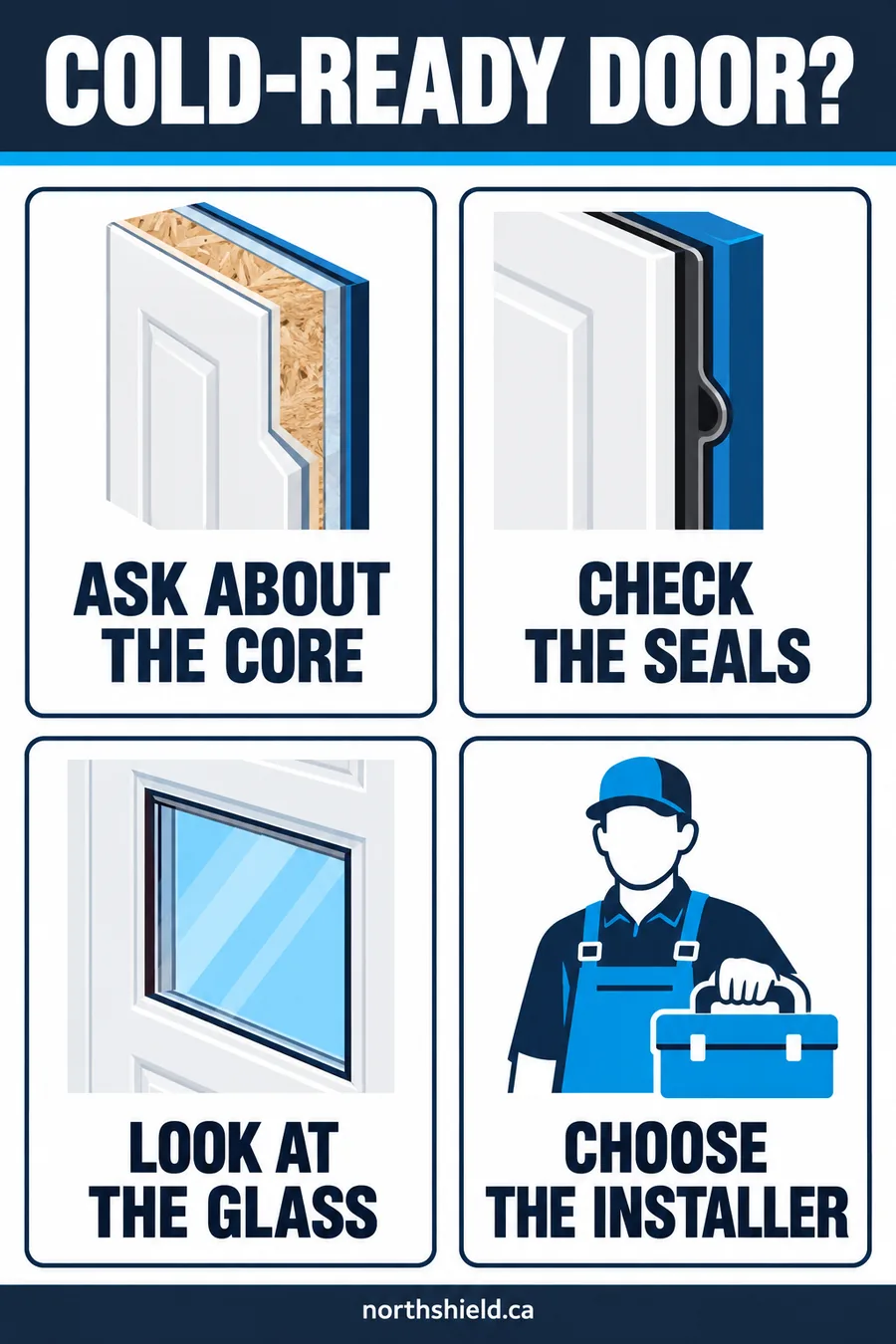
Download the free quick guide
A one-page list of what to look at, what to ask a supplier and what to watch for through the winter.
Glass, hardware and a storm door
Glass is a trade-off for any exterior door in extreme cold. A door with a window or sidelight lets in daylight, and per NRCan, doors that include glazing are less thermally resistant than insulated core doors. That doesn't rule glass out. It means the glazing choice deserves a look at the rating, and you can browse glass options for entry doors to see what's available.
Hardware is the other cold spot you can feel. Handles and locks are metal, so they feel cold to the touch and can collect frost on a deep-freeze morning. That's normal. What you want to avoid is frost that spreads from the lock area across the door face, or a latch that stops catching.
Some homeowners add a second layer. Storm doors have an extra external layer and can suit some entries and not others, so ask which fits your door and your weather before you buy.
If you'd like to see an exterior door up close first, here's a short look at one of ours.
Why the install decides so much
The best door in a crooked frame will still leak. How the frame is set, shimmed, insulated and sealed into the wall has a big say in how an exterior door in extreme cold behaves. NRCan lists poor installation first among the reasons doors end up out of square, which is why who does the work matters as much as what you buy.
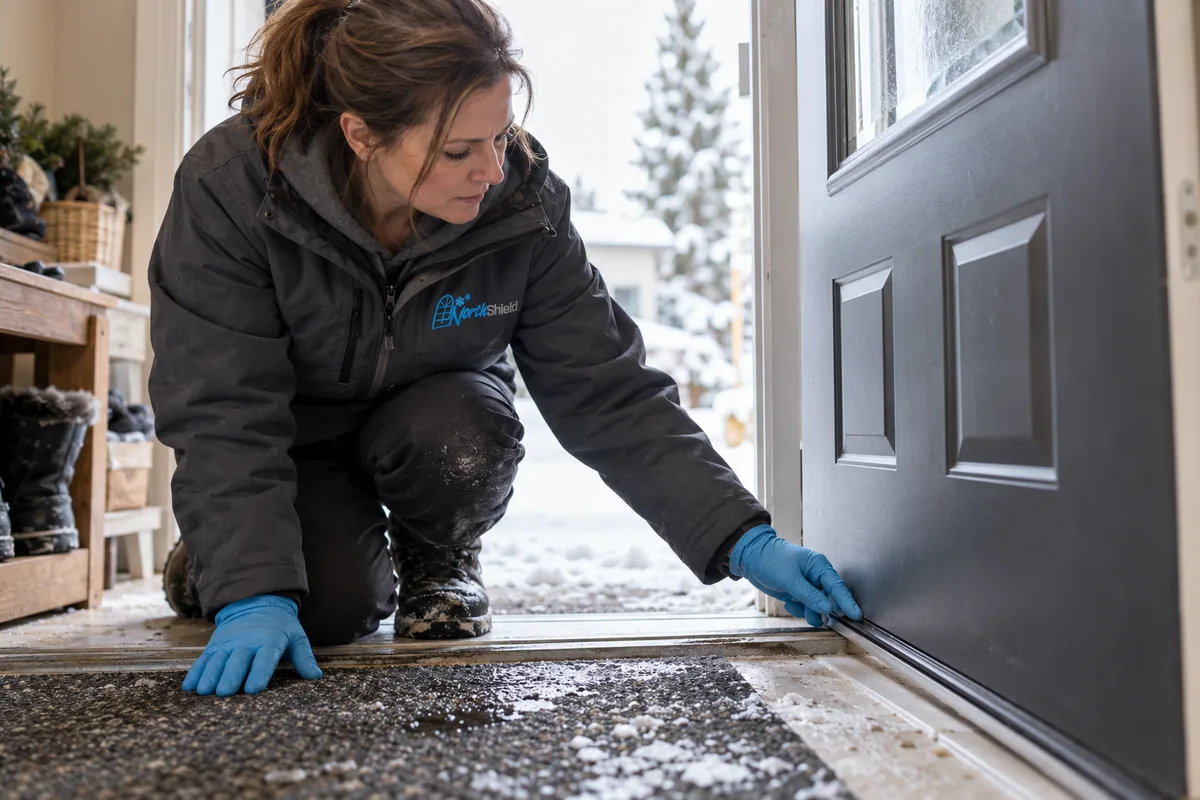
Before you sign anything, it's fair to ask the installer:
- How they set the door square and check it before they finish.
- How the gap around the frame is insulated and sealed.
- How the threshold is set and what can be adjusted later.
- Who you call if the door sticks or leaks after its first winter.
That last question is a good test of the company. You can read how we work on our door and window installation process page.
Good to know
This article is general information, not professional advice. Door ratings, building conditions and requirements vary by home and change over time. Confirm the details that apply to your entry with the door's maker, a qualified installer or your local building authority before you decide. NorthShield Windows and Doors isn't responsible for decisions made solely on the basis of this article.
Signs a door isn't coping
A door that struggles in the cold usually tells you. Watch for frost patches on the inside face, a draft you can feel at the edges, ice or water at the threshold, or a door that sticks or latches differently on the coldest days.
Red flag
A door that won't close and latch securely, water that keeps pooling at the threshold, or soft, swollen trim around the frame all call for a professional look. Don't wait for spring on those.
Seals that have worn out are often the first thing to address, and they're a small job. If the door has moved out of square or the slab is damaged, that's the point to look at a replacement instead of another round of patching.
Conclusion: ask about the whole door
An exterior door in extreme cold works as a system: the core, the seals, the threshold, the glass and the install all pull their weight. Ask for the spec sheet, check the bottom of the door and the edges, and choose an installer you'd call back in January.
Thinking about a new exterior door?
Book a free in-home estimate and we will go through cores, glass and installation for your own entry. NorthShield serves homeowners in windows and doors in Winnipeg, window and door replacement in Toronto and windows and doors in Calgary.
Frequently asked questions
Is steel or fiberglass better for a cold climate?
Either can be built with an insulated core, and Natural Resources Canada says insulated core doors are more thermally resistant than solid material doors. So the shell matters less than what's inside and how the door is put together. Ask for the spec sheet on the exact door and compare those, then read our comparison of fiberglass and steel for the finish and upkeep side.
Will a storm door help an exterior door in extreme cold?
It can add a second layer outside the main door, and some homeowners like it for that. Whether it suits your entry depends on the door, the frame and your weather, so ask the supplier or installer which style fits before you buy.
Why does my door stick or latch differently when it's very cold?
Natural Resources Canada points to seasonal warping as one reason hinged doors drift out of square with their frames. Cold can also stiffen seals. A hinge or strike adjustment may help, but if it keeps happening, have a qualified installer check the door and frame.
Should I replace the door or just fix the seals?
Start with the seals and the threshold, since worn weatherstripping is a common and inexpensive fix. If the door is out of square, damaged or no longer closes properly, a replacement may make more sense. A free in-home estimate can help you compare both routes for your own entry.