

If you notice a cloudy spot or moisture inside your window that will not wipe away, the problem may be between the panes of glass. This usually means water has entered the sealed space inside the window, where it cannot be cleaned from either side.
That’s usually the first visible sign that the seal holding a double or triple pane unit together has given out, and it’s worth understanding what’s actually happening before you decide whether the fix is a full frame window replacement or something smaller.
Water between window panes doesn’t wipe away, doesn’t come and go with the weather the way ordinary condensation does, and it usually shows up in one window before spreading to others in the house. Here’s what’s happening inside the glass, how to tell it apart from a simple humidity problem, and what a repair-or-replace decision usually comes down to.
Good to know
This article explains, in general terms, why water can appear between window panes and how a repair-or-replace decision usually gets made. It is not a diagnosis of your specific windows. What makes sense for your home depends on the age and condition of each window, and any question about warranty coverage should go directly to whoever installed or manufactured the unit.
What causes water to appear between window panes
A modern double or triple pane window is built around a sealed cavity between the layers of glass, held apart by a spacer bar packed with a small amount of desiccant and closed off with a primary and secondary sealant. That sealed gap is what gives an insulated glass unit its performance, a detail covered in general terms by energy programs such as Natural Resources Canada’s ENERGY STAR Canada program, which tracks how sealed glazing contributes to a window’s overall efficiency rating.
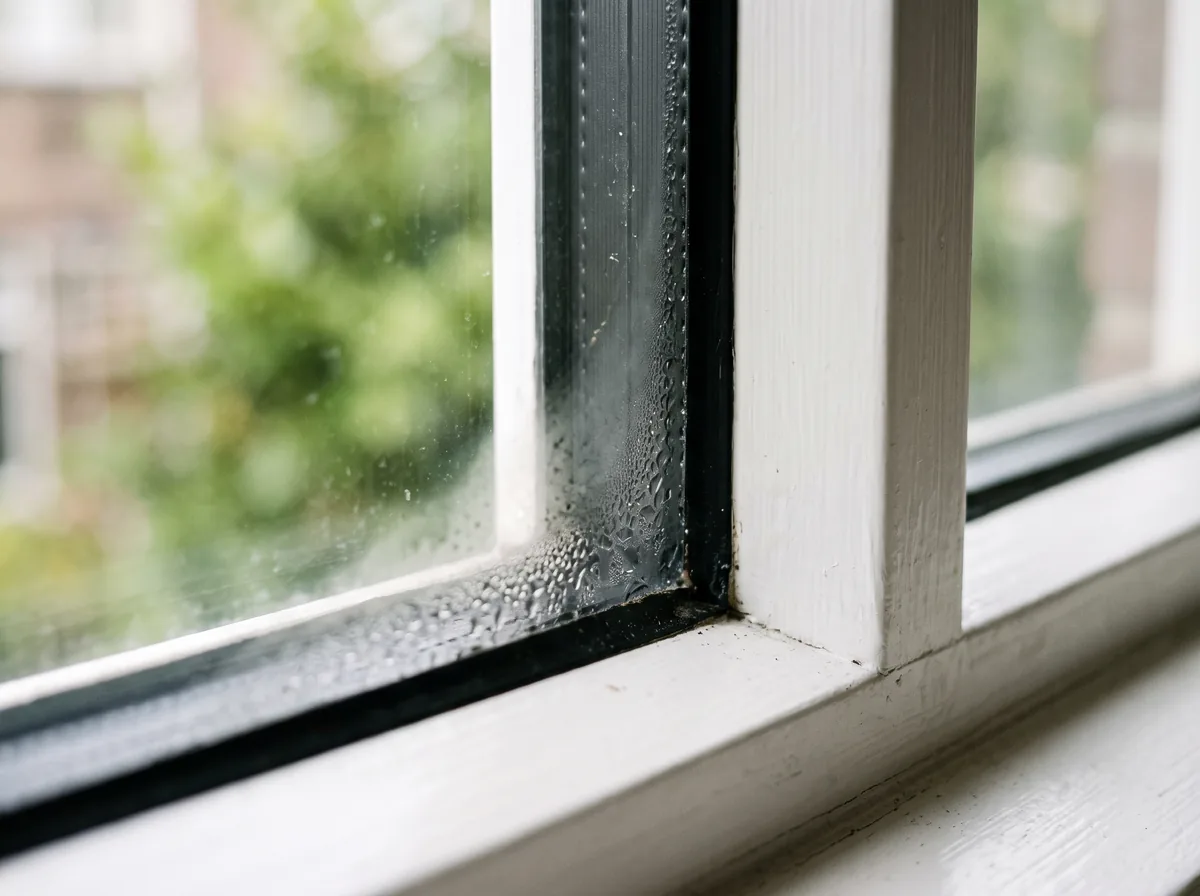
When that seal is intact, the air or gas inside the cavity stays dry and the glass stays clear no matter what the weather is doing outside. Once the seal opens even slightly, humid outside air works its way in. The desiccant absorbs what it can, and once it is saturated, moisture starts condensing on the inside faces of the sealed unit instead. That’s the haze or the beading you’re seeing, and it’s on glass you cannot physically touch.
Is it surface condensation or moisture trapped inside
Not every damp window points to a failed seal. Moisture on the room-side surface of the glass, especially on a cold morning after a shower or a pot of pasta boiling on the stove, is a different and far more common problem tied to humidity levels inside the house. our separate look at that kind of window sweating covers what to do about it, and the short version is that it usually wipes away and comes back with the humidity, not with the season alone.
Water between window panes behaves differently. It sits inside the glass where nothing you spray or wipe will reach it, it rarely disappears once it shows up, and it often comes with a faint rainbow sheen or a permanent gray haze around the edges of the pane rather than a clean fog across the whole surface. a broader rundown of seal failure symptoms is worth a look if you’re also noticing drafts or a window that feels harder to insulate than it used to.
Red flag
Water sitting between window panes that never clears, regardless of the weather or how long the heat has been running, is not a cleaning problem. That is the seal telling you it has already failed. Waiting rarely improves the situation, and it gives moisture more time to work on the spacer and the frame around it.
Why the seal on a sealed unit fails over time
Sealant is a rubber-like material, and like any rubber material exposed to sun and temperature swings, it hardens and shrinks a little more with every hot summer and cold winter. Years of that expansion and contraction eventually open a hairline gap that outside air can find. A unit that faces direct afternoon sun tends to show this earlier than one on a shaded elevation, and corners usually go first since that is where the seal has to work hardest around the spacer’s joints. None of that is visible from the outside, which is exactly why so many homeowners just want a straight answer for why there’s suddenly water between their window panes.
How the window was installed in the first place plays a role too. A unit set slightly out of square, or one that was not properly supported in the frame, puts uneven stress on the seal from day one instead of years down the road, which is one reason installation quality tends to matter as much as the window itself when it comes to how long a sealed unit actually lasts.
Pro tip
Before you call anyone, check the corners of the affected window first and note whether the haze is constant or only shows up in certain weather. A technician can usually tell within a few minutes whether you’re dealing with a failed seal or something simpler, but that quick observation saves a step.
Repair or replace: what usually makes sense
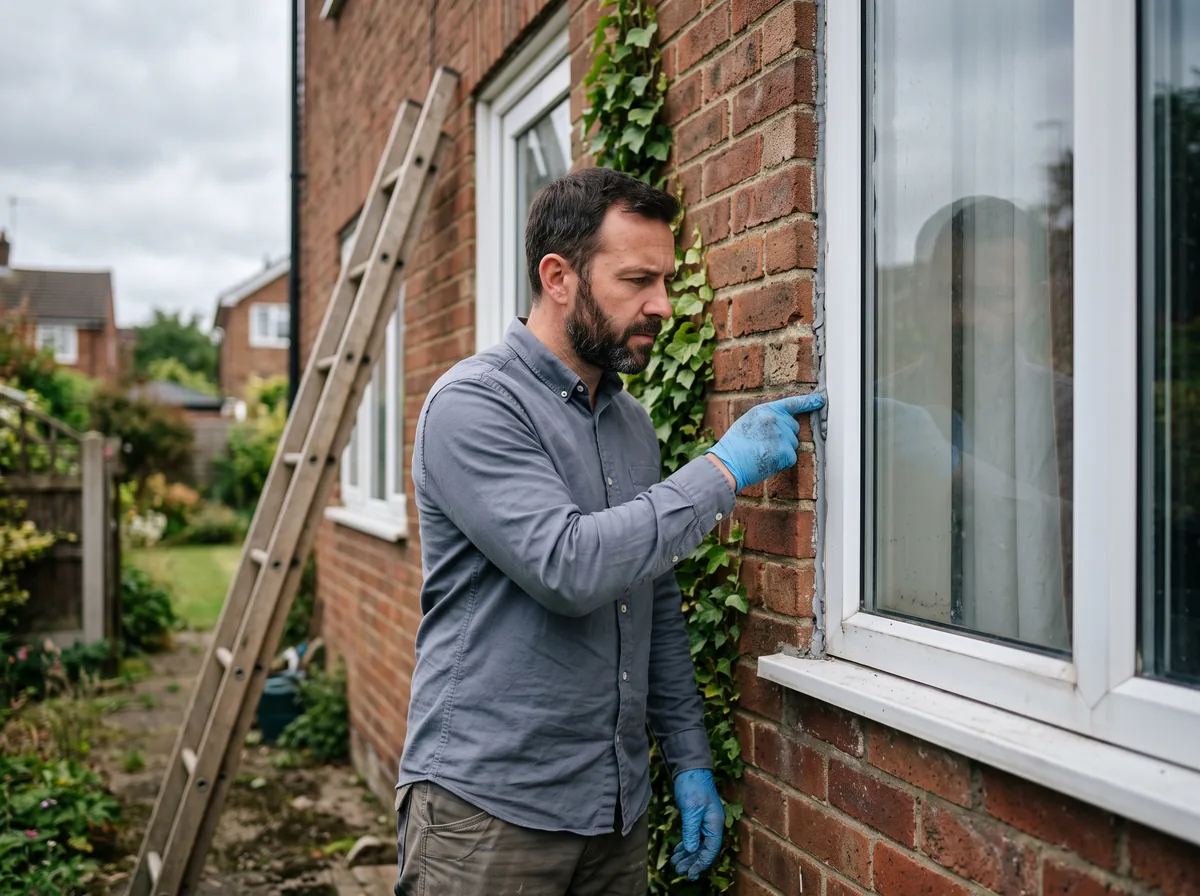
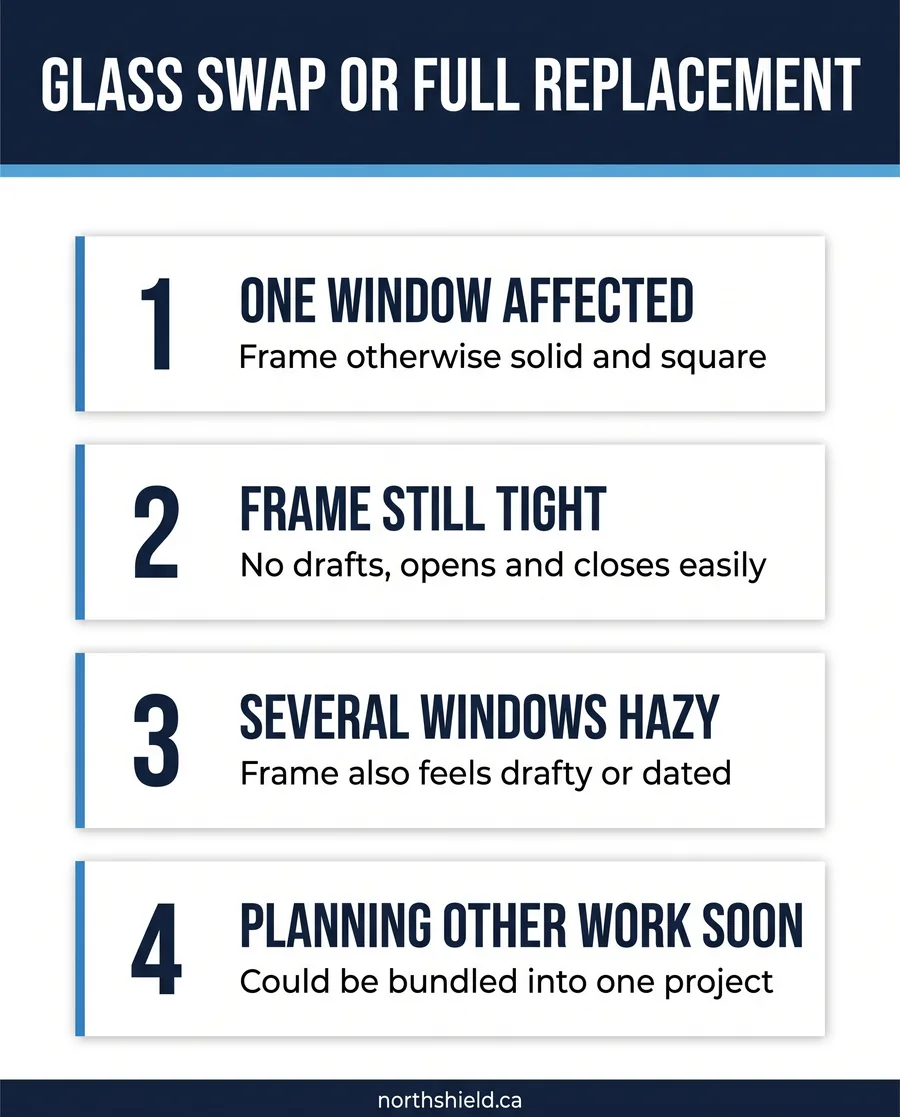
Once a technician confirms it’s a seal failure and not condensation from indoor humidity, deciding what to do about water sitting between the window panes usually comes down to one practical question: whether to replace just the glass unit or the whole window. For a single fogged unit sitting inside a frame that is otherwise square, weathertight, and in decent shape, swapping only the glass is often the more sensible starting point, since the frame itself usually still has plenty of service life left in it.
That calculation tends to shift once a home has several windows showing the same haze, or when the frame itself is drafty, difficult to operate, or clearly older than the glass unit inside it. At that point a lot of homeowners find that a full window replacement ends up being the better use of a single service visit, rather than paying for separate glass swaps every year or two as more units fail. our general framework for weighing repair against replacement walks through the same logic for other window and door problems, and it applies here too.
- How many windows in the house are already showing haze, not just the one you noticed first.
- The overall condition of the frame: drafty, hard to open, or visibly worn versus solid and square.
- Whether you’re planning other window work soon that a full replacement could be bundled into.
- What a written estimate says for glass-only versus full replacement, side by side.
Download the free quick guide
A printable one-page guide to what a sealed unit failure looks like, what to check before you call, and the questions worth asking before you approve a repair.
What to do next
If you’ve spotted water between window panes somewhere in your home, three things are worth doing before you book anything:
- Check every window in the house for the same haze, not just the one that caught your eye.
- Note whether it clears with the weather or stays put, since that tells you if it’s surface condensation or a sealed unit.
- Get a written estimate that separates glass-only replacement from full window replacement so you can compare real numbers.
If it turns out several units are aging out at once, that’s often a good moment to ask about moving up to a triple pane glass option rather than replacing like for like. Either way, book a free windows and doors estimate and a technician can tell you within one visit which path makes sense for your specific windows.
Frequently asked questions
Is water between window panes covered under warranty?
It depends entirely on the manufacturer and the terms of the specific warranty that came with your windows, so this isn’t something a general article can answer for you. Coverage periods and what counts as a covered defect vary widely between brands. Pull your paperwork or the manufacturer’s documentation and confirm directly with them or with your installer before assuming either way, since some sealed-unit warranties are transferable and others are not.
Can I clean the water out from between the panes myself?
No. The cavity between the panes is sealed by design, and opening it yourself breaks that seal permanently even if it looks intact elsewhere. Drilling a hole to let moisture escape, a method sometimes suggested online, does not restore the insulating performance of the sealed gap and can let more moisture and dust in over time. The sealed cavity needs to be professionally replaced or the window itself needs to be swapped, not opened at home.
Does a hazy window mean it has stopped insulating properly?
Once you can see water between window panes, the sealed unit is no longer working the way it was designed to, since the trapped gas or dry air that gave it its performance has been replaced by humid outside air. How much that affects your comfort or your energy bill depends on the size and location of the window and how many units are affected, so there’s no single number that applies to every home. A technician can look at your specific windows and speak to what you’re likely noticing.
How long can I leave a fogged window before it becomes a bigger problem?
There’s no fixed timeline, and anyone who gives you an exact number of weeks or months is guessing. What tends to happen is that water sitting between window panes keeps working on the spacer and, eventually, the surrounding frame, so a window left alone for a long stretch is more likely to need full replacement instead of a simpler glass swap by the time it gets attention. Getting it looked at while the frame is still in good shape keeps more options open.
If one window is fogging, will the rest fail soon too?
Not automatically. Seal failure is usually tied to age, sun exposure, and how a specific unit was installed, so windows on different sides of the house, or installed at different times, often age at different rates. That said, if several windows went in around the same time from the same batch, it’s reasonable to keep an eye on the others rather than assume the one you noticed is an isolated case.