

Finding a cracked window with no rock or baseball in sight is baffling. It feels like a mystery, but the cause is often a scientific phenomenon. When this happens, homeowners are often looking at a case of spontaneous glass breakage, a known issue that can affect even high-quality glass. Understanding why it happens is the first step toward finding the right solution, which often involves exploring options for professional window installation.
This unexpected event can be startling, leaving you to wonder about the integrity of your other windows. The good news is that it’s a relatively rare occurrence with explainable causes. Let’s look at the science behind why a window might crack on its own and what you should do about it.
What is Spontaneous Glass Breakage?
Spontaneous glass breakage is exactly what it sounds like: a window cracking or shattering without any obvious impact or external force. It’s not a myth or a sign that your house is haunted, but a recognized phenomenon within the glass industry. It happens when internal stresses within the glass pane build up to a point where the glass can no longer support the tension, causing it to fail.
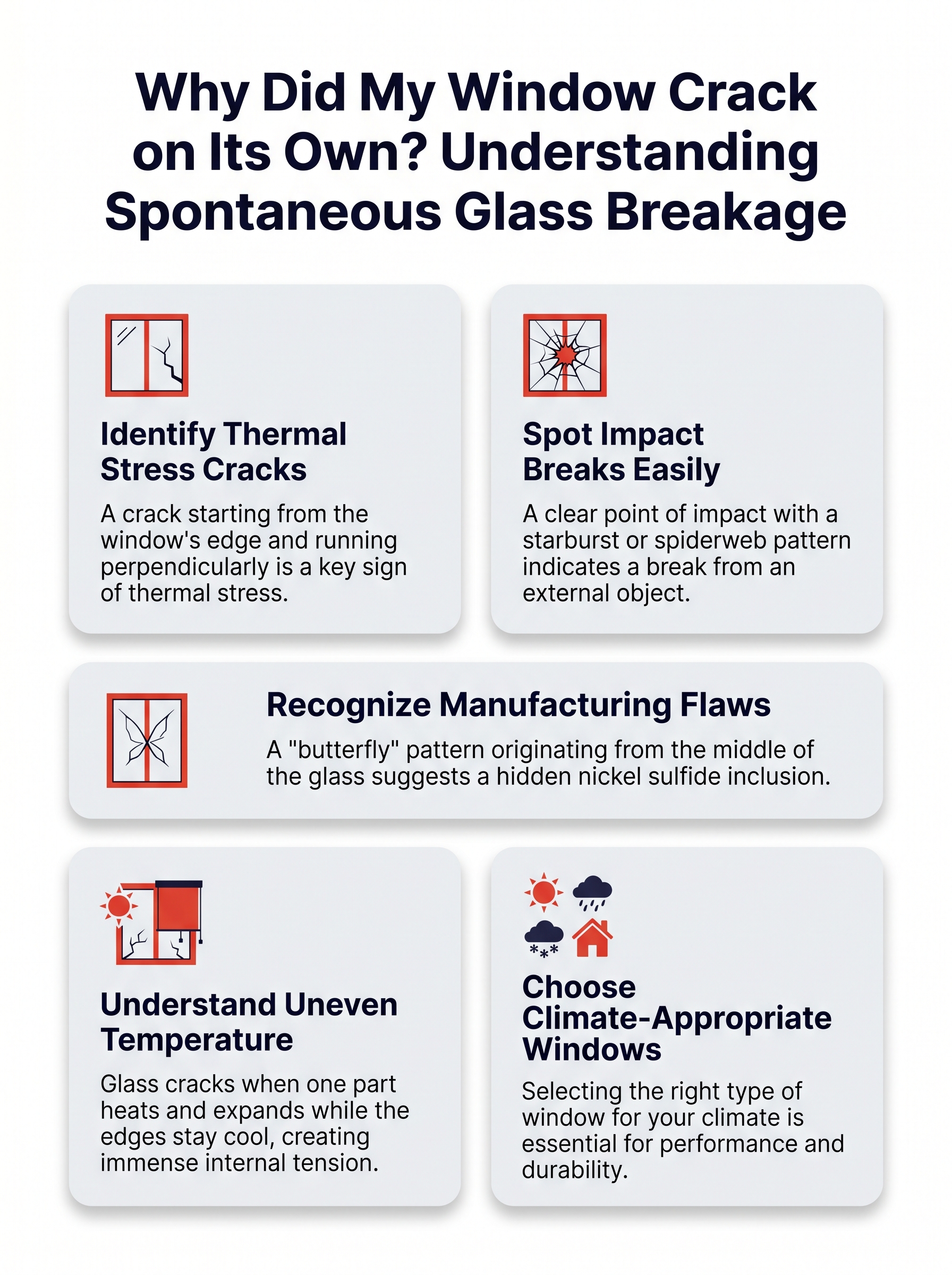
It’s important to distinguish this from an impact break. A rock or a stray ball will typically leave a clear point of impact, often with a starburst or spiderweb pattern radiating outward. In contrast, a spontaneous break often has a more distinct and telling pattern, which can help identify the underlying cause. Understanding this difference is key to diagnosing the problem correctly.
The Most Common Cause: Thermal Stress
One of the leading culprits behind a window cracking on its own is thermal stress. Glass, like many materials, expands when it gets hot and contracts when it cools down. This usually isn’t a problem, but issues arise when this process happens unevenly across a single pane of glass.
Imagine a cold, sunny day. The portion of your window receiving direct sunlight heats up and expands, while the edges of the glass, tucked away in the window frame, remain cool and contracted. This difference in temperature creates tension. The expanding center of the glass pushes outward, while the cool edges resist. Over time, this repeated stress can weaken the glass until it forms a crack to relieve the pressure.
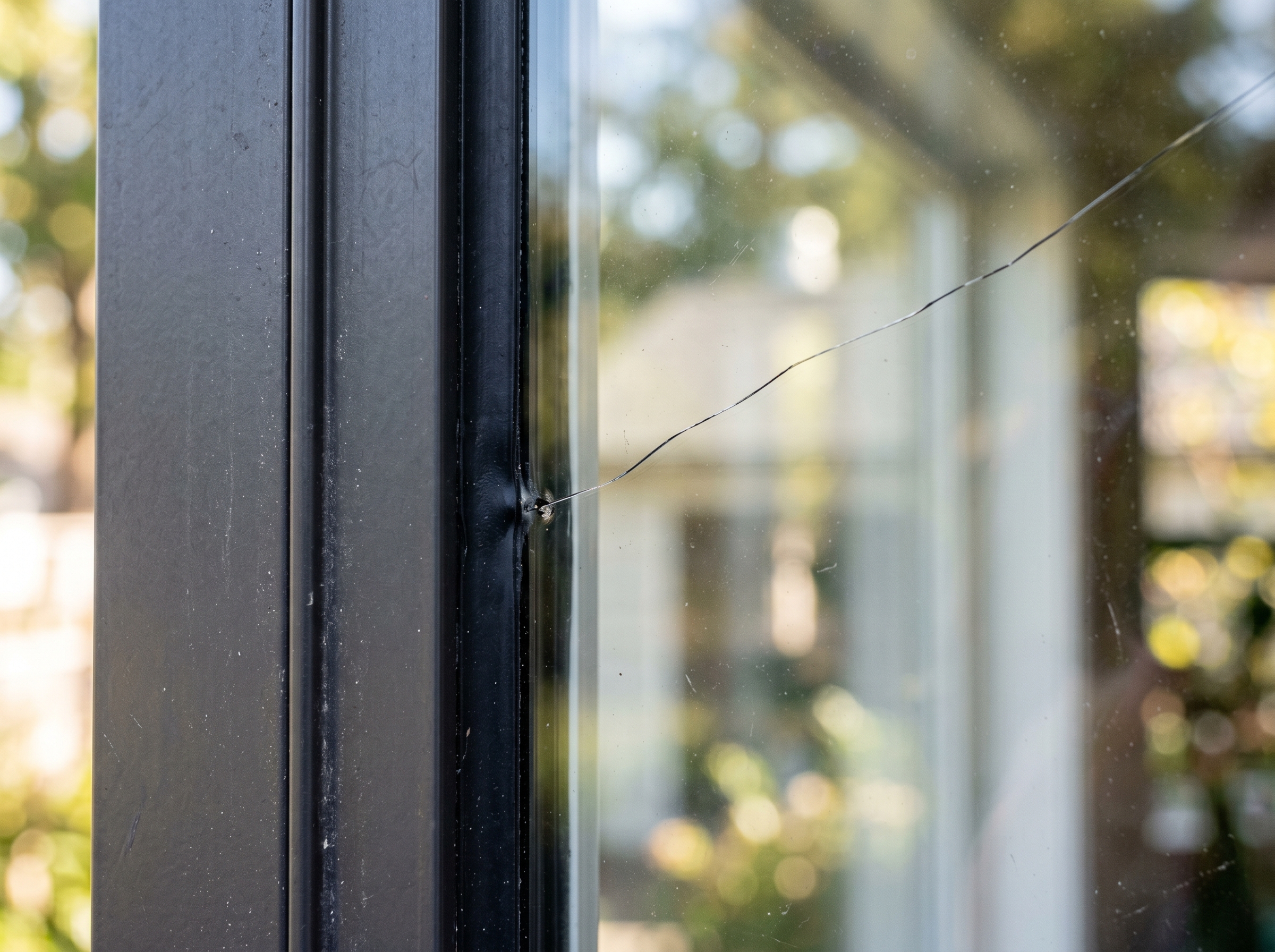
A thermal stress crack has a very specific appearance. It almost always starts from the edge of the glass and runs perpendicular to it for a few inches before it might start to branch out. If you see a crack that originates right at the frame, thermal stress is a likely suspect. Selecting the right type of window for your climate is essential for performance and durability, which includes managing thermal stress.
A Hidden Defect: Nickel Sulfide Inclusions
Another primary cause, particularly in tempered glass, is a microscopic flaw called a nickel sulfide (NiS) inclusion. During the glass manufacturing process, tiny, invisible particles of nickel sulfide can accidentally get mixed into the molten glass. These particles are harmless at first, but they have a peculiar property: they change in size and structure when heated.
Over months or years, as the window is exposed to sunlight and temperature fluctuations, these tiny NiS inclusions can slowly expand. This expansion creates an immense point of pressure from within the glass itself. Because tempered glass is already under high tension as part of its safety design, this extra internal pressure from an NiS inclusion is often enough to make the entire pane shatter into thousands of small, pebble-like pieces.
When a nickel sulfide inclusion is the cause, the break pattern often features a unique ‘butterfly’ or figure-eight shape originating from a single point somewhere in the middle of the glass, not at the edge. This is the telltale sign of a manufacturing defect rather than an environmental stressor.
Other Factors That Can Cause a Window to Crack
While thermal stress and NiS inclusions are the main causes of spontaneous glass breakage, a few other factors can contribute to a window’s failure.
- Minor edge damage: During shipping or installation, the edge of a glass pane can get a tiny chip or nick. While it might seem insignificant, this small flaw creates a weak spot. Over time, normal expansion and contraction can concentrate stress on that point, eventually causing a crack to propagate from the damaged edge.
- Frame pressure: A window needs to fit perfectly within its frame. If the frame is installed improperly, warped, or if the house settles over time, it can put uneven pressure on the glass pane. This constant, localized stress can eventually lead to a crack.
- Extreme weather: While less common, very high winds can cause a window to flex, and significant, rapid changes in barometric pressure can also add stress. These environmental forces can be the final straw for a pane already weakened by other factors.
- Vibrations: If you live near a busy road, construction site, or airport, constant low-level vibrations can contribute to the degradation of the glass and its seals over time, potentially leading to stress cracks.
What to Do When Your Window Cracks For No Reason
Finding a cracked window can be alarming, but it’s important to act calmly and safely. Here are the steps you should take.
- Prioritize safety: If the glass has shattered, carefully secure the area to protect your family and pets. If the glass is just cracked, you can use heavy-duty tape to help hold the pieces in place and prevent the crack from spreading further. Always wear thick gloves when handling broken glass.
- Document everything: Before you clean up, take clear photos of the window. Capture the entire pane, close-ups of the crack’s origin point, and the overall pattern of the break. This documentation will be invaluable if you need to file a warranty or insurance claim.
- Don’t delay replacement: A cracked window is more than just a cosmetic issue. It compromises your home’s insulation, leading to energy loss. It’s also a weak point for security and is no longer able to protect you from the elements.
- Contact a professional: The best next step is to Request a professional assessment to understand your options. An expert can help confirm the cause of the break and recommend the right type of replacement window for your home.
How Proper Installation Helps Prevent Breaks
While you can’t control every factor, advancements in window manufacturing and installation techniques significantly reduce the risk of spontaneous glass breakage. Modern window producers have developed processes to minimize these issues.
For tempered glass, many manufacturers now use a process called ‘heat-soaking’. After the glass is tempered, it’s placed in a special oven and heated to a high temperature for several hours. This process accelerates the expansion of any nickel sulfide inclusions, causing flawed panes to break in the factory, not in your home. Also, today’s high-quality vinyl and fiberglass frames are incredibly stable. They don’t warp or shift with temperature changes, which means they won’t exert undue pressure on the glass they hold.
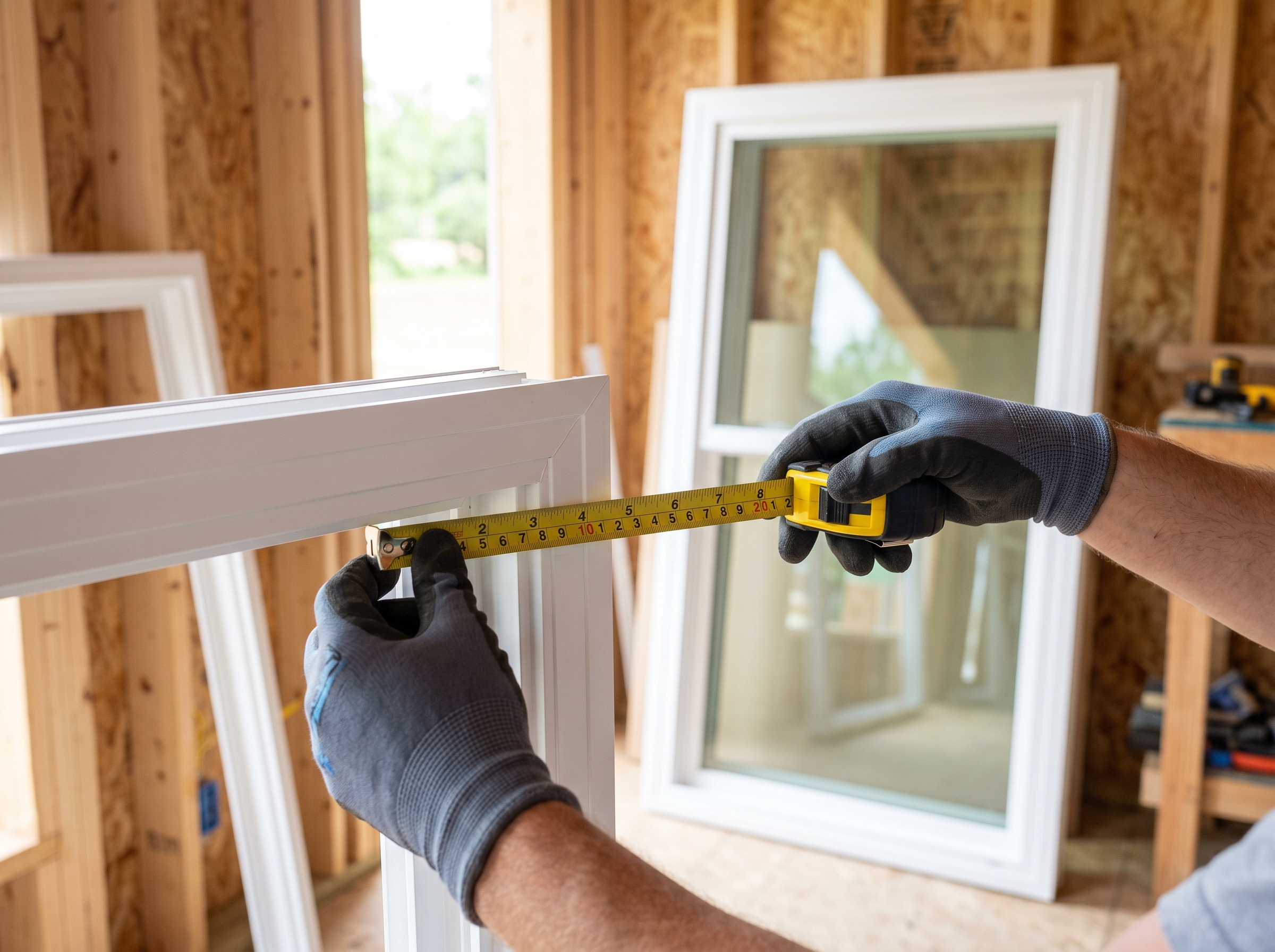
However, even the best window can fail if installed incorrectly. This is where expert installation becomes so important. A professional installer ensures the window is perfectly square and plumb within the opening. They make sure there is adequate room for the glass to expand and contract naturally, preventing frame pressure and reducing the risk of edge damage during the process. Proper installation is the final, and perhaps most important, step in ensuring your windows last for decades.
FAQs
Is spontaneous breakage covered by my window warranty?
This depends entirely on the manufacturer and the specific terms of your warranty. Some premium warranties cover spontaneous breakage resulting from manufacturing defects like NiS inclusions. However, cracks from thermal stress are often considered an environmental factor and may not be covered. Always review your warranty documents and discuss them with your installer.
Can a double-pane window crack on just one side?
Yes, and it happens frequently. The inner and outer panes of a double-pane (or triple-pane) window experience different conditions. The outer pane is exposed to direct sunlight and outdoor temperatures, while the inner pane is affected by your home’s indoor climate. Because of this, it’s common for one pane to experience thermal stress and crack while the other remains intact.
How can I tell if a crack was from thermal stress or an impact?
Look closely at the origin of the crack. A thermal stress crack will almost always start at the very edge of the glass. An impact crack will originate from a point on the face of the glass, and you can often see a small chip or pit mark where the impact occurred.
If one window broke, are my other windows at risk?
It’s generally unlikely. Spontaneous breakage is a rare event. If the cause was a manufacturing defect, it could theoretically affect other windows from the same batch, but the odds are low. If the cause was thermal stress, other windows with the same orientation and sun exposure could be under similar stress, but it doesn’t guarantee they will also fail. It’s best to have a professional inspect them if you are concerned.
Can a window really crack on its own without being hit?
Yes, it’s a phenomenon called spontaneous glass breakage. It occurs when internal stresses build up within the glass pane to a breaking point. The most common causes are thermal stress from uneven heating and cooling, or microscopic manufacturing defects like nickel sulfide inclusions that expand over time.
What is thermal stress in a window?
Thermal stress happens when one part of a glass pane heats up and expands while another part stays cool and contracted. For example, direct sunlight can heat the center of the glass while the edges in the frame remain cool. This difference creates tension that can eventually lead to a crack originating from the edge of the glass.
How can I tell if my window broke from impact or on its own?
An impact break, like from a rock, typically leaves a clear point of impact with a starburst or spiderweb pattern. A spontaneous break has a different signature. A crack from thermal stress usually starts at the very edge of the glass, while a break from an internal defect may show a unique ‘butterfly’ pattern in the middle of the pane.
Is spontaneous glass breakage a common problem?
No, it is a relatively rare occurrence. While it is a known issue within the glass industry with clear scientific causes, it is not something most homeowners will experience. Factors like manufacturing quality, installation, and extreme climate conditions can influence its likelihood.
Can a small chip on the edge of a window cause a big crack later?
Yes, even a tiny, seemingly insignificant chip or nick on the edge of the glass from shipping or installation can create a major weak spot. Normal daily expansion and contraction from temperature changes can concentrate stress on that specific point, eventually causing a large crack to spread from that initial damage.
Free Reference: Why Did My Window Crack? A Quick Guide