

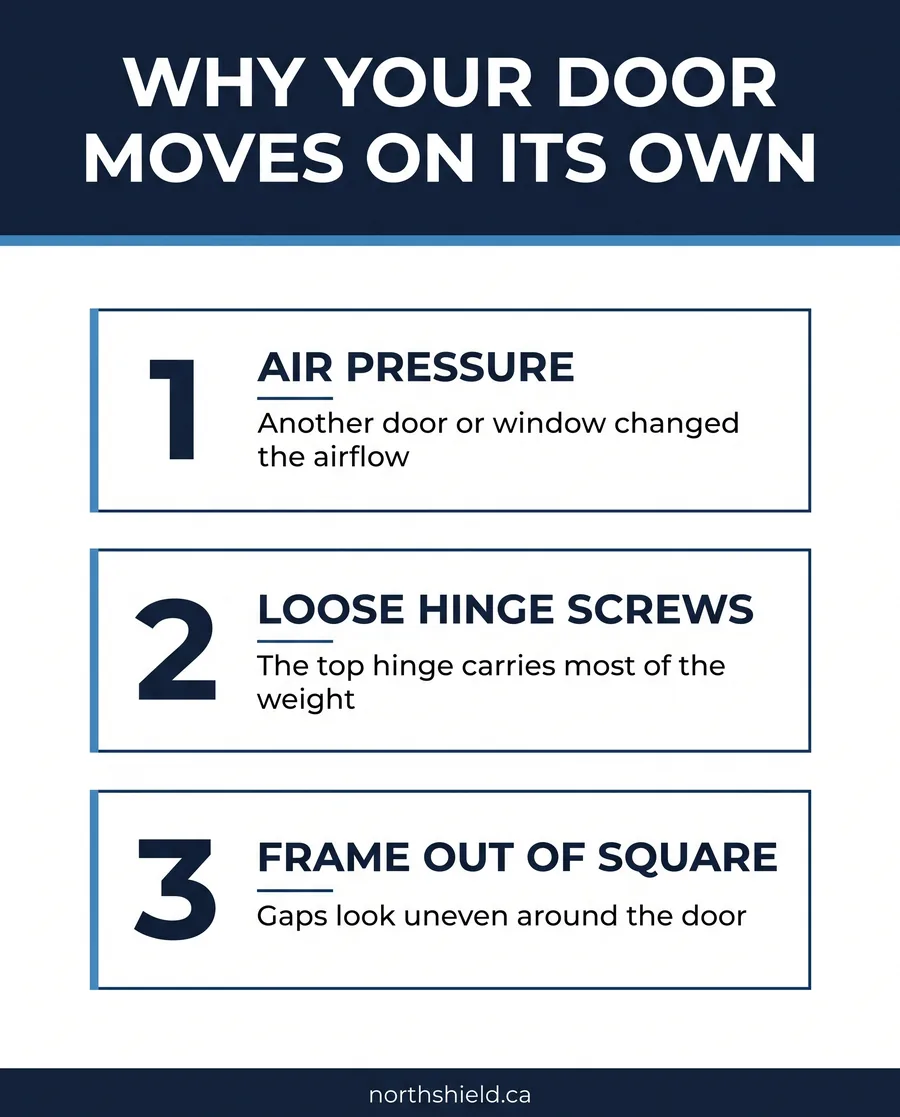
The short answer: a door that swings open by itself, or slams shut on its own, is almost never haunted and almost never an emergency. It’s usually one of three things, air pressure moving through the house, a hinge or latch that has loosened, or a door frame that has shifted slightly out of square, and you can usually tell which one you’re dealing with by watching when it happens rather than guessing from the hardware options on the door.
The rest of this guide walks through how to tell those three causes apart, what a door swinging open by itself usually points to in each case, and where the line sits between something you can check yourself and something worth having a technician look at.
Door swings open by itself: the short answer
Watch the door for a day or two before you assume the worst. Note whether it moves on its own when the house is closed up and still, or only when another door or window opens somewhere else in the house. Note whether it happens more on windy days. And check whether the door swings open by itself from a fully closed position or only drifts a little from being slightly ajar. Each pattern points somewhere different, which is why a quick log over a couple of days beats a single observation.
People often ask
Is this normal in an older house? To a point, yes. Wood houses move a little with temperature and humidity year round, and a door that swings open by itself once in a while during a cold snap is common. A door that does it constantly, or that has started doing it recently and keeps getting worse, is worth a closer look rather than writing off as normal.
Symptom to cause: what’s moving your door
These are the patterns a technician checks first, and most homeowners can narrow it down to one or two before anyone shows up to look at it.
| What you’re noticing | What it usually points to | Where to check first |
|---|---|---|
| Door swings open on its own in a still house, no other doors moving | Latch not fully engaging, or hinges have loosened over time | Strike plate alignment and hinge screws |
| Door slams shut the moment another door or window opens elsewhere | A pressure difference moving through the house, sometimes called the stack effect | Which doors and windows were open at the same time |
| Door drifts shut or open only on windy days | Wind pressure acting directly on an exterior door | Weatherstripping condition and whether a storm door is in place |
| Door only swings on its own along one edge of the opening | Frame slightly out of square, often from age or seasonal movement | Gap consistency along the top, latch side, and bottom of the frame |
| Door feels heavier to push shut than it used to, or drags on the floor | Hinges sagging or the door itself settling in the frame | Top hinge screws and the gap at the bottom corner |
Wind pressure and airflow between rooms
The most surprising cause, and the one people rule out last, is simple air pressure. Open a window on one side of the house and a door on the other, and air has to move somewhere to equalize. A door that was resting almost latched can get pulled or pushed the rest of the way by that movement, especially in a tighter, well-sealed house where the air has fewer places to escape. General home performance resources, including consumer information from the Canada Mortgage and Housing Corporation, touch on how airflow moves through a home as doors and windows open and close, which is the same mechanism behind a door that seems to move on its own.
A furnace or air handler kicking on can do the same thing on a smaller scale, especially in a room with the door mostly closed and no return air vent. If your door movement lines up with the furnace cycling, or with a specific window you tend to leave cracked, that’s a strong clue you’re dealing with pressure rather than a hardware problem. our guide to sealing a drafty front door covers the weatherstripping side of this, which often reduces how much a door reacts to pressure changes even when it doesn’t eliminate the movement entirely.
Hinges, hardware, and a frame out of square
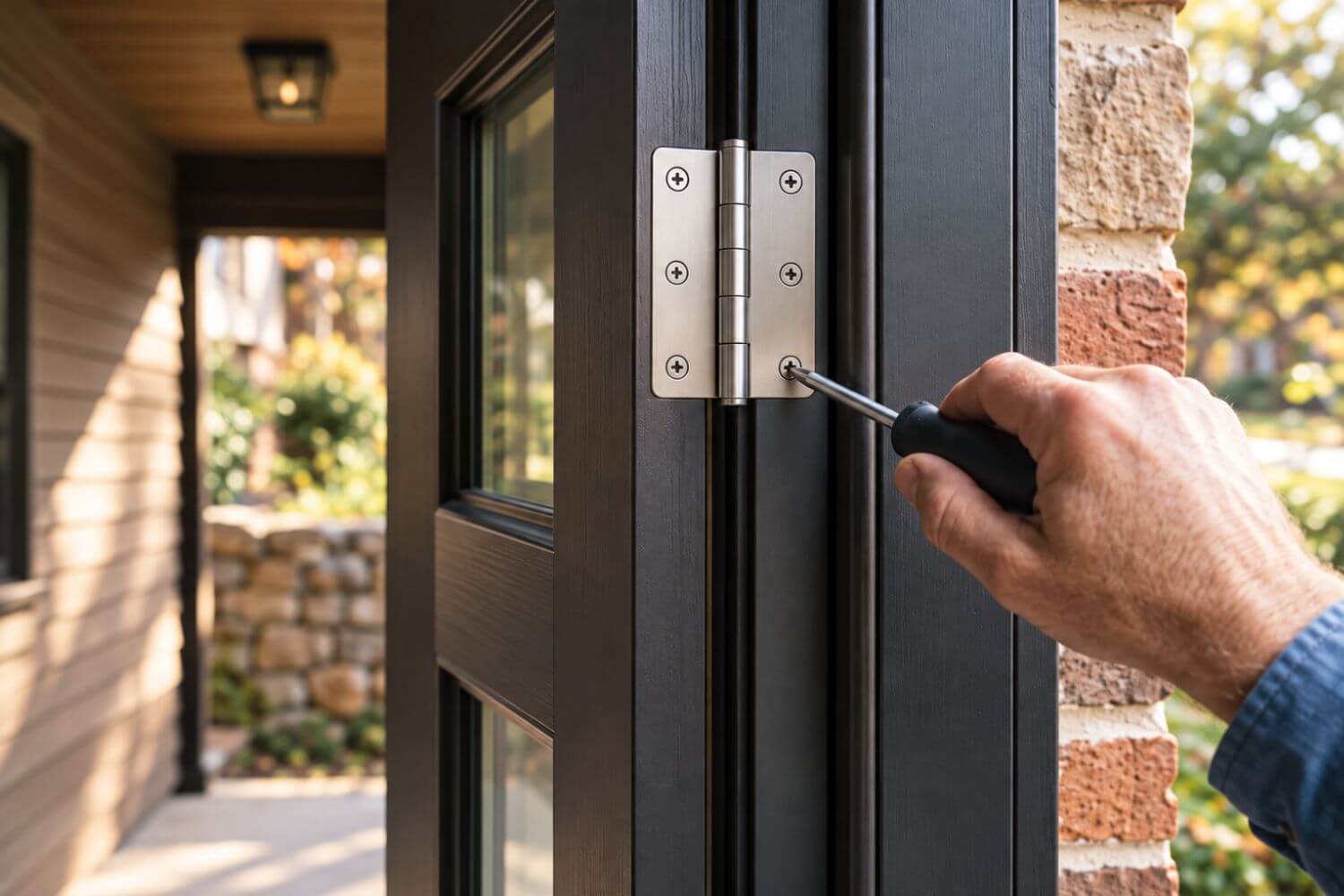
If pressure doesn’t explain what you’re seeing, the door and its frame are the next place to look. Hinge screws loosen over years of use, especially the top hinge, which carries most of the door’s weight every time it swings. A loose top hinge lets the door sag just enough that gravity, not wind, starts pulling it open or shut on its own. Tightening those screws, or replacing a stripped screw hole with a longer screw that reaches the framing behind the jamb, solves a surprising number of these cases without any other work.
A frame that has shifted slightly out of square is a bigger job but not necessarily an urgent one. Wood-framed houses settle a small amount as seasons change and as the structure ages, and the door jamb that holds your door can shift with it. You’ll usually see uneven gaps around the door rather than one clean line, and the door tends to consistently drift toward whichever side has the tighter gap. A technician can shim the hinges or the strike plate to compensate in a lot of cases, and only recommends replacing the whole unit when the frame itself is too far gone to adjust.
Red flag
A door that suddenly swings open with force, especially paired with a loud bang from a pressure change, can catch fingers or knock into something behind it. If that’s happening regularly, treat it as worth fixing soon rather than living with it, particularly in a home with small children or pets near the door.
Download the free quick guide
A printable one-page guide to logging when your door moves, what to check yourself, and the questions worth asking before you book a repair.
Good to know
This article describes common reasons a door moves on its own in general terms, not a diagnosis of your specific door or home. Structural movement, framing condition, and hardware wear vary by property. If you suspect a structural cause beyond normal seasonal movement, a qualified professional is the right person to confirm what’s happening before any repair is made.
What to do next
Before you book anything, spend a couple of days doing this:
- Log when the door moves: calm weather or windy, alone or right after another door or window opened.
- Check the top hinge screws first, since a loose top hinge causes more of this than people expect.
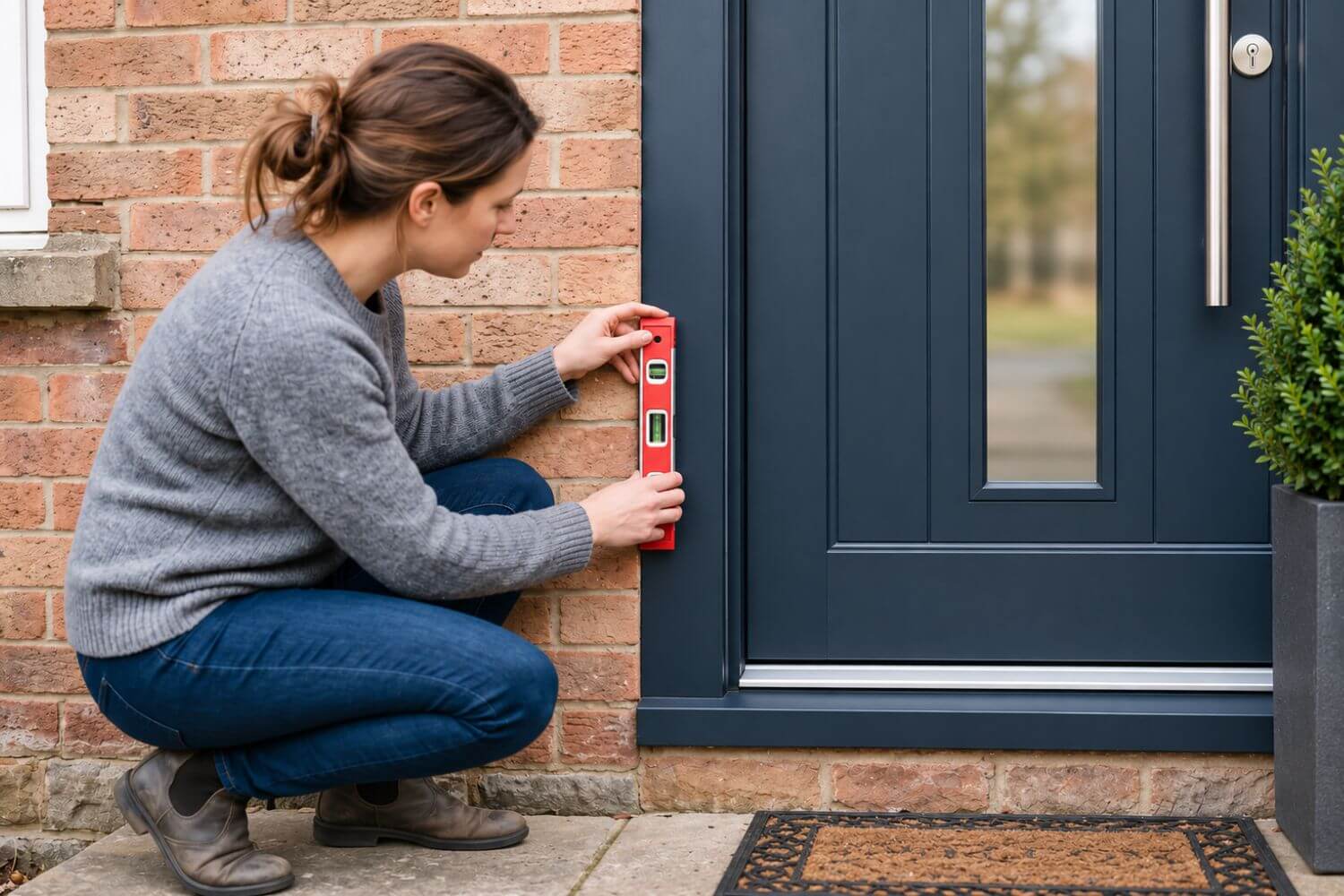
- Run a hand along the gap between the door and the frame on all four sides, looking for one side noticeably tighter than the rest.
If tightening the hinges doesn’t solve it, or the gaps around the frame look uneven, our entry door replacement checklist is a reasonable next stop if the door and frame are older and due either way. Otherwise, book a free windows and doors estimate and a technician can usually tell within one visit which of the three causes is behind your specific door.
Frequently asked questions
Is it dangerous if my door swings open by itself?
Usually not, but it can startle someone or catch a finger if it moves with real force, especially around small children or pets. Most cases trace back to air pressure or a loose hinge rather than anything structural, so the movement itself is more of a nuisance than a hazard. The exception is a door that slams hard and repeatedly, since that kind of force can also loosen hardware further and make the pattern worse over time.
Can I fix a door that won’t stay shut myself?
Often, yes, at least as a first step. Tightening loose hinge screws, or replacing a worn screw with a slightly longer one that bites into the framing, is a simple job most homeowners can handle with a screwdriver. Adjusting a strike plate position is also manageable for a lot of people. Where it gets harder is if the frame itself has shifted out of square, since that usually calls for shims or hardware adjustments a technician has more practice making correctly.
Why does my door only move when a different door or window opens?
That pattern points almost directly at air pressure rather than a hardware problem. Opening a door or window on one side of the house changes the air pressure inside, and a door that was resting close to latched elsewhere can get pushed or pulled the rest of the way as the air finds a new path to equalize. Tighter, well sealed homes tend to show this more noticeably than older, drafty ones, simply because the air has fewer other places to go.
Does a door swinging open by itself mean my house is settling badly?
Not necessarily. All wood-framed houses move a small amount with the seasons, and a little bit of that movement showing up as a door that occasionally drifts open is common rather than alarming. What’s worth paying closer attention to is movement that keeps getting more noticeable over months, uneven gaps you can see clearly around the frame, or cracking in nearby drywall. If you’re seeing those together, a qualified professional can look at whether something beyond normal seasonal movement is going on.
When should I stop trying to fix this myself and call someone?
If tightening the hinges and checking the strike plate doesn’t solve it, or if the gaps around the door frame look clearly uneven rather than just a little tight in one spot, that’s a reasonable point to bring in a technician. It’s also worth calling sooner rather than later if the door is slamming with real force, since that can be a sign the movement has gotten more pronounced than a simple hinge adjustment will fix.