

A sliding patio door that is hard to open is rarely just being stubborn for no reason. It is a track packed with grit, a roller that has worn flat or seized, or a door that has slipped out of adjustment. Track the cause and most of these doors glide again with an hour of work and a few dollars in parts. If the rollers or the frame are past saving, a new patio door is what finally ends the fight.
Here is the thing though: a heavy slider is not just annoying. Straining to yank it open is how people wrench a shoulder or slam a finger, and every hard pull grinds the roller a little flatter. This guide sorts the quick, cheap fixes from the signs that your door has reached the end of the line, so you fix the right thing once.
Why a Sliding Patio Door Gets Hard To Open
A sliding patio door hangs its whole weight on two small rollers that ride along a metal track. That is a lot of glass and frame balanced on a couple of wheels, so anything that interferes with those rollers or that track shows up instantly as drag. The usual reasons a smooth door turns stiff:
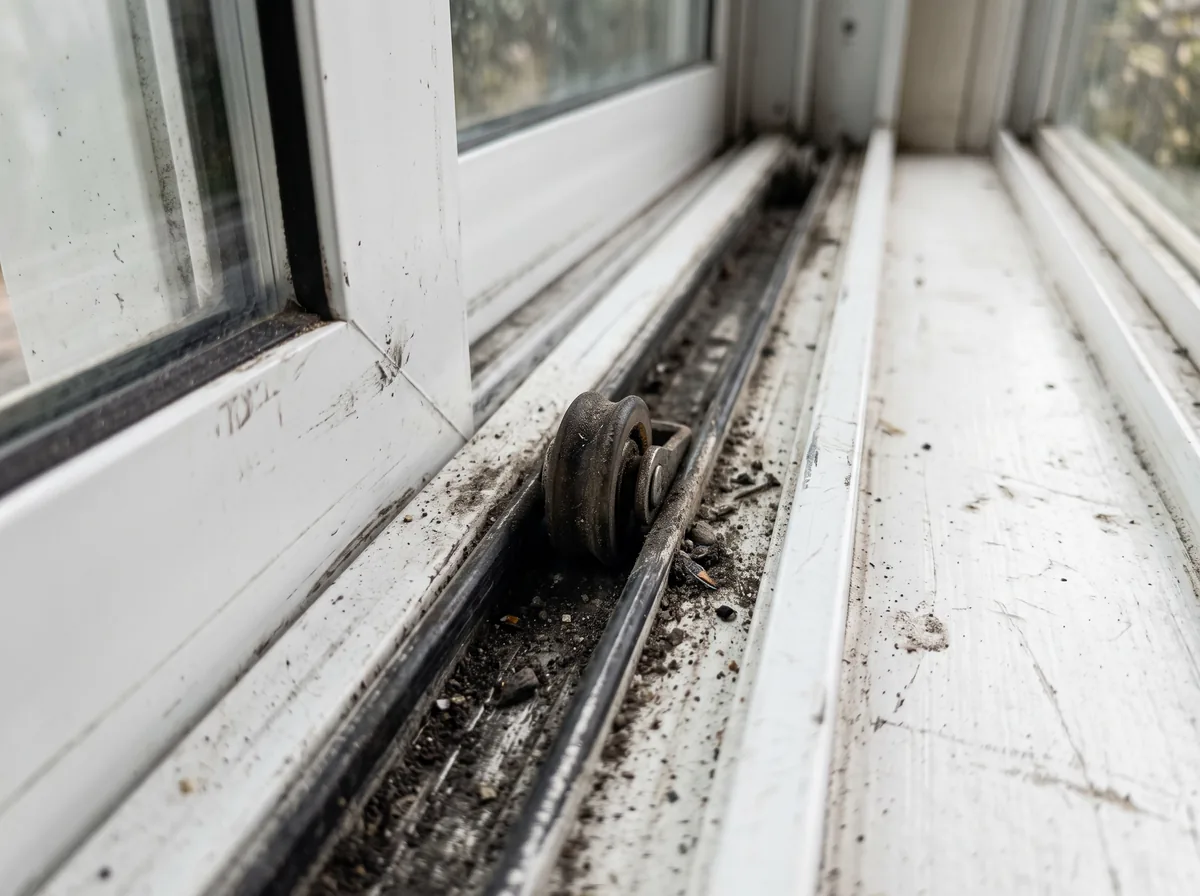
- A dirty track. Dust, pet hair, sand, and grit pack into the channel and jam the rollers, which is by far the most common cause.
- Worn or flat-spotted rollers. Years of weight and use grind the wheels down until they no longer turn freely.
- Rollers out of adjustment. Most sliders have an adjustment screw that sets roller height. If it drifts, the door drags or scrapes.
- A bent or damaged track. A dropped object or years of pressure can dent the track so the rollers catch at one spot.
- Swelling or shifting in the frame. Humidity, settling, or a door that is slightly out of square adds friction along the jamb.
- Dried-out or gummy lubricant. Old grease turns sticky and actually slows the glide instead of helping it.
Quick take
Before you assume the worst, clean the track. A packed, gritty channel is the number one reason a slider gets heavy, and a vacuum plus a damp cloth fixes it for free. Only move on to rollers, adjustment, or replacement once the track is genuinely clean.
How To Tell What the Problem Is
A stiff door feels the same no matter the cause, so a quick diagnosis saves you from buying parts you do not need. Run through this before touching a screwdriver:
- Look down the track. Grit, hair, or a visible dent tells you a lot before you do anything else.
- Feel where it sticks. If the door is heavy the whole way, suspect rollers or adjustment. If it catches at one spot, suspect a damaged track or debris.
- Listen as it moves. Grinding or a rhythmic thump usually means a flat-spotted or seized roller.
- Lift and test. Gently lift the door by the handle. If it suddenly slides easier, the rollers are set too low and need adjusting up.
- Check the frame for square. Look at the gap along the top and side. An uneven gap points to a door or frame that has shifted.
Did you know
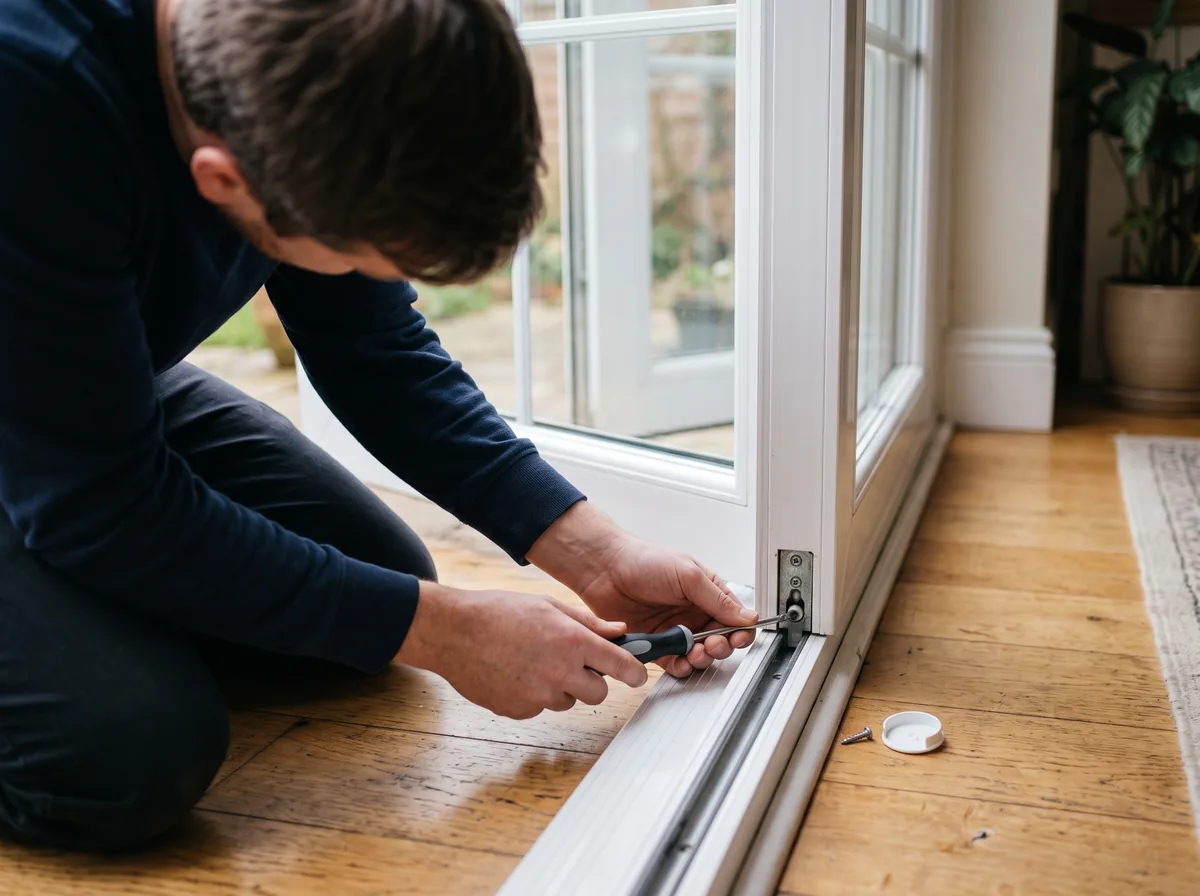
Nearly every sliding patio door has hidden roller adjustment screws, usually behind small plastic caps near the bottom corners of the moving panel. Turning them a quarter-turn at a time raises or lowers the door on its rollers, which is often all it takes to cure a drag or a scrape without replacing a single part.
Step-by-step Fixes
A sliding patio door panel is heavy and made of glass. Removing or lifting one is a two-person job, and dropping it risks serious injury and a shattered pane. Do only the steps you are comfortable and equipped for, and call a professional for roller replacement or anything that involves taking the panel off its track. NorthShield Windows & Doors is not responsible for injury or damage from work attempted based on this article.
Work through these in order and stop as soon as the door glides. Most people never get past step two:
- Clean the track thoroughly. Vacuum out the loose debris, then scrub the channel with an old toothbrush and a little soapy water. Dry it fully.
- Lubricate lightly. Apply a dry silicone or PTFE lubricant to the clean track. Avoid heavy oils and grease, which attract the very grit that jammed the door.
- Adjust the rollers. Find the adjustment screws behind the caps at the bottom of the panel and turn them a quarter-turn at a time until the door rides level and slides freely.
- Straighten a minor track dent. A small, high spot can sometimes be gently tapped flat with a block of wood and a rubber mallet. Do not force a badly bent track.
- Replace worn rollers. If the wheels are flat, cracked, or seized, the panel has to come out to swap them. This is the point where most homeowners bring in a pro.
If you do decide to swap rollers or adjust a factory door yourself, a manufacturer walkthrough helps.
Pro tip
Use a dry silicone spray, not WD-40 or cooking oil, on a patio door track. Wet, oily lubricants feel great for a week, then collect dust and turn into a sticky paste that jams the rollers worse than before. Dry lubricants slide without becoming grit magnets.
Repair or Replace
Cleaning and roller swaps solve most sticky doors, but not every one. Here is how the common scenarios shake out so you know whether to reach for a screwdriver or a quote. Costs are broad Ontario planning ranges, not quotes.
| Symptom | Likely cause | Fix | Typical cost |
|---|---|---|---|
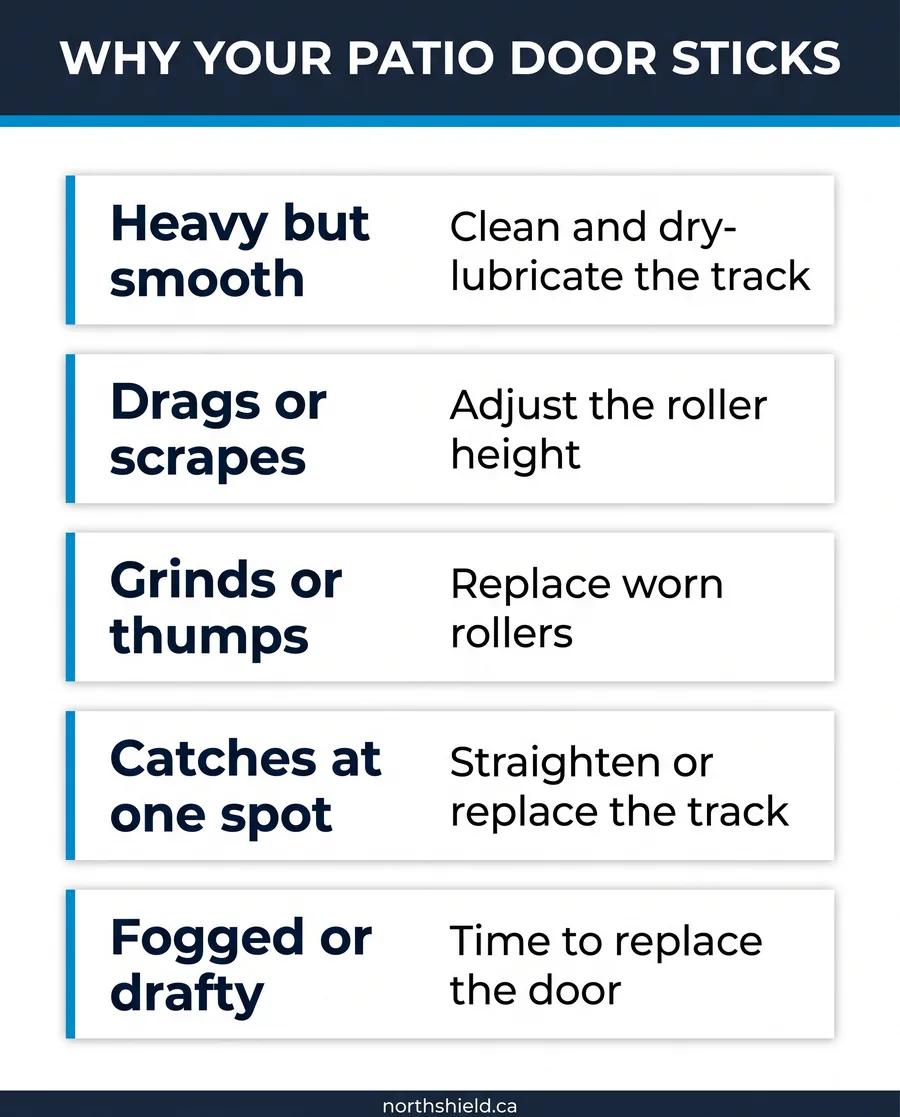
| Heavy but smooth | Dirty track or dry glide | Clean and dry-lubricate | Under $20 |
| Drags or scrapes evenly | Rollers out of adjustment | Turn the adjustment screws | $0 |
| Grinds or thumps | Worn or seized rollers | Replace rollers | $75 to $250 |
| Catches at one spot | Bent or dented track | Straighten or replace track | $100 to $400 |
| Fogged glass, drafts, rot | Failed door unit | Replace the patio door | $1,500 to $4,000+ |
Pricing note: these are typical Ontario ranges as of 2026 for planning only. Actual costs depend on the door brand, parts availability, access, and labour. Always get a written quote before authorizing repair or replacement work.
Save your money
Do not replace a whole patio door because of one bad roller. Rollers are a standard wear part and a fraction of the cost of a new unit. Save replacement for doors that are fogged, drafty, rotting, or so out of square that new rollers will not sit right.
How to keep it sliding smoothly for years
A patio door that glides today can be dragging again by next summer if the track fills back up. A little routine care keeps it effortless:
- Vacuum the track every month or two, more often if you have pets or the door opens onto a deck or garden.
- Re-apply dry silicone lubricant a couple of times a year, wiping the track clean first.
- Keep the weep holes at the bottom of the track clear so water drains instead of pooling and corroding the channel.
- Lift, do not force. If the door starts to drag, adjust the rollers early rather than muscling it open for months.
If your slider is decades old and you are tired of babying it, newer patio doors ride on sealed, low-friction rollers and tighter frames that glide with a fingertip. A clean, professional door installation also squares everything up so the roller wear that plagued the old door does not start over on the new one.
“Spent a year shoving our patio door with two hands. A neighbour showed me the little adjustment screws, a quarter-turn each side, and now my kid opens it with one finger. Wish I had known sooner.”
GTA homeowner, 2024
Download the free quick guide
A one-page checklist to diagnose a heavy slider and get it gliding again the right way.