

It is a small thing that drives you a little crazy. The blinds you barely noticed for years suddenly hang crooked, gap at the edges, or refuse to close tight against the glass. Window blinds not sitting flush anymore almost always comes down to a loose or shifted bracket, a warped or bent headrail, or slats and cords that have stretched out of true. The fix is usually quick and cheap. Once in a while, though, blinds that will not sit right are quietly telling you the window opening behind them has moved, which is worth checking if you are already thinking about new windows.
This is a blinds-fit problem first, so we will start there: what flush should look like, why yours drifted, and how to bring them back into line. Near the end we will cover the one situation where the blinds are fine and the window itself is the culprit, so you know which is which before you start adjusting anything.
What blinds sitting flush should look like
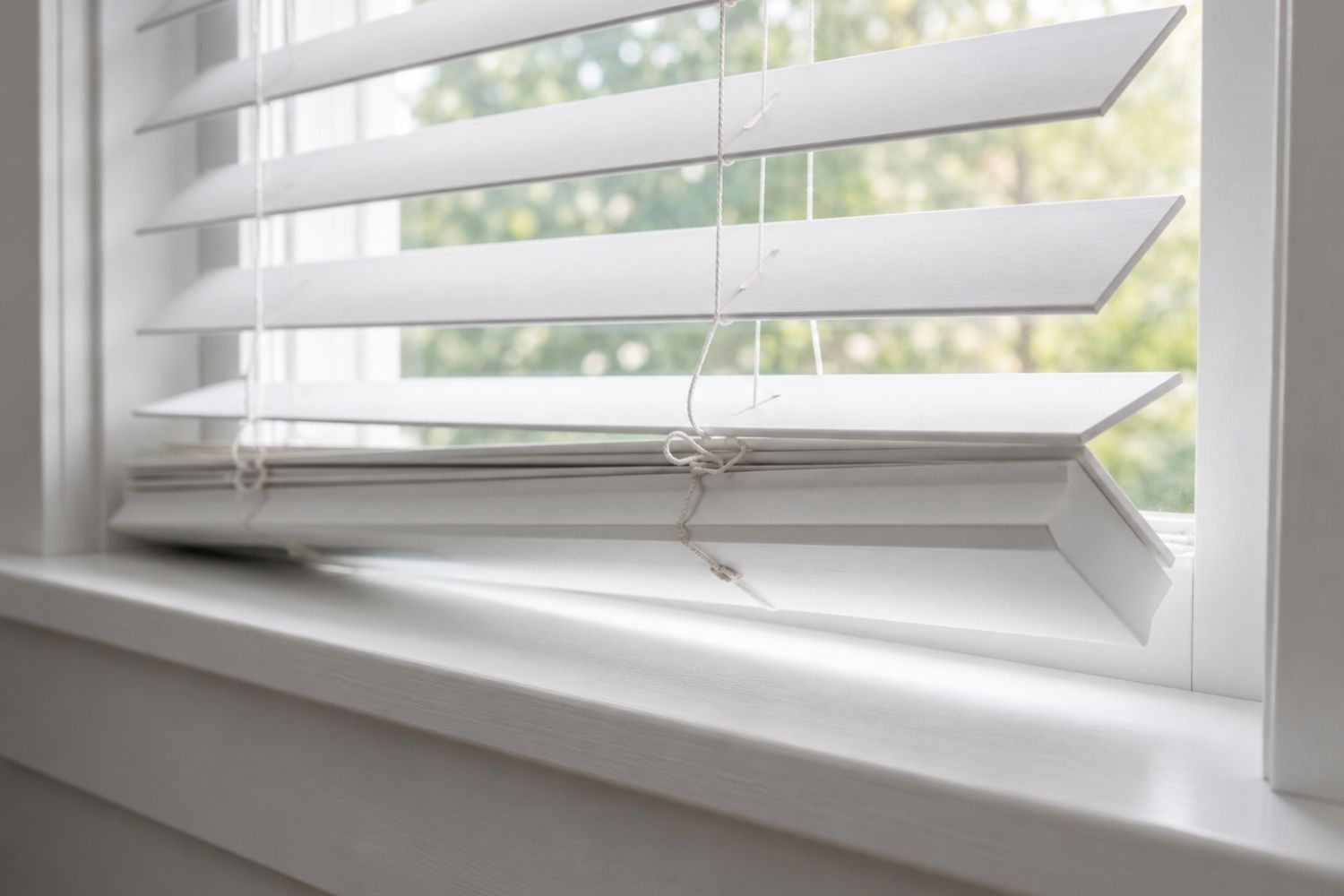
Flush blinds hang level, sit parallel to the glass, and close evenly so the slats or panels meet the frame with no obvious gaps of daylight. The headrail should be tight to the mounting surface, the bottom rail should be level, and the whole stack should raise and lower without cocking to one side. When any of that slips, you get the tell-tale signs: a slanted bottom rail, one corner standing off the wall, slats that will not fully close, or light leaking down one edge.
Knowing the ideal helps you spot the fault fast. Stand back, look at the bottom rail against the windowsill, and note whether the gap is even end to end. That single check points you straight at the problem area more often than not.
Quick take
Flush means level, parallel to the glass, and tight to the mount. If the bottom rail is slanted, one bracket has shifted or the cords are uneven. If the whole unit stands off the wall, a bracket is loose. Start by naming which of those you see.
Why window blinds stop sitting flush
Blinds do not usually go crooked all at once. It builds up as brackets loosen and parts wear. The common reasons a flush blind drifts out of line:
- Loose mounting brackets. Screws back out of the wall or frame over time, especially in soft drywall, and the headrail sags away from the surface.
- A bent or twisted headrail. A knock, an overloaded wide blind, or years of gravity can bow the top rail so nothing below it hangs straight.
- Uneven cords or lift mechanism. On corded blinds, one side lifts more than the other, leaving the bottom rail permanently slanted.
- Worn or stretched ladder strings. The tiny strings that hold the slats level stretch or snap, and the slats tilt or sag on one side.
- A bracket mounted out of level. If it was never quite level to begin with, seasonal movement or a bump finally makes it obvious.
- Warped slats. Heat, sun, and humidity can cup or bow individual slats so they no longer close flat against each other.
Did you know
Wide blinds are the most likely to sag in the middle and stop sitting flush. Anything past about 100 centimetres wide often needs a centre support bracket. If your widest blind is the one that drifts, a missing middle bracket is a prime suspect, not the blind itself.
Match the symptom to the cause
Because so many things look like the blind being crooked, it helps to match what you see to the likely fix before you touch a screwdriver.
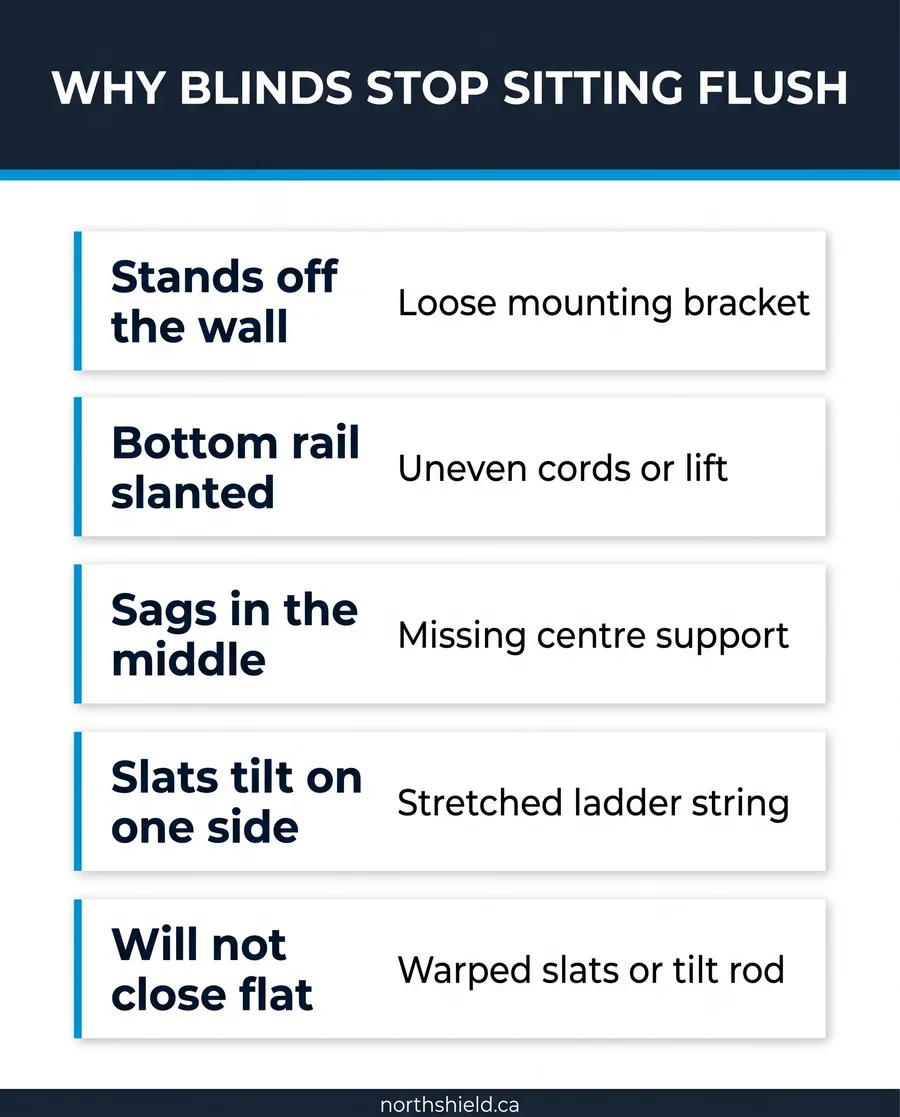
| What you see | Likely cause | Usual fix |
|---|---|---|
| Whole blind stands off the wall | Loose mounting bracket | Re-anchor or move the bracket screws |
| Bottom rail slanted | Uneven cords or lift | Level the cords or reset the lift mechanism |
| Sags in the middle | Missing centre support | Add a centre bracket |
| Slats tilt or sag on one side | Stretched or broken ladder string | Restring or replace the blind |
| Slats will not close flat | Warped slats or tilt rod | Replace slats or service the tilt mechanism |
Save your money
Most flush problems are a bracket or a cord, not a dead blind. A pack of anchors and ten minutes usually beats buying a whole new set. Only replace the blind when the slats are warped or the internal strings have failed beyond a simple restring.
How to get your blinds sitting flush again
The steps below are for standard, accessible blinds you can safely reach from the floor or a low step stool. Skip anything involving tall windows, heavy motorized units, or hardware you are not comfortable removing. NorthShield Windows & Doors is not responsible for injury or damage from work attempted based on this article. If a blind is corded, this is also a good moment to consider a safer cordless option, especially in homes with children or pets.
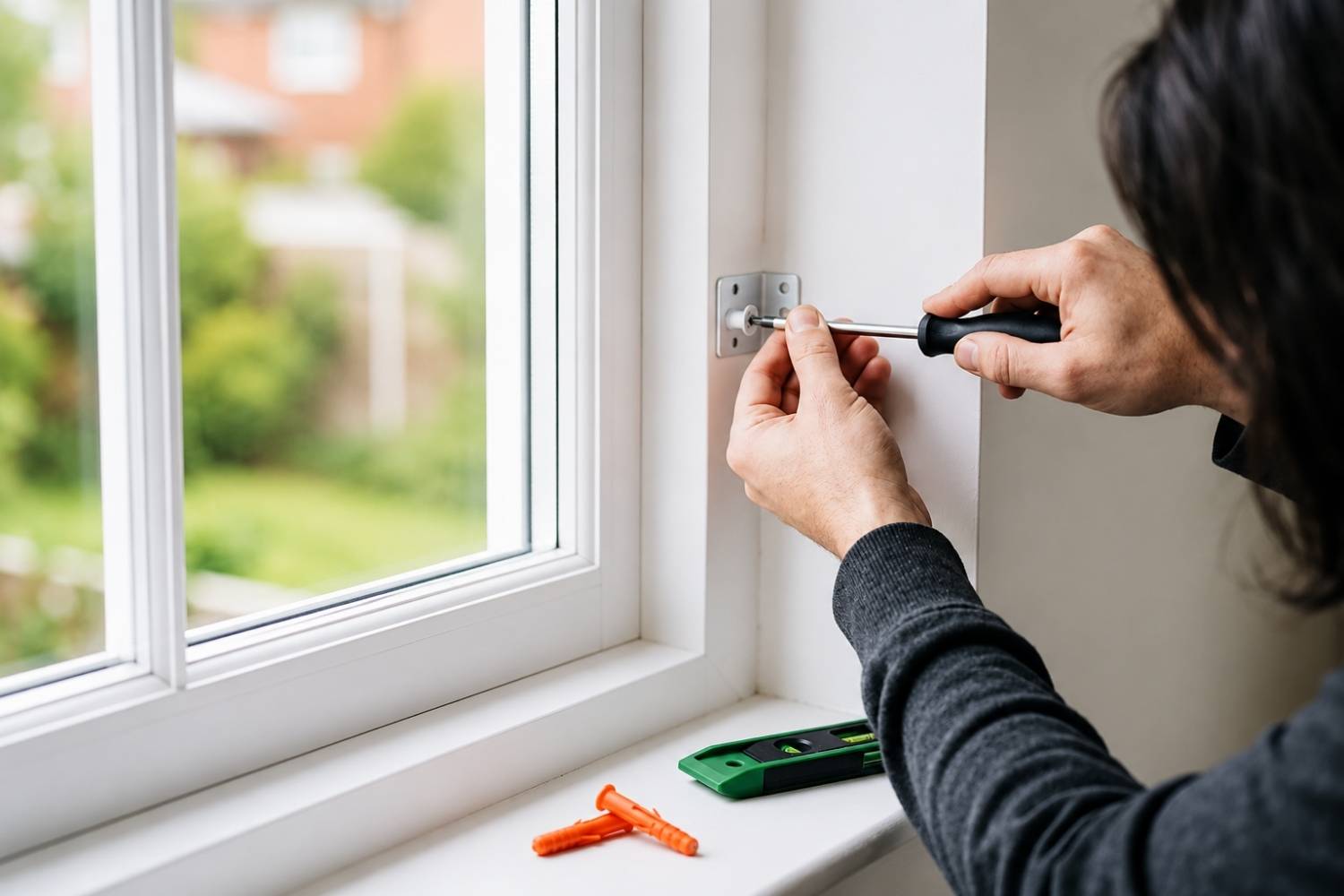
- Tighten or re-anchor the brackets. Remove the blind, check every bracket screw, and re-drive loose ones into fresh anchors so the headrail sits tight and level.
- Level the mount. Put a small level on the bracket line and shim or reposition so the headrail is truly horizontal before you rehang.
- Even out the cords. On a corded blind, fully lower it, then feed the cord back through so both sides carry the load evenly and the bottom rail sits level.
- Add a centre support if it sags. For wide blinds, fit a middle bracket to stop the headrail bowing.
- Restring or replace failed parts. If ladder strings are stretched or broken, restring the blind or swap it out, since no adjustment fixes a snapped internal string.
If your blinds are corded and you are already handling them, it is worth reading the Window Covering Safety Council guidance on cord safety before you rehang, since cordless designs remove a real hazard for young children and are often easier to keep sitting flush too.
Pro tip
When you re-drill a bracket, do not just reuse the stripped hole. Move over a centimetre or use a proper wall anchor. A bracket screwed back into a worn-out hole will loosen again within weeks and put your blind right back off the wall.
When the blinds are fine but the window is not
Once in a while you level the brackets, even the cords, and the blind still will not sit square. At that point, look past the blind. If the window frame itself has gone out of square, from settling, moisture, or age, a perfectly good blind mounted to it will always look crooked because the opening it lives in is crooked.
You can spot this by checking the window with a level: if the frame, sill, or opening is off, the blind is just reporting the problem. That is not a blind repair, it is a window one. An old, racked, or drafty window that throws off everything mounted to it is a sign it may be time for a proper window installation that resets the opening square, and your blinds hang flush against it again.
Red flag: a window that will not level
If a level shows the window frame or sill is clearly out of true, and the window also sticks, drafts, or shows fog between the panes, the blind is the least of it. A frame that far out of square usually points to a window at the end of its service life rather than anything you can fix with a bracket.
“Spent a weekend convinced our living room blind was junk. Turned out two of the bracket screws had pulled out of the drywall. New anchors, ten minutes, and it hangs perfectly level again.”
Ontario homeowner, 2024
Download the free quick guide
A one-page checklist to find why your blinds hang crooked and get them sitting flush again.
Frequently Asked Questions
Levelled the brackets and the blinds still hang wrong? The window behind them may be the real problem. NorthShield Windows & Doors helps homeowners across Whitby, Pickering, and Milton check whether a window has gone out of square. Book a free in-home estimate and we will tell you whether it is a blind fix or a window one.