

Evaluating the black frame windows pros cons question is something we get asked at least a few times a week. The trend has been dominant for five years, and now it’s maturing — which means homeowners are asking smarter questions. Not “are black frames on trend?” but “do they actually work for my house, and does the premium make sense for window replacement in Toronto?” That’s a better question, and the answer depends on your architecture, your exterior palette, and what you plan to do with the interior.
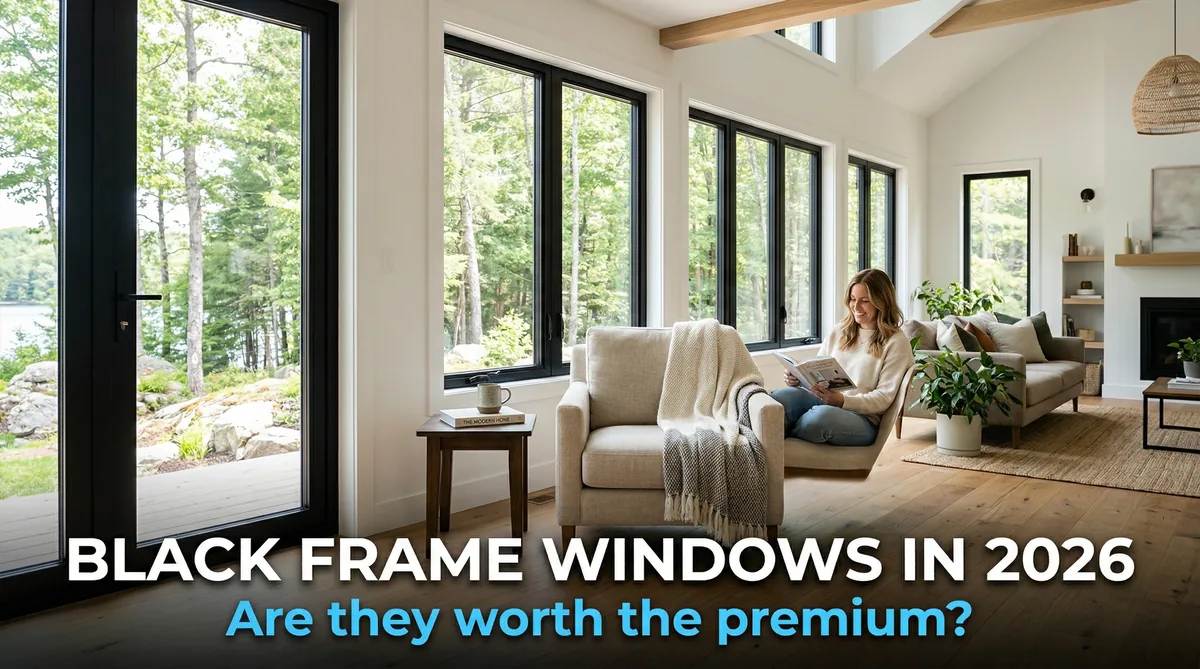
Why Black Frame Windows Took Over
The shift happened gradually through the mid-2010s and accelerated sharply around 2018 to 2020. A few things drove it. Scandinavian interior design went mainstream in North America, bringing with it a preference for high-contrast, graphic interiors. The modern farmhouse aesthetic — Joanna Gaines and similar — used black frames as a signature element. And Instagram architecture rewarded the kind of strong visual geometry that black frames provide.
What kept the trend alive past the typical five-year cycle is that black frames genuinely work across multiple design styles. Unlike some trends that only work in one context, black frames translate across modern, craftsman, farmhouse, and industrial aesthetics. They photograph dramatically. And they age better than most colour choices because they read as architectural rather than decorative.
In Canadian markets, Toronto and Vancouver adopted the trend earliest and most thoroughly. Calgary and Edmonton followed. In Winnipeg and Atlantic Canada, it’s still growing. Wherever you are, the market is more accepting of black frames in 2026 than it was in 2020.
The Real Pros of Black Window Frames
These aren’t talking points. They’re the reasons we actually recommend black frames to certain clients.
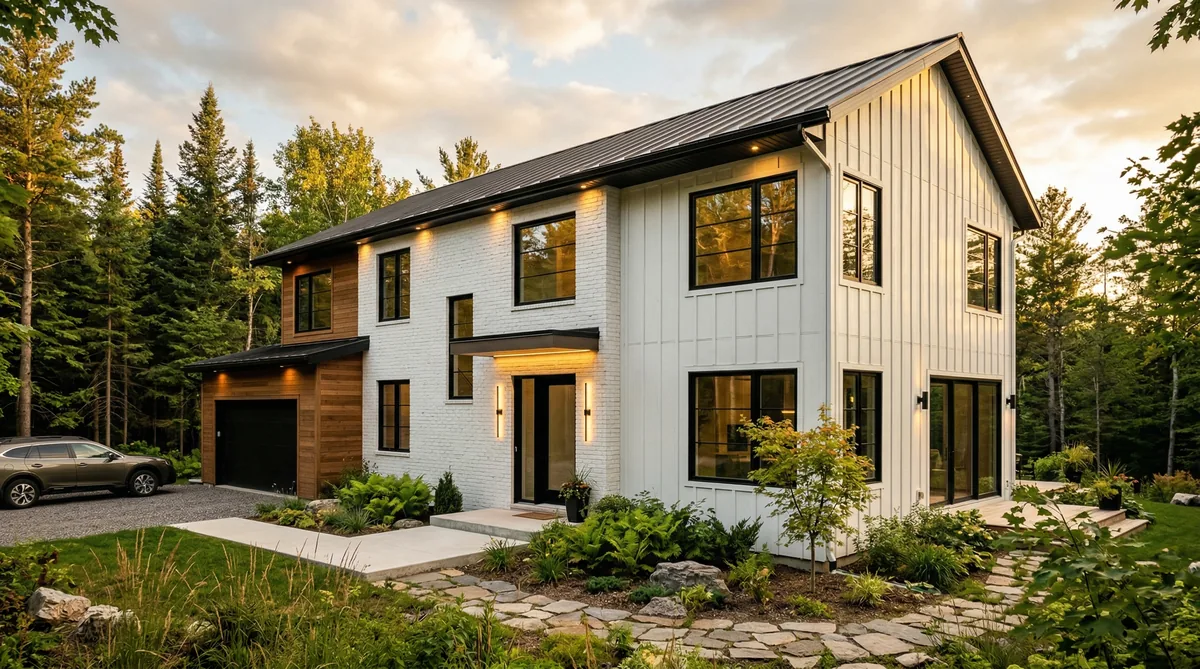
Visual impact: The contrast between a black frame and a white or light wall is genuinely dramatic. It frames the view outside like a work of art. This isn’t a subtle upgrade — it changes the visual character of the room and the building facade in a way that white frames simply don’t.
Windows become a design feature: In most homes, windows are background elements. With black frames, they become part of the architectural composition. If you have a good view or an interesting exterior landscape, black frames help you emphasize that.
Versatility across styles: Modern farmhouse, craftsman bungalow, contemporary, industrial — black frames work in all of them. White frames are also versatile, but they recede into the background. Black frames declare themselves.
Maintenance appearance: Black hides dirt, dust, and water spots far better than white. On the exterior, this matters in cities. On the interior, black sills and frames stay looking clean with minimal effort.
Resale: In most Canadian urban markets in 2024 to 2026, black frame windows are a positive for buyers. This isn’t universal — see the cons section — but in Toronto, Vancouver, Calgary, and major Ontario markets, buyers respond well to them.
The Honest Cons you Should Know
We work with enough clients who’ve already committed to black frames and then have regrets to want to be clear about the downsides before you spend the money.
Cost premium: Most quality manufacturers charge $50 to $150 more per window for black versus white. On a 15-window project, you’re looking at $750 to $2,250 extra for the colour alone. That’s real money that could go toward a better glass package.
Heat absorption on south-facing windows: Black absorbs more solar radiation than white. On south-facing windows, black frames will run slightly hotter in summer, which can contribute marginally to interior heat gain. In most Canadian homes this is a minor issue, but if you have a lot of south glass, it’s worth factoring in.
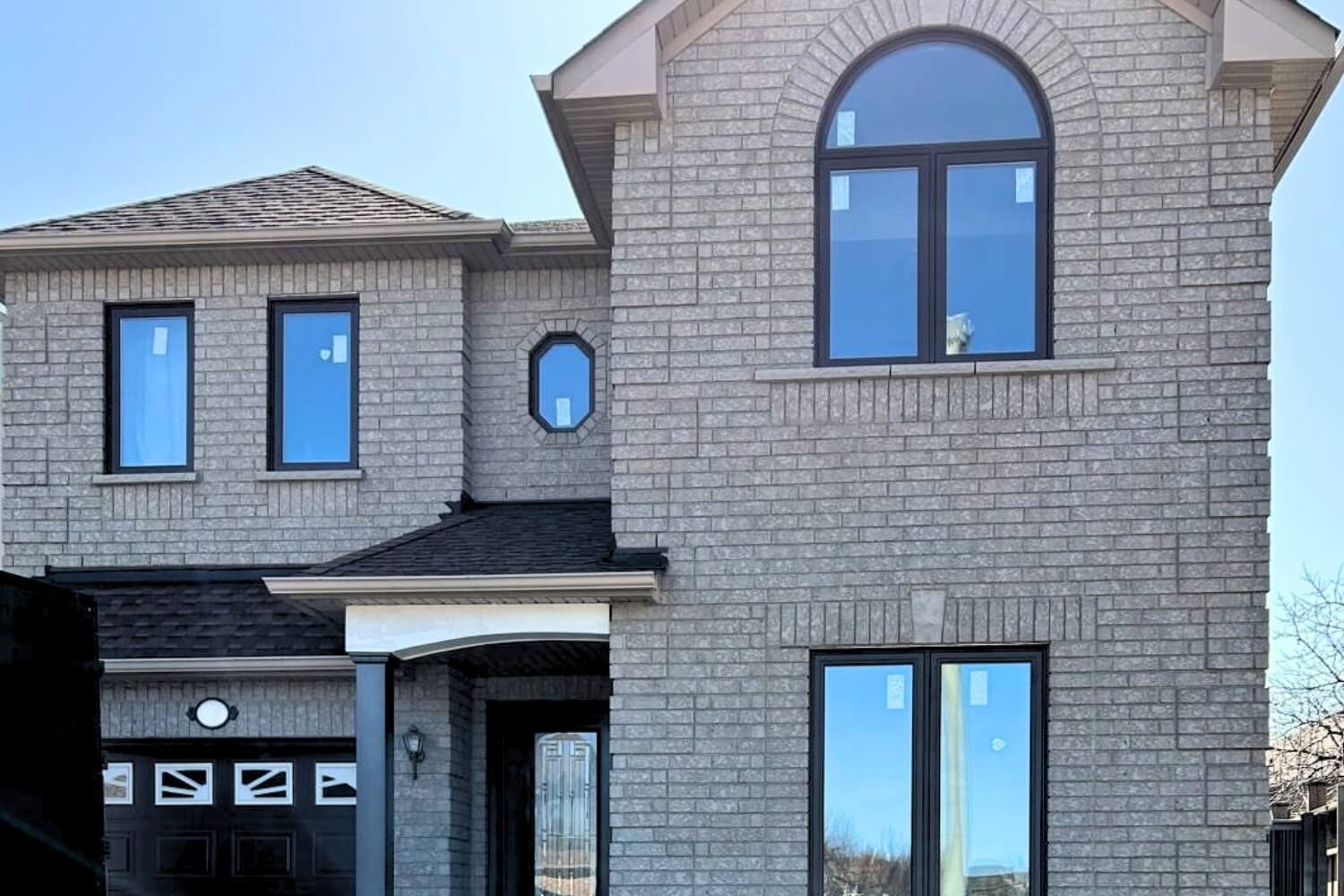
Not right for every exterior: Red brick, warm yellow or beige siding, and traditional Victorian or colonial architecture often don’t work with black frames. The combination can look heavy, harsh, or anachronistic. This is the most common regret I see — homeowners who chose black frames because they saw them on a white-clad modern house and didn’t account for how different the result would look on their red brick 1960s bungalow.
Interior coordination commitment: Once you have black frames, your interior trim, hardware, and palette need to work with them. White walls and warm wood work beautifully. But black frames in a room with beige walls and brass hardware can feel confused. It’s not a difficult coordination challenge, but it’s one you need to plan for.
Resale risk in conservative markets: In smaller cities and towns, or in neighbourhoods where traditional architecture predominates, black frames can be a negative for some buyers. This is less of a concern in major urban centres, but it’s worth thinking about if you’re in a smaller market.
What black frames actually cost in Canada (2026)
The premium for black versus white varies by manufacturer and product line. Here’s what to expect from quality Canadian suppliers.
Marlin Windows, Fibertec, and Inline Fiberglass — all Canadian manufacturers — offer black as a premium colour option. For vinyl products, the black coating is either a foil wrap or a co-extruded colour layer. For fiberglass and aluminum-clad products, it’s typically a powder-coat finish baked on at the factory. The powder-coat option is more durable and more expensive.
On a mid-size casement or double-hung window, expect to pay $50 to $100 more for black in vinyl, and $75 to $150 more in fiberglass or aluminum-clad. For a complete house replacement of 12 to 15 windows, the black premium runs $750 to $2,250 depending on the product line and window sizes.
One option worth knowing about: dual-colour windows, where the exterior frame is black and the interior is white. Most quality manufacturers offer this. The premium is typically $75 to $200 per window but you get the exterior curb appeal of black without committing every interior wall to a dark frame. For clients who aren’t sure about the interior impact, this is usually the right compromise.
When Black Frames Work and When They Don’t
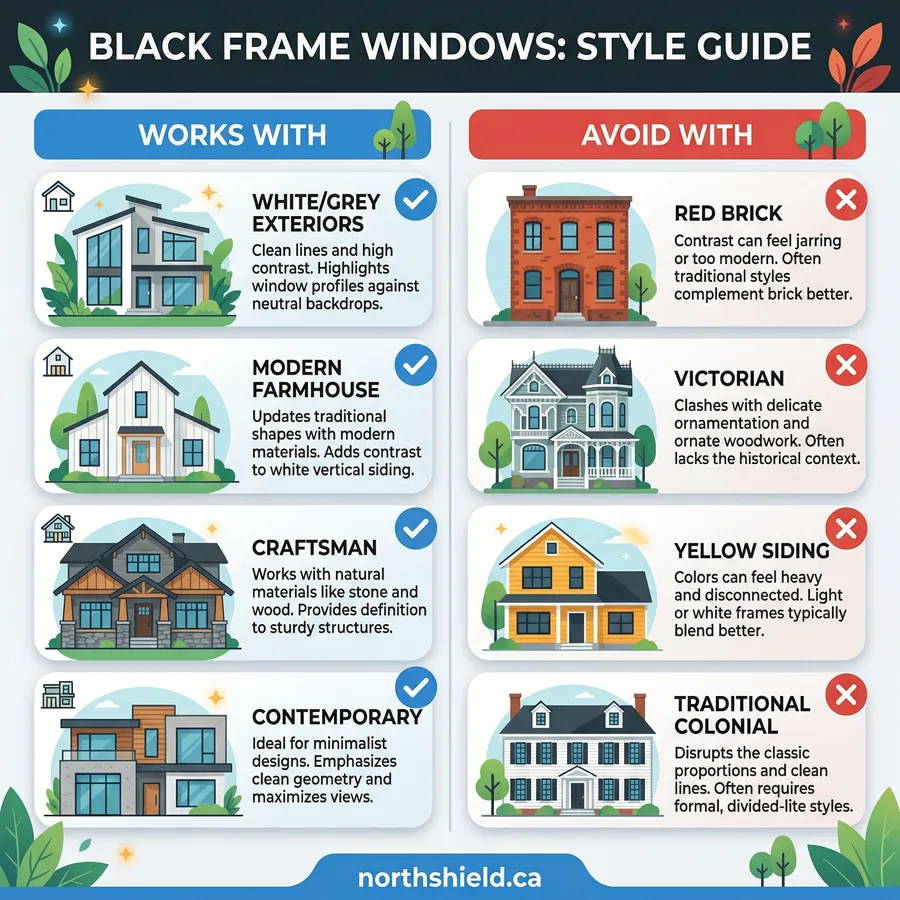
Black frames work well with: white, grey, charcoal, or dark-painted exteriors; board-and-batten, smooth stucco, metal panel, or painted brick cladding; modern, contemporary, farmhouse, craftsman, and bungalow architecture; urban settings where the building sits close to the street and curb appeal is a priority.
Black frames usually don’t work with: natural red brick or buff brick (the visual weight is too heavy and the colour temperature clashes); warm beige or yellow siding; Victorian, colonial, or formal traditional architecture; heritage homes where historically appropriate materials are expected.
The clearest diagnostic question: does your house have a light or neutral exterior? If yes, black frames will almost certainly look good. If your exterior is warm-toned brick or siding, get a large sample or a digital rendering done before you commit.
Interior Style Pairings
Black frames work in more interior contexts than most people expect. The key is having enough contrast — usually white or very light walls — so the frame reads as a deliberate architectural element rather than a dark spot in the room.
Modern farmhouse
Black frames + white walls + warm wood + matte black hardware. The classic combination that drove the trend.
Industrial modern
Black frames + concrete or charcoal walls + black steel fixtures + raw wood. Urban loft energy in a residential setting.
Scandi minimal
Black frames + white walls + light oak floors + linen textiles. The contrast is subtle and sophisticated.
Contemporary luxe
Black frames + light grey walls + marble or stone + brushed gold hardware. The black grounds the palette.
What doesn’t work as well: black frames in a room with very dark walls (the frame disappears), black frames with warm beige or terracotta palettes (the colour temperatures fight each other), and black frames with ornate traditional moulding profiles (the graphic minimalism of black frames looks out of place in an elaborate traditional interior).
Frequently Asked Questions
Do black window frames fade over time?
Quality aluminum-clad and fiberglass frames with baked-on powder-coat finishes hold their colour well — 15 to 20 years before noticeable fading. Lower-quality vinyl with a surface-applied black coating fades faster. Always ask specifically about the coating process before you buy.
Are black windows harder to keep clean?
Actually easier than white in most cases. Dust, water spots, and light dirt are far less visible on black than on white. The interior sill does show dust more visibly — worth wiping down monthly with a damp cloth.
Do black frame windows affect energy efficiency?
Marginally. Black absorbs more solar heat, which is a small advantage on north and west-facing windows in winter but a slight disadvantage for south-facing windows in summer. For most Canadian homes, the effect is negligible compared to the glass package (double vs triple, low-e coatings).
Will black windows still be popular in 5 years?
Design trends move slowly in home renovation. Black frames are still in a growth phase in most Canadian markets. In Toronto and Vancouver, they’re mainstream. In smaller markets, they’re still emerging. It’s a safe stylistic choice for 2026 that’s unlikely to look dated within a decade.
Can I get black on the exterior only and white on the interior?
Yes. Many manufacturers offer dual-colour windows — black exterior frame, white interior. This gives you the curb appeal of black without committing to black trim on every interior wall. It’s a popular and practical choice in Toronto and across the GTA.
Keep reading
If you’re still deciding between black frames, white frames, or dual-colour, NorthShield can walk you through the options with your specific home in mind. We offer free in-home consultations in Toronto, Winnipeg, and Calgary and we’ll give you an honest assessment of what will look best and hold up longest for your situation. Book your free quote today.
NorthShield Windows and Doors serves homeowners across Canada
Get a free quote for your project