

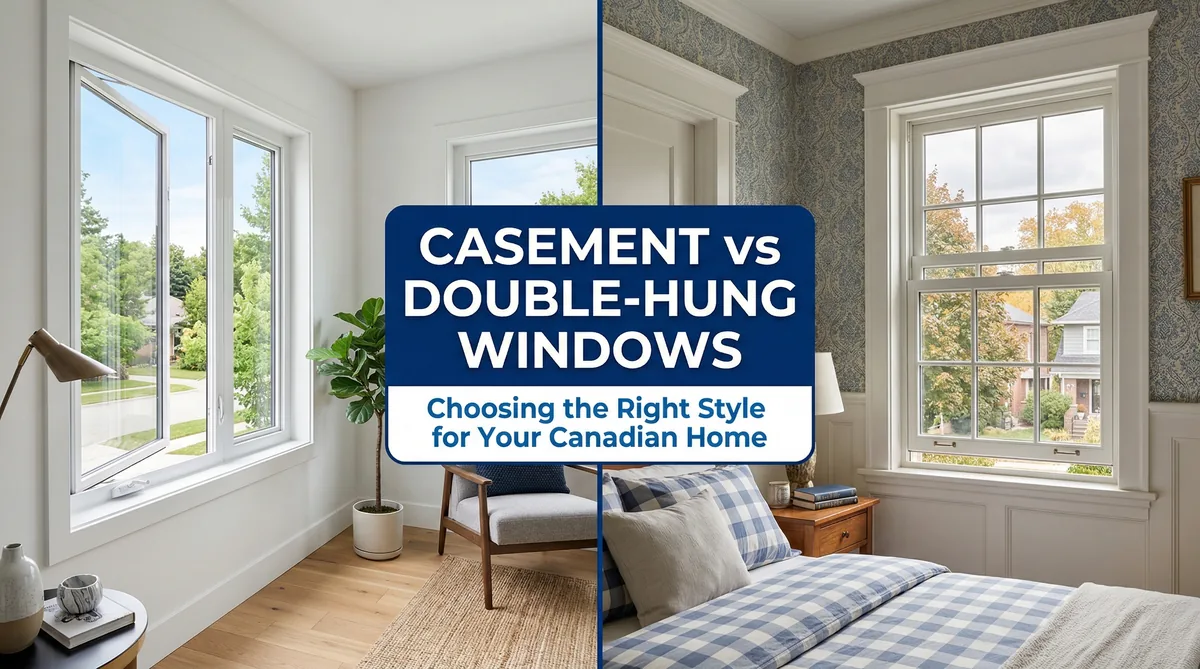
Casement vs double hung windows: this comparison comes up constantly when homeowners are planning window replacement in Toronto, Winnipeg, or Calgary. Both types are common across Canadian homes, and choosing between them isn’t just about looks. Ventilation, cleaning access, energy performance, room function, and architectural style all factor into which window is actually the better choice for a given space. Here’s how they stack up.
What’s the Difference Between Casement and Double-hung?
The mechanical difference is significant enough that it affects nearly every performance characteristic.
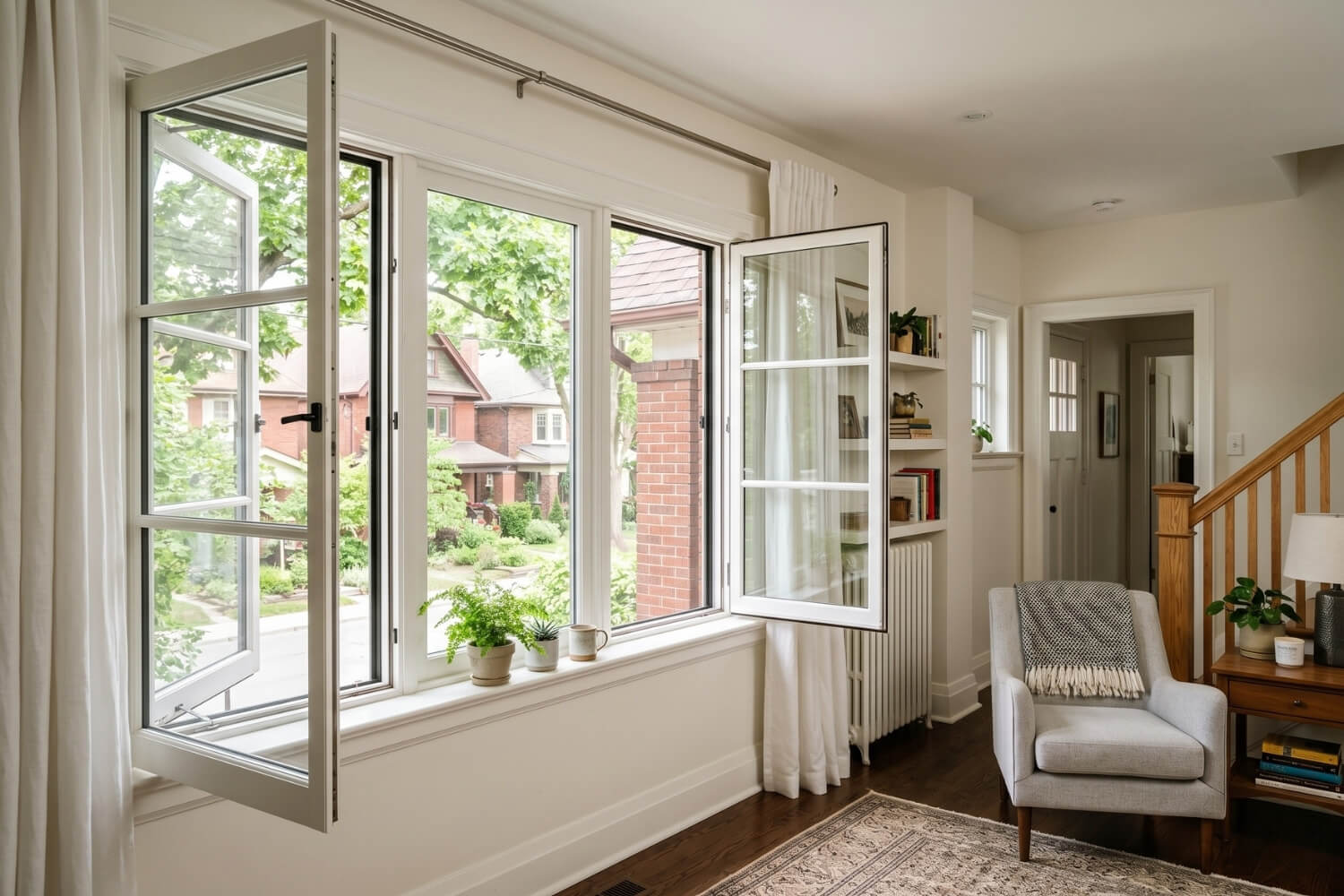
Casement windows are hinged on one side and open outward by turning a crank at the bottom of the frame. Think of them like a door that opens sideways. The entire sash opens, giving you access to the full window opening for ventilation. When closed and locked, the sash presses firmly against a perimeter seal, creating a compression seal that is very tight. There’s no sliding mechanism, no track, and no gap for air to pass through when properly closed.
Double-hung windows have two sashes (the glass panels) that slide vertically up and down within the frame. The lower sash slides up, the upper sash slides down. You can open one or both at the same time, and since warm air rises, opening the top slightly lets hot air escape while the bottom opening brings cooler air in. Modern double-hung windows have tilt-in sashes that fold inward for cleaning.
Ventilation: Where Casement Wins
A fully open casement window exposes the entire window opening to airflow. A fully open double-hung window can only expose half of the window area at most, because one sash is always covering the other half of the frame.
In practical terms, if you have a 36-inch wide by 48-inch tall window, a casement can ventilate the full 1,728 square inches of that opening. A double-hung can ventilate about 864 square inches maximum, even with both sashes open.
In a bedroom where cross-ventilation matters on a hot Toronto night, or in a kitchen where you want to exhaust cooking odours quickly, that difference is noticeable. The casement also catches perpendicular breezes that hit the face of the house, because the open sash acts like a scoop. Double-hung are better at capturing airflow that runs parallel to the window surface.
Cleaning and Maintenance
This is the category where double-hung windows have a real advantage over casements, particularly in multi-storey homes.
Modern double-hung windows have tilt-in sashes. You tilt both the lower and upper sash inward from inside the house and clean the exterior glass surface while standing safely inside. For a second or third-floor window, this is genuinely convenient and safe. No ladder, no reaching out the window, no cleaning company required.
Casement windows open outward. To clean the exterior glass, you either have to lean out of the opening (uncomfortable and limited by your reach), access the exterior from outside (fine on the ground floor, not great on higher floors), or hire a window cleaning service. On main floor installations this is a minor inconvenience. Above the ground floor it starts to matter.
Full feature comparison
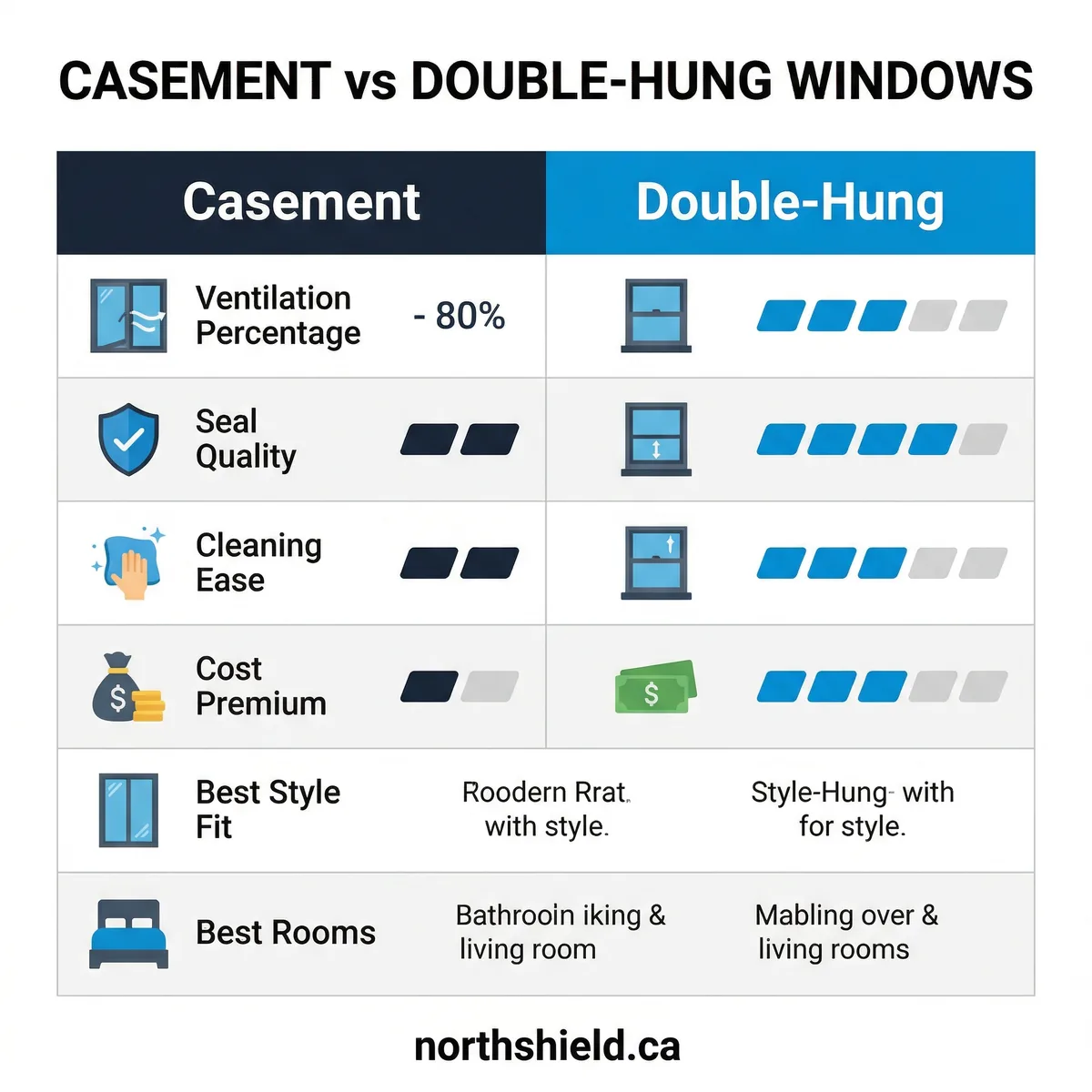
| Feature | Casement | Double-hung |
|---|---|---|
| Ventilation capacity | Up to 100% of window opening | Up to 50% of window opening |
| Seal quality when closed | Excellent (compression seal) | Good (sliding seal) |
| Exterior cleaning from inside | Not possible on upper floors | Easy with tilt-in sashes |
| Cost | 10 to 20% more per window | Standard pricing |
| Energy efficiency | Slightly better | Good with quality weatherstripping |
| Security | Excellent when locked | Good |
| Style fit | Modern, contemporary, Scandinavian | Traditional, craftsman, heritage |
| Screen placement | Interior screen | Exterior screen |
| Operation | Crank handle (one hand) | Lift sash (both hands) |
| Best rooms | Living room, bedroom, kitchen | Bathroom, high floors, heritage homes |
Energy efficiency: Casement Edges Out Double-hung
When a casement window is closed and locked, the sash is pressed firmly against a perimeter compression gasket. There’s no track gap, no sliding channel, and no mechanism that requires clearance for movement. The seal is as tight as the frame and gasket allow.
Double-hung windows seal against weatherstripping in the frame channels, but the design requires enough clearance for the sashes to slide. That clearance can allow small amounts of air infiltration, particularly as the window ages and the weatherstripping compresses or wears. A new double-hung with quality weatherstripping performs very well; an older one with worn seals performs noticeably less well.
The difference between a new casement and a new quality double-hung is small, but real. In a cold Canadian climate, particularly in Winnipeg or Calgary where winters are severe and long, that small difference across 12 to 20 windows adds up across a heating season. It’s one of the reasons building envelope specialists tend to recommend casements for new builds in extreme cold zones.
Which Looks Better?
Both window types can be beautiful. The question is whether the style matches the architecture of the home.
Casements have clean, uninterrupted sightlines. There’s no horizontal sash rail dividing the glass area. The result is a larger, clearer view with a modern aesthetic. They fit well in contemporary homes, Scandinavian-influenced designs, modern farmhouses, and any building that emphasizes clean geometry. In a Toronto semi-detached with a modern renovation, casements usually look right at home.
Double-hung have that horizontal rail between the upper and lower sash, which gives them a more traditional, divided appearance. This suits craftsman bungalows, colonial homes, Victorian-era architecture, and traditional home styles found in older Canadian neighbourhoods. In a heritage home in older Toronto or a classic Calgary character home, double-hung windows fit the architectural language in a way that casements simply don’t.
You can also add divided light grilles (those decorative grid patterns) to either window type, which affects the visual weight significantly. Talk to your window supplier about grille options if you’re trying to match an existing aesthetic.
Where to Use Each Window Type in Your Home
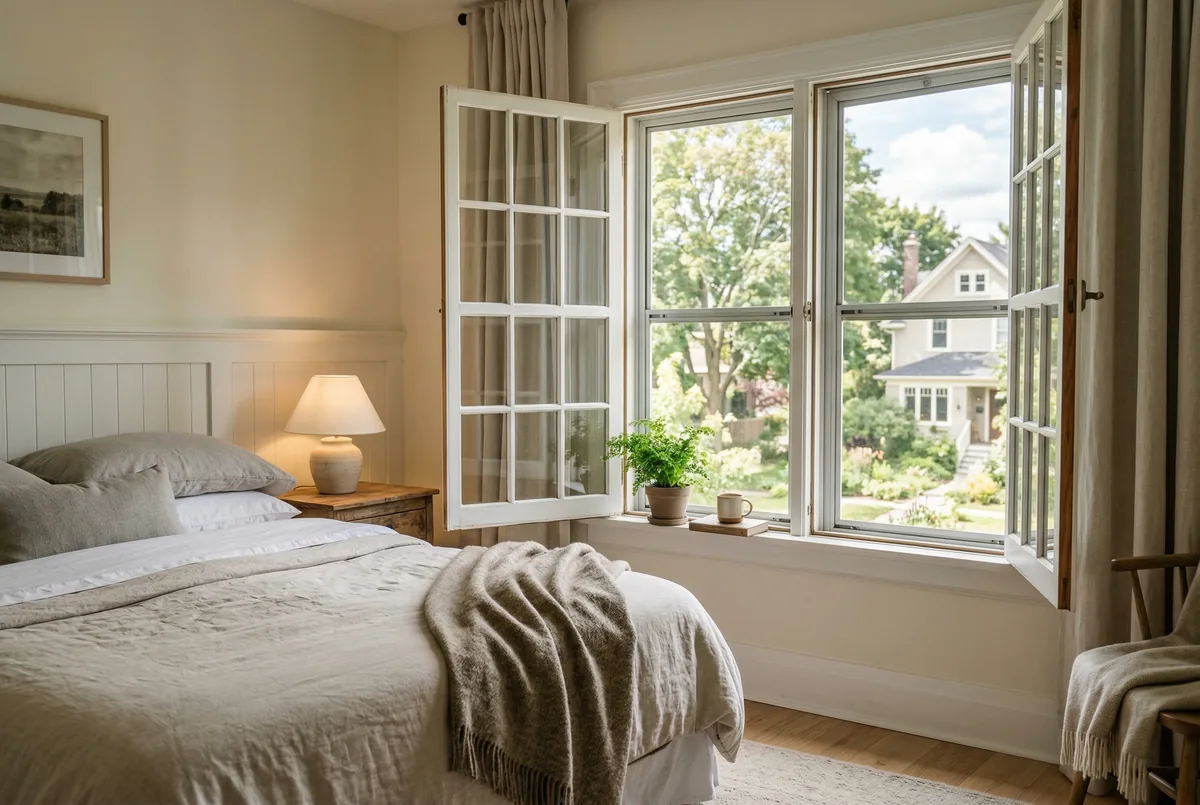
The most practical answer to casement vs double hung is usually: use both, in the right places.
| Room | Recommendation | Reason |
|---|---|---|
| Main floor bedroom | Either, slight edge to casement | Better ventilation, good seal for night comfort |
| Second floor bedroom | Double-hung | Tilt-in cleaning much easier at height |
| Kitchen | Casement | Full ventilation, one-hand crank operation |
| Bathroom | Casement | Crank open for ventilation while maintaining privacy |
| Living room | Casement | Unobstructed views, full ventilation |
| Dining room | Casement or picture window combination | Views and natural light take priority |
| Heritage/character home | Double-hung | Matches architectural language |
| High floors (3rd+) | Double-hung | Safety and cleaning practicality |
Frequently asked questions
Are casement windows more expensive than double-hung?
Typically 10 to 20% more per window. The difference narrows with larger windows. On a full-house replacement, budget an extra $500 to $1,500 for casements over double-hung, depending on the number of windows and the product line you choose. The added cost comes from the crank mechanism and the more complex frame geometry.
Which window type is better for cold climates?
Casement, slightly. The compression seal creates a better thermal barrier when the window is closed. In Winnipeg or Calgary winters, this adds up across a full house over a heating season. That said, a quality double-hung with good weatherstripping performs well in any Canadian climate. The difference is real but not dramatic on newer windows.
Can I mix casement and double-hung in the same house?
Yes, and it’s often the right approach. Many architects and designers recommend casements for main living areas and bedrooms, and double-hung for bathrooms and high second-floor windows where cleaning access matters. Mixing styles works well as long as you keep the frame profiles and exterior finishes consistent so the home reads as cohesive from the outside.
Do casement windows work with window screens?
Yes, but the screens mount on the interior side because the window opens outward. Interior screens are actually less prone to weather damage than exterior screens, but they’re less common and some homeowners find them less aesthetically clean. It’s worth discussing screen options when ordering, since not all casement systems have equally good interior screen hardware.
Which is easier to operate for elderly or mobility-limited residents?
Casements are significantly easier. Double-hung windows require lifting the sash, which demands grip strength and range of motion that can be difficult for elderly residents or anyone with hand or arm limitations. Casement cranks rotate with very little force and only require one hand. For accessibility, casements are the better choice, especially for lower-mounted and frequently used windows.
Keep reading
If you’re working through a window replacement project and want guidance on which type is right for each room in your home, NorthShield provides free in-home consultations in Winnipeg, Toronto, and Calgary. We’ll take a look at your space, discuss your priorities, and put together a written quote with no pressure. Book your free consultation here.
NorthShield Windows and Doors serves homeowners across Canada
Get a free quote for your project