

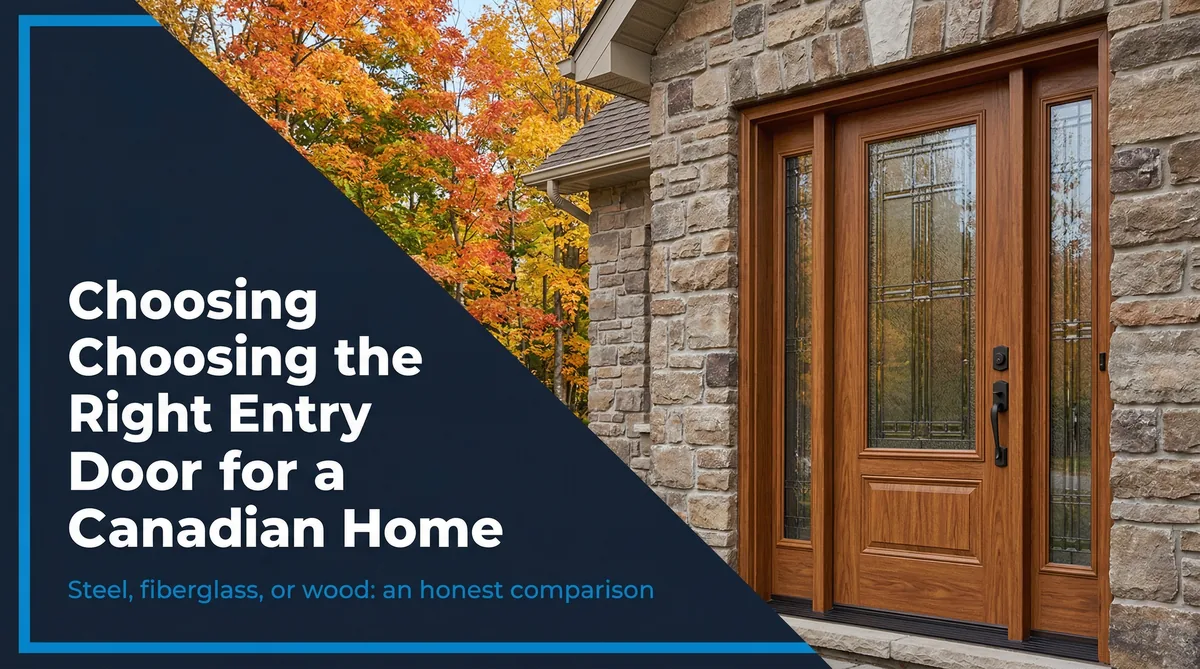
Choosing an entry door for a Canadian home means thinking about things Florida homeowners never have to worry about: cold snaps that push past -40 degrees, massive temperature swings in spring, and six months of UV exposure bouncing off snow. A professional entry door replacement isn’t just a cosmetic decision. The material, insulation value, and installation quality all directly affect your heating bills and how long that door lasts. Here’s what actually matters.
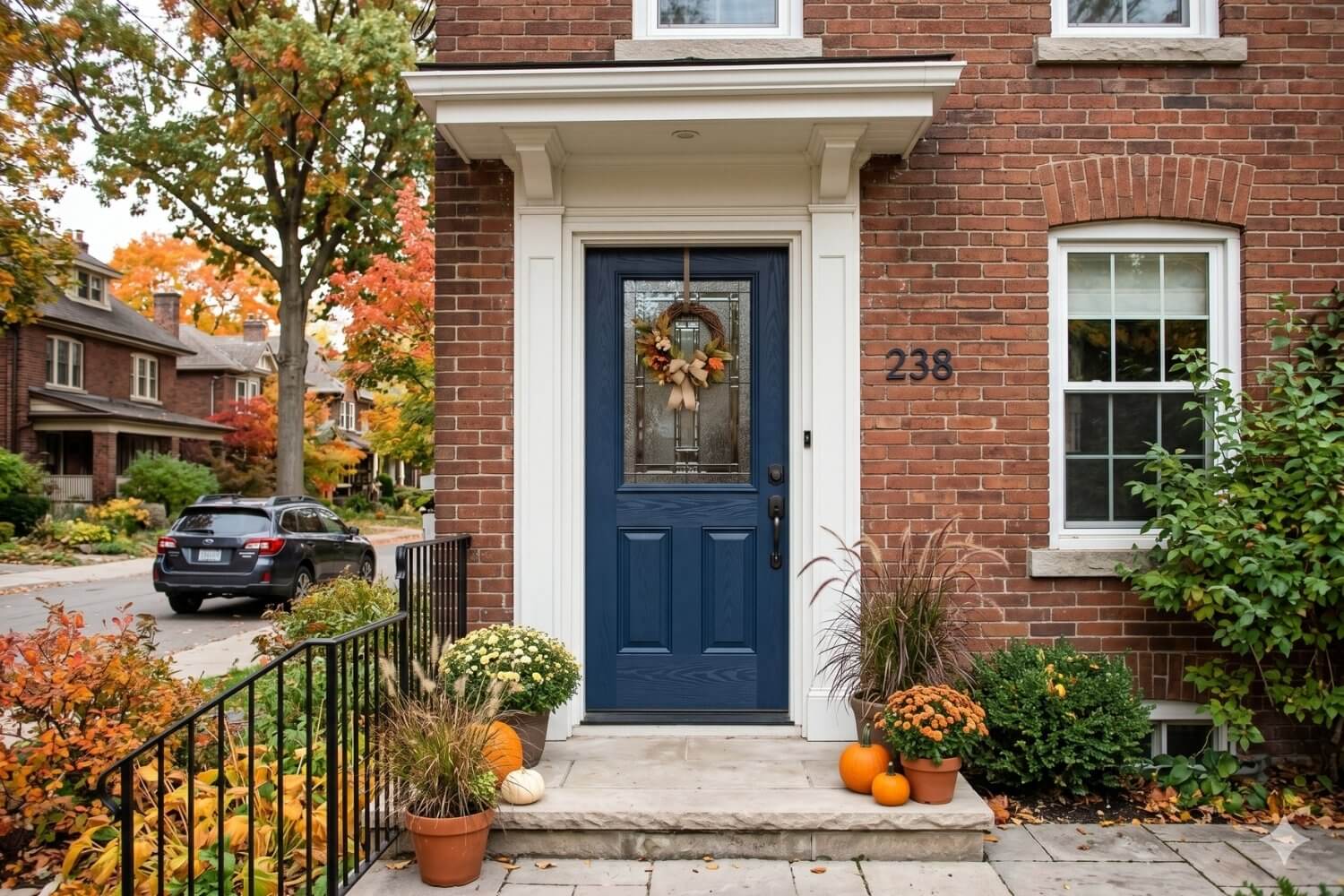
Steel vs Fiberglass vs Wood: Which is Right for Your Climate?
Every installation in Canada comes down to picking between three main materials. Each has a real place in the market. None of them is perfect for every situation.
Steel
Steel is the most affordable option. It’s strong, offers excellent security, and handles Canadian climates well when you pay attention to the thermal break. That last part is important: a steel door without a proper thermal break conducts cold right through the slab and creates frost on the interior surface. Good steel doors have a foam core and a thermal break in the frame that stops that cold transfer.
The downsides are real. Steel dents. If a moving company clips it or a teenager slams a bike into it, you’ll see it. In wet climates like Vancouver or coastal areas, lower-quality steel doors can rust if the paint gets scratched and nobody addresses it.
Fiberglass
For most Canadian homes, fiberglass is the premium choice. A good fiberglass door with a foam core hits R-5 to R-8, won’t warp or crack in cold, won’t dent, and can be finished to look like real wood grain. The maintenance requirements are minimal compared to any other material.
In Calgary, where we see temperatures swing from -35 in January to +30 in July, fiberglass handles that thermal cycling better than anything else. It doesn’t expand and contract the way steel and wood do. Long-term, a fiberglass door often works out to be the better value even though it costs more upfront.
Wood
Wood is beautiful. It’s also a maintenance commitment that most Canadian homeowners underestimate. Wood swells in humidity and contracts in cold. Left without proper finishing and regular upkeep, an exterior wood door in a Canadian climate will warp, crack, and fail faster than you’d expect. The R-value is also the worst of the three options at R-2 to R-3.
If you’re doing a heritage restoration, or you have a covered porch that shields the door from direct rain and sun, wood can work. For most Canadian homes with fully exposed entry doors, it’s not the practical choice.
| Feature | Steel | Fiberglass | Wood |
|---|---|---|---|
| Insulation (R-value) | R-5 to R-6 | R-5 to R-8 | R-2 to R-3 |
| Maintenance | Low | Very low | High |
| Cold weather performance | Good (thermal break required) | Excellent | Poor to fair |
| Security | Excellent | Good | Fair to good |
| Dent resistance | Low | High | Medium |
| Best for | Budget, most climates | Extreme cold, long-term value | Heritage/aesthetics only |
Energy Efficiency
The R-value on the door slab is only part of the story. A door can have a great foam core and still leak heat badly if the installation isn’t done right. Here’s what to look for in both the product and the install.
Foam core, not air-filled. Some entry doors have an air gap instead of a foam core. The foam core versions insulate significantly better. Ask specifically when you’re shopping.
Thermal break in the frame. This matters most for steel doors. A steel door without a thermal break will conduct cold from outside directly to the interior face. Look for a frame that includes a polyurethane or polyamide break between the exterior and interior faces.
Triple-point locking. A door that locks only at the knob can bow away from the frame at the top and bottom in extreme cold, creating small gaps. Triple-point locking compresses the weatherstripping along the full perimeter when you engage the lock, improving the seal significantly.
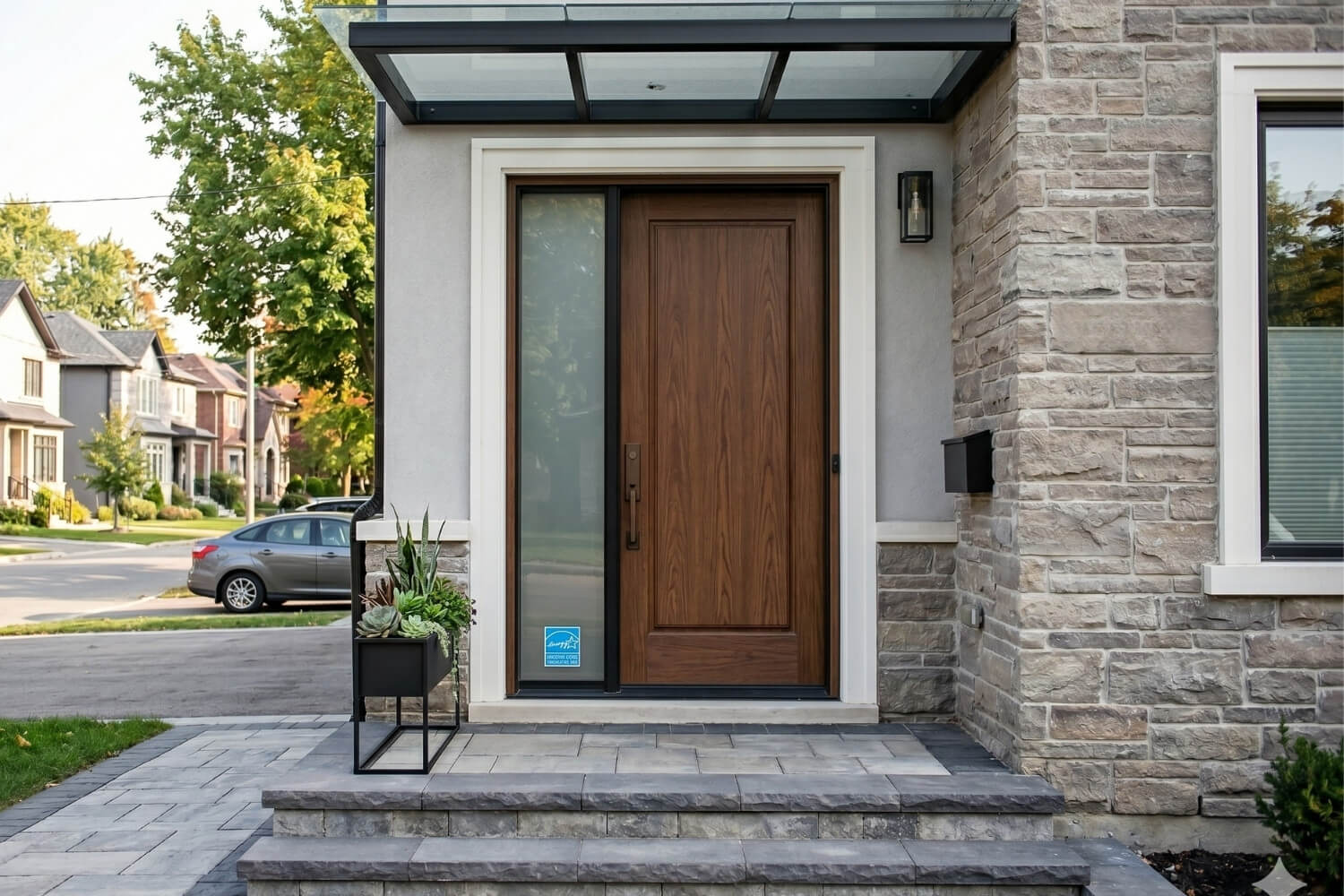
ENERGY STAR certification. ENERGY STAR has Canadian climate zone ratings. A door certified for Zone 3 (which covers most of the prairies and Ontario) meets specific air leakage and U-factor requirements for that climate. It’s not just a marketing badge when it’s zoned correctly.
How to Choose the Right Style for Your Home
The door material is a practical decision. The style is where you personalize it. A few things worth thinking through before you finalize.
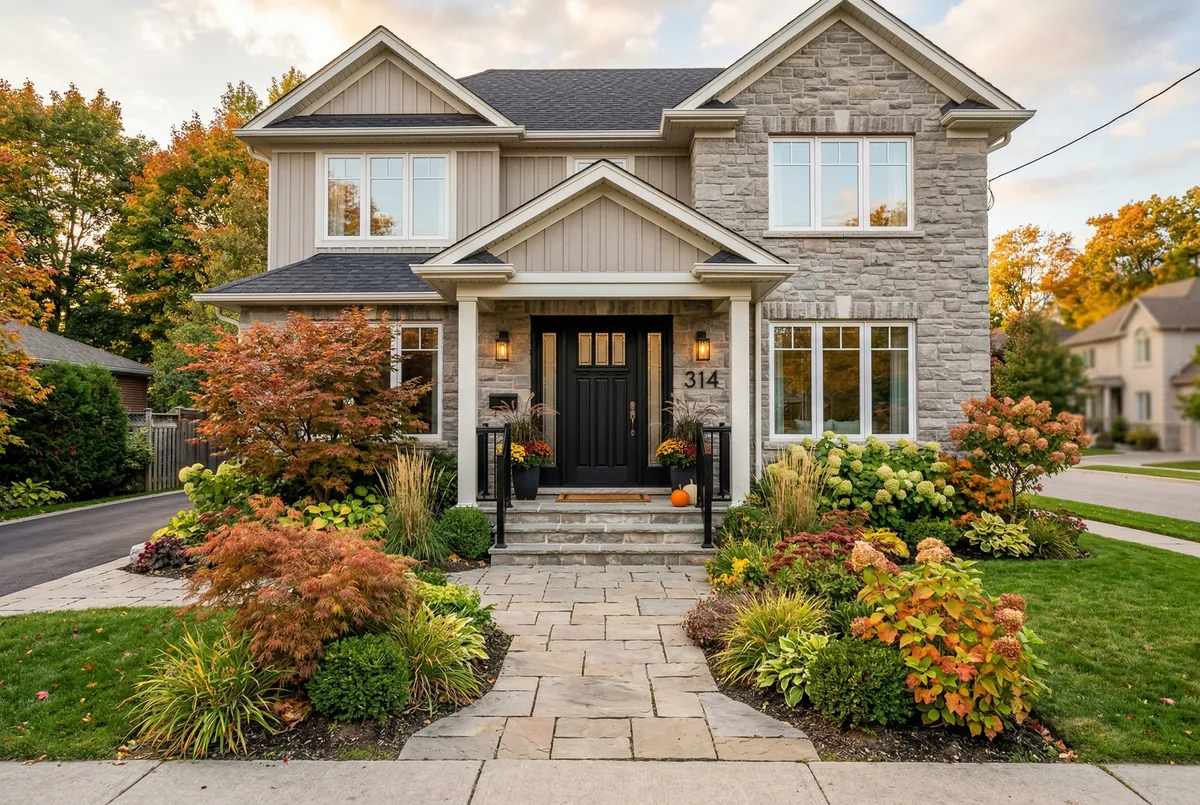
Match the architecture. A modern flush door with narrow glass lites looks great on a contemporary home but can look out of place on a craftsman bungalow. Traditional raised-panel doors suit heritage and colonial styles. The door is one of the most visible elements of a home’s exterior, so it’s worth looking at photos of similar homes before committing.
Colour choices. Classic black is the most popular front door colour right now and works with almost any exterior colour. Bold red and navy are strong choices for lighter brick or siding exteriors. For darker homes, lighter accent colours or natural wood finishes stand out better. One consideration in Canadian climates: very dark colours on fibreglass doors in exposed south-facing locations can cause surface heat that accelerates wear on cheaper paint finishes. Quality factory finishes handle this fine; cheap aftermarket paint less so.
Glass in the door. Any glass in an entry door should be low-E, double-pane at minimum. Triple-pane is available on premium doors. Decorative glass looks great but check the seal quality; cheap decorative units fail faster than standard IGU panels.
FAQs
How long does a fiberglass door last in Canada?
A quality fiberglass door with a foam core and proper maintenance should last 30 to 50 or more years. The weatherstripping and threshold seal need replacement every 5 to 10 years, but the door itself is extremely durable in Canadian climates. It won’t warp in extreme cold or expand in summer heat the way steel and wood do.
Do steel entry doors rust in Canada?
Lower-quality steel doors can rust, especially in wet coastal climates or when scratched paint is left unprotected. Better-quality steel doors use galvanized steel with a factory primer and paint system that resists rust. If you choose steel, repaint or touch up any scratches immediately before rust can get started underneath the coating.
Should I replace my door and frame together?
In most cases, yes. An old frame may have rot, shifting, or air leaks that a new door alone won’t fix. A proper replacement includes the entire door unit: door slab, frame, threshold, and weatherstripping. Trying to save money by keeping an old frame often leads to problems within a few years.
Can I install an entry door myself?
Technically yes, but it’s not recommended in Canadian climates. A poorly fitted door creates air leaks and moisture infiltration. Improper shimming and levelling leads to early failure and can void the warranty. In Alberta and Manitoba specifically, professional installation with proper insulation around the frame is important for performance and longevity.
How much does it cost to add a sidelight to an entry door?
Adding a fixed sidelight panel on one or both sides of the door approximately adds $400 to $900 to the project cost, not counting any structural work to widen the rough opening. It dramatically increases curb appeal and brings natural light into the entry area. Make sure any sidelight glass is low-E and at least double-pane.
Keep reading
If you’re ready to move forward, NorthShield provides free in-home estimates in Winnipeg, Toronto, and Calgary. We’ll assess your existing setup, walk you through the right material for your climate and budget, and give you a written quote with no surprises. Book your free estimate here.
NorthShield Windows and Doors serves homeowners across Canada
Get a free quote for your project