

If you’re choosing windows for a Canadian home, the material your frames are made from matters more than it would in California. In vinyl vs fiberglass windows cold climate comparisons, both products perform well for window replacement in Toronto, Winnipeg, and Calgary — but they handle -30°C and the freeze-thaw cycles that come with it in genuinely different ways. Here’s what 18 years of installing windows across Winnipeg and the prairies has taught me about which one holds up.
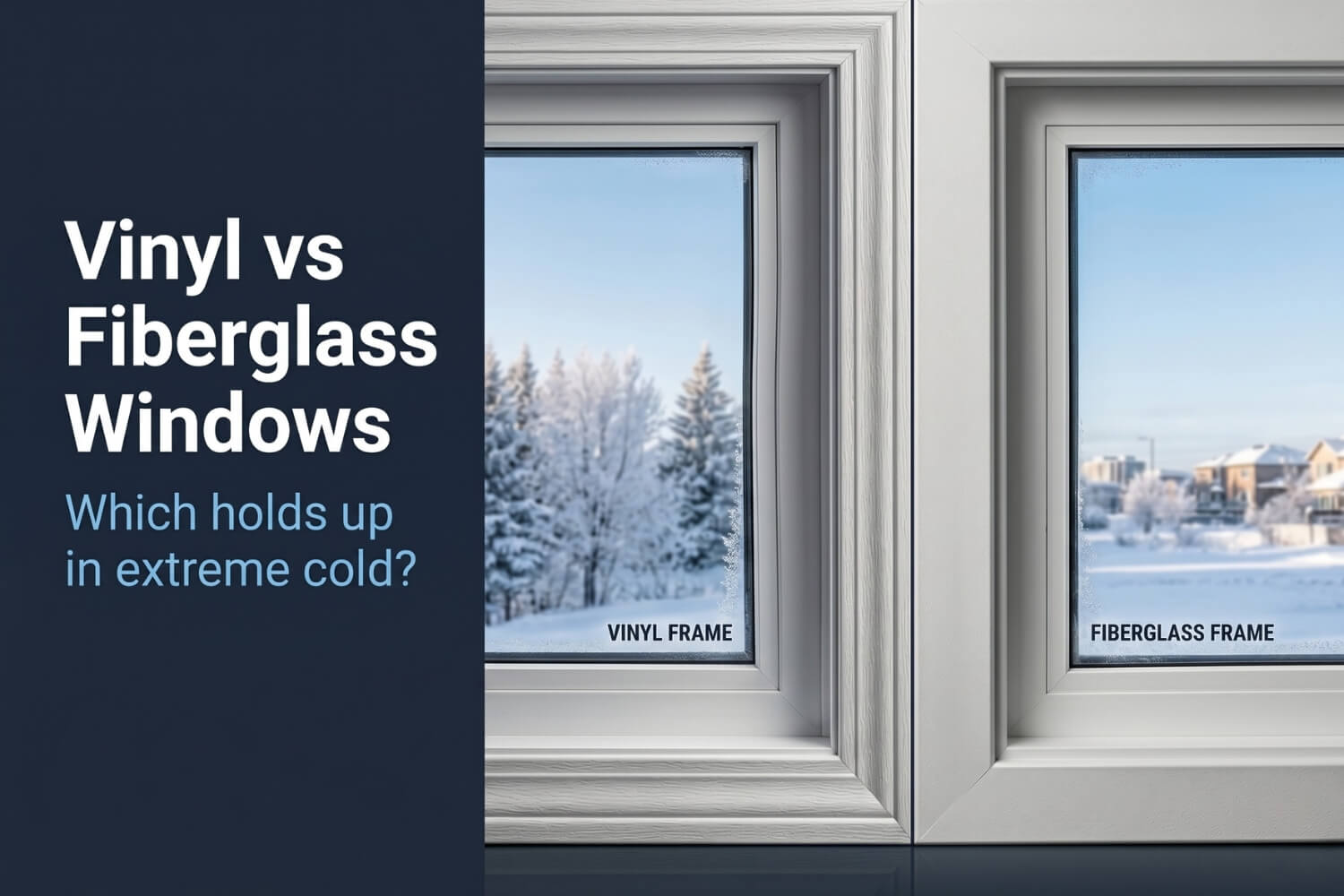
How Vinyl Windows Perform in Cold Climates
Vinyl is the most common window frame material in Canada, and for good reason. It’s low-maintenance, reasonably priced, and when made properly, it handles our winters without issue. The key phrase is “when made properly.”
Vinyl (PVC) expands and contracts as temperatures change. In extreme cold, inferior PVC formulations can become brittle and crack at the corners. Quality vinyl with UV stabilizers and multi-chamber profiles is engineered to handle temperatures down to -40°C without cracking or warping. The multi-chamber design isn’t just marketing — those internal air pockets reduce heat transfer and add structural rigidity that keeps the frame stable through temperature cycles.
What you want to avoid is the bottom-tier vinyl that gets imported and sold on price alone. That product has thinner walls, fewer chambers, and inferior PVC compounding. It will crack in a Winnipeg winter within five to ten years. Ask the manufacturer what cold-weather rating their product carries and whether it meets or exceeds CSA A440.
For most Canadian homeowners in Ontario, BC, and Atlantic Canada, a good quality vinyl window is the right call. It’s maintenance-free, holds its shape, and costs significantly less than fiberglass.
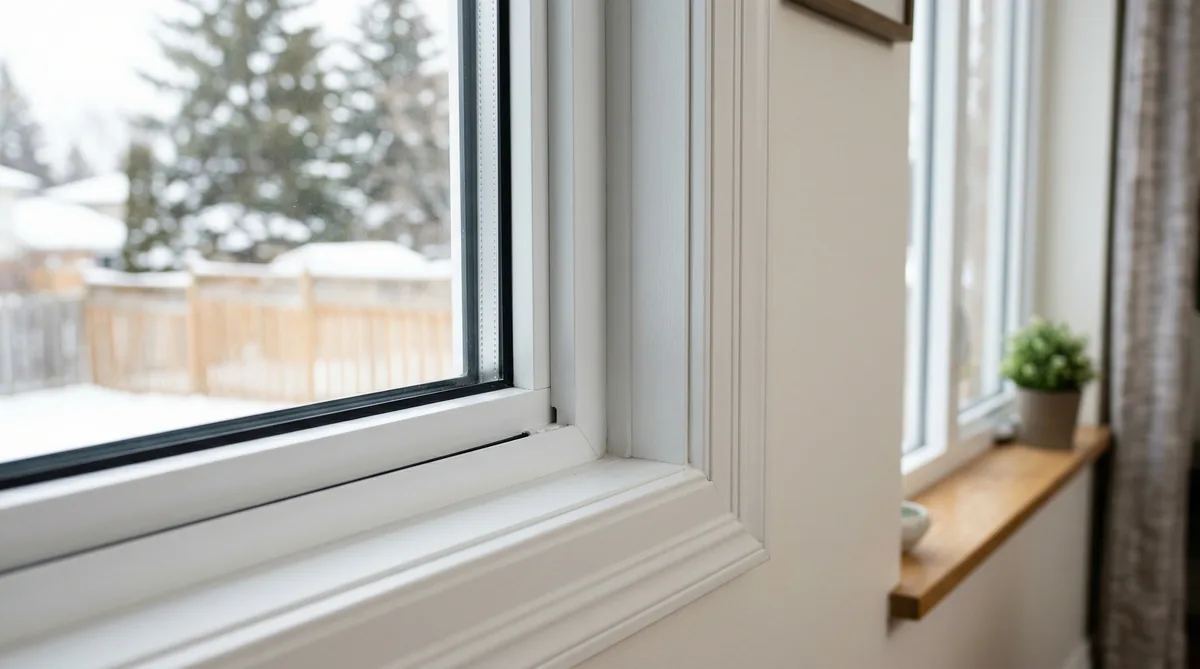
A quality vinyl window frame corner. The multi-chamber PVC profile is what separates good vinyl from bargain product.
How Fiberglass Performs in Cold Climates
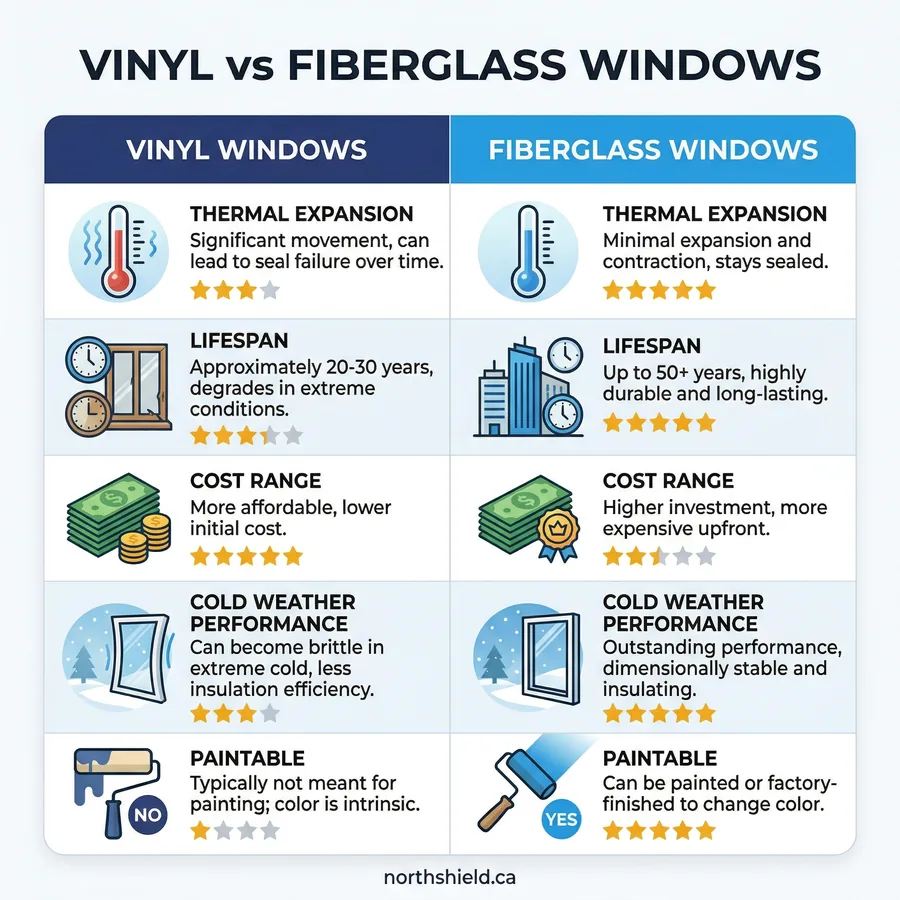
Fiberglass window frames have a thermal expansion coefficient very close to that of glass itself. That’s the single most important technical fact about fiberglass in cold climates. Because the frame moves with temperature at almost the same rate as the glass unit inside it, the seal between frame and glass experiences far less stress through repeated freeze-thaw cycles.
In practice, this means the insulated glass unit (IGU) inside a fiberglass frame is less likely to develop edge seal failures over time. In Manitoba and Alberta, where windows go from -35°C to +30°C and back multiple times a year, that matters.
Fiberglass is also substantially stiffer and stronger than vinyl. Larger window units — picture windows, bay windows, full-height casements — hold their shape better in a fiberglass frame. There’s less risk of sag or racking over time.
The disadvantages are cost and weight. Fiberglass windows run 40 to 60% more than comparable vinyl. They’re heavier, which makes installation more involved. And while you can paint fiberglass, that’s also something you have to do — vinyl needs no finishing at all.
| Feature | Vinyl | Fiberglass |
|---|---|---|
| Thermal expansion | High | Very low (similar to glass) |
| Performance at -30C | Good (quality vinyl) | Excellent |
| Lifespan | 20 to 30 years | 30 to 50+ years |
| Maintenance | None | None |
| Paintable | No | Yes |
| Weight | Light | Heavier |
| Best for | Most Canadian homes | Extreme cold, heritage homes |
Glass VS Frames
One more consideration: the glass package often matters more than the frame material. Whether you’re buying vinyl or fiberglass, prioritize triple pane over double pane for Manitoba and Alberta, and always spec warm-edge spacers and low-e coatings. A good glass package in a vinyl frame beats a bare double-pane fiberglass unit in cold weather performance.
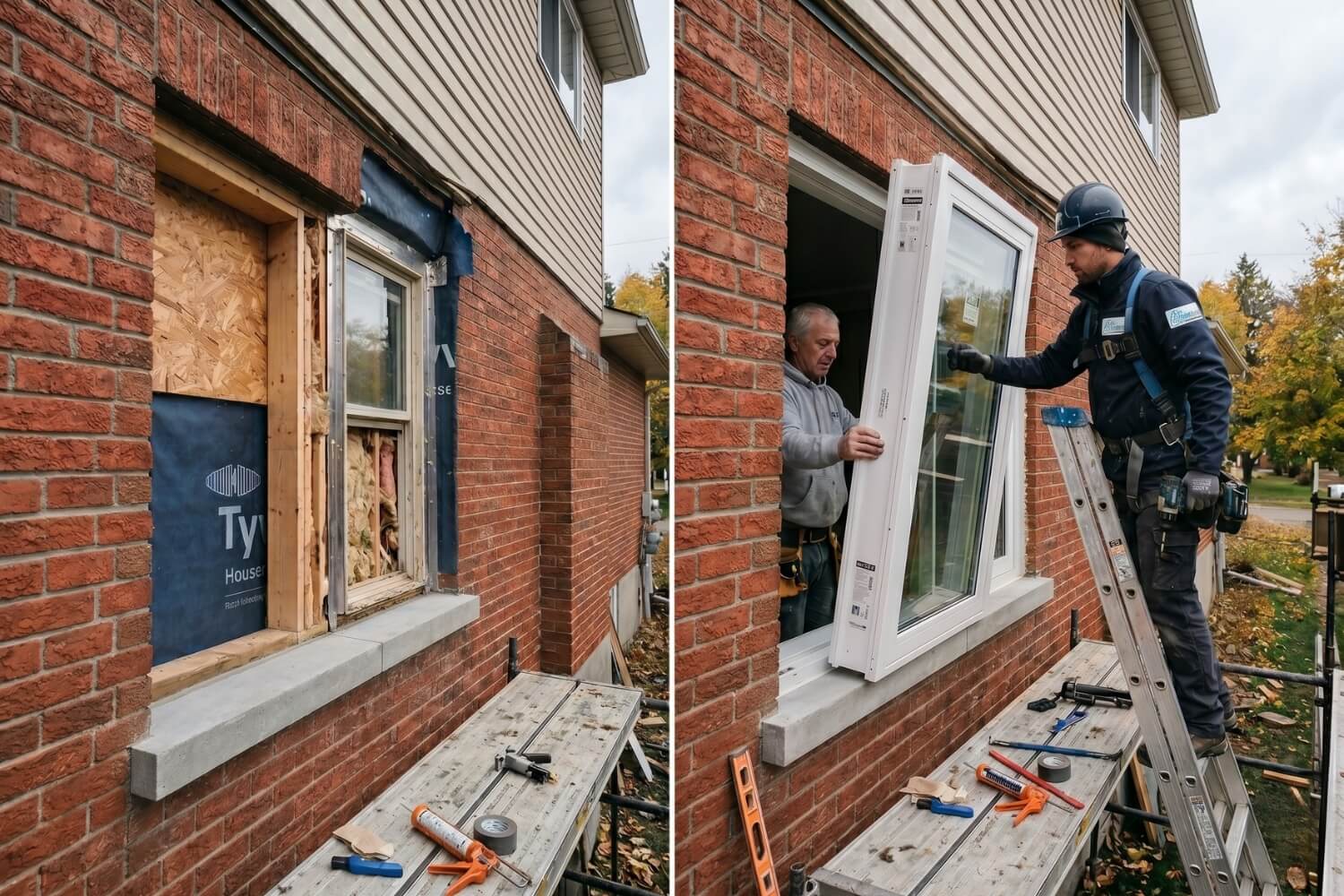
Specific Considerations for Winnipeg and Calgary
Winnipeg regularly records temperatures below -35°C, and Calgary gets its own punishment with chinook cycles that swing temperatures 20 to 30 degrees in a single day. These aren’t just cold climates — they’re high-stress climates for building materials.
In Winnipeg especially, the freeze-thaw cycling at the frame-to-glass junction is where cheap vinyl fails first. The IGU edge seal cracks, air infiltrates the gas fill, and the window fogs between panes within five to ten years. Quality vinyl handles this better than cheap vinyl, but fiberglass handles it best.
For Calgary, the chinook effect creates rapid thermal expansion and contraction. A window that goes from -25°C at 8am to +10°C by 2pm is being stressed in a way that southern Ontario windows simply aren’t. Again, fiberglass’s lower expansion coefficient is a genuine advantage in that context.
That said, I’ve installed thousands of quality vinyl windows in Winnipeg homes that are performing fine 15 years later. “Quality vinyl” is the operative phrase. Don’t let anyone sell you a bargain vinyl product for a prairie home.
What About Composite Frames?
Some manufacturers offer frames that combine vinyl and fiberglass in different proportions — sometimes called composite or hybrid frames. These sit between vinyl and fiberglass in both performance and cost, and they’re worth considering if you want something better than standard vinyl without the full fiberglass premium.
Brands like Fibertec and some Marlin lines offer composite options. The construction varies significantly between manufacturers, so you’ll want to ask specifically what the frame composition is and how it’s rated for cold weather. A composite that’s 80% vinyl with a fiberglass skin is different from one that’s built around a fiberglass core.
For most Winnipeg and Calgary homeowners, if the budget allows, I’d skip composite and go straight to fiberglass. If you’re in Ontario or BC, composite is a reasonable middle ground that can save you money versus full fiberglass with minimal performance trade-off.
Keep reading
Still not sure which frame material is right for your home and climate? NorthShield offers free in-home consultations in Winnipeg, Toronto, and Calgary. We’ll walk through your specific situation and give you a straight answer — not a sales pitch. Book your free quote today.
NorthShield Windows and Doors serves homeowners across Canada
Get a free quote for your project